
Excavator noise varies by power source, engine condition, measurement position, work cycle and cab sealing, so operator readings cannot be compared directly with exterior emissions or legacy test data [S2][S3].
What the noise measurements represent
Heavy construction equipment sound levels span roughly 80–120 dB(A), while construction power tools can reach 115 dB(A) [S2]. These values describe a broad field, not a single excavator generation, and noise inventories can contain LAeq, Lmax, L10 or sound-power data that are not interchangeable [S3].
Excavator and other heavy-equipment dosimetry should therefore be treated as task-specific exposure evidence. The 2007 field study used time-motion studies to correlate each operator’s cumulative noise dose with the work performed and identify the tasks associated with the greatest noise exposure [S2]. An in-cab one-minute reading is not a substitute for a full-shift dose.
The distinction is critical when an owner compares a new excavator with a machine built decades earlier. The result depends on whether the test covers exterior emissions, the operator position, or cumulative exposure during digging, loading, travelling and idling [S2][S3].
Diesel generations set the operating baseline
A 1999 construction-worker study recorded a mean one-minute operator reading of 80 dBA inside a tracked-excavator cab [S6]. Older machines remain difficult to characterize with a single figure because engine age, hydraulic condition, exhaust-system integrity, muffler design and cab deterioration can all alter the measured level [S2][S3].
The Bobcat T770 provides a useful declared-emissions reference, with a specified bystander noise level of approximately 93 dB at a reference distance commonly near 23 ft, or 7 m [S1]. That is an exterior bystander declaration, not an operator-position dose, so it cannot be used to infer hearing protection requirements inside a cab [S1].
Diesel performance also changes over the machine life. Rebuilding a worn muffler or correcting an air-intake restriction may lower emissions, but the research material does not provide a defensible numerical improvement for a specific repair. A fleet comparison must therefore test equivalent duty cycles rather than infer sound reduction from model age alone [S2][S3].
Electric excavators make the largest step change

A 10 dB increase represents a tenfold rise in sound intensity, so the 13 dB difference is substantial even though the arithmetic difference looks modest [S4].
The source contrasts the constant rumble of diesel machines with the gentle whir of electric motors [S4]. These changes suit battery-electric excavators used near homes, schools, hospitals and offices, where exterior noise and operating-hour restrictions can constrain the work plan [S4].
Electric equipment is not automatically quiet under every condition. Hydraulics, pumps, attachments, tracks and impact work can still generate substantial sound, so a duty-cycle test remains necessary. The cited 80 dB figure belongs specifically to the EC18 comparison and should not be transferred to every battery-electric model [S4].
Modern diesel cabs improve operator conditions
That figure addresses vibration rather than a measured decibel reduction, but lower structure-borne vibration can reduce perceived harshness and improve operator comfort when the cab, seat and hydraulic controls are well maintained [S5].
For modern diesel excavators, the practical comparison is three-part: engine and exhaust condition, enclosure performance and operator exposure. A quiet cab must address airborne transmission, structural vibration and seat or armrest resonance, while the machine must also have a maintained muffler and sound-insulating panels [S5].
They measure different mechanisms and must not be merged into one claimed sound-reduction percentage.
Diesel, electric and legacy machines compared
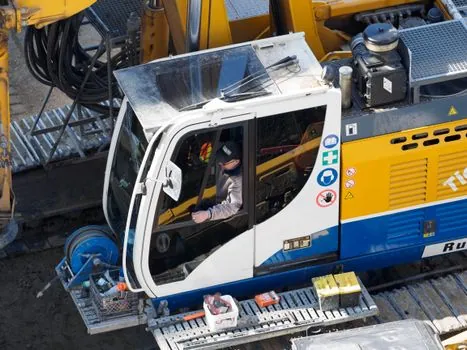
Diesel machines are suitable where fuel availability, long continuous duty and established service support dominate. Electric machines offer the strongest documented exterior-noise advantage, particularly for urban work and early or extended operating windows [S4]. Legacy machines remain serviceable when noise, vibration and exhaust condition are independently verified rather than judged from age [S2].
None of these options is universally correct. The decision should use measured exposure and site restrictions, not a marketing label such as “quiet cab.”
Where direct generation comparisons fail
Model year alone does not establish a safe or unsafe cab. A 2024 machine with damaged seals can outperform an older machine with maintained insulation, and a rebuilt legacy unit can close part of the gap [S2][S3]. The governing variables are engine load, operating speed, attachment type, test geometry, microphone position and the definition of the acoustic metric [S3].
Excavators are mobile sources that may alternate between full-power and reduced-power periods, unlike stationary pumps or compressors [S3]. A single low reading taken while the engine is idling can conceal a much higher level during hydraulic movement or digging. Conversely, a peak exterior reading can overstate steady cab exposure if the operator is shielded by the enclosure [S2][S3].
Field testing should record LAeq, peak or Lmax, measurement position, engine condition, duty cycle and sampling duration. For worker protection, the priority remains cumulative 8-hour dose rather than a marketing comparison between cab generations [S2].
Standards and purchasing evidence

The NIOSH Recommended Exposure Limit cited in the field study is 85 dB(A) as an 8-hour time-weighted average, and OSHA dose criteria were also applied [S2]. The research additionally describes construction-equipment sound levels of 80–120 dB(A) and notes that technologically achievable engineering controls can reduce the sound reaching a bulldozer operator by as much as 3 dB(A) [S2].
Noise inventories span equipment information from the 1970s through 2006 and identify manufacturers, agencies and suppliers as potential data sources [S3]. For procurement, request the declared noise metric, test distance or operator position, standard or regulation cited, and engine-load condition. The 80 dBA cab average, 93 dB exterior reference, 13 dB electric-machine reduction and 16% vibration reduction each have different scopes [S1][S4][S5][S6].
Use the external baseline of 80 dBA for the EC18 comparison and the cited 93 dB diesel equivalent, then verify each procurement model against the same test basis [S4]. This prevents a battery-electric excavator comparison from being confused with an operator dose assessment.
The next decision point is a same-duty-cycle baseline: measure the existing excavator and shortlisted replacements at the operator position, calculate exposure over the planned shift and record engine, exhaust, hydraulic and enclosure condition [S2].