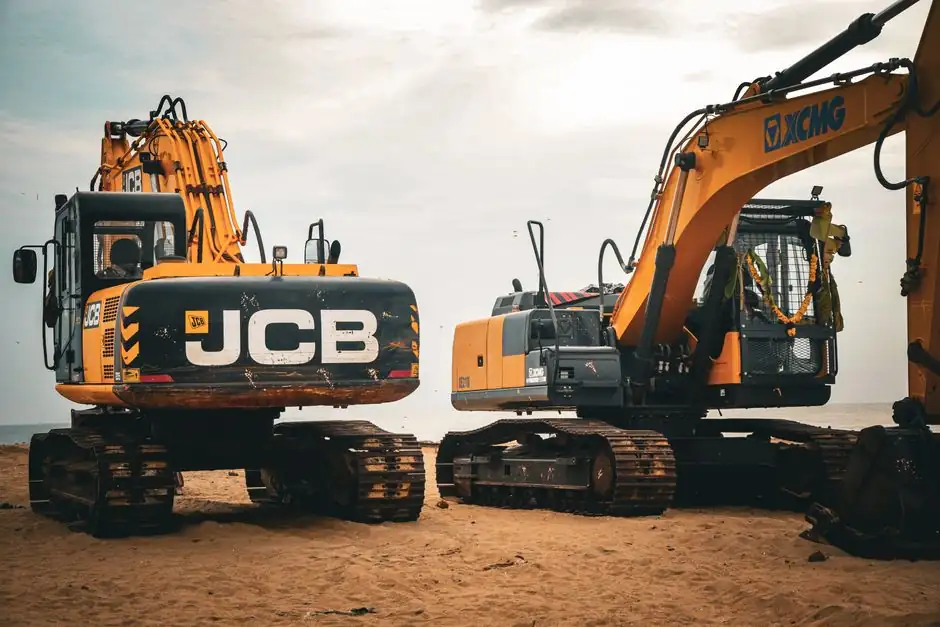
An excavator swing-speed specification is normally expressed in rpm for upperstructure rotation, with the SANY SY235C specification listing a swing speed of 11 rpm [S4].
The figure describes platform rotation, not engine crankshaft speed or travel speed, and its usefulness depends on whether the manufacturer states the test condition, machine class, braking arrangement, and operating mode.
What Excavator Swing Speed in RPM Means
Excavator swing speed in rpm is the rotational rate of the upperstructure, including the boom, arm, bucket, counterweight, cab, and house, around the lowerstructure swing bearing. A 10 rpm rating means one upperstructure revolution in 6 seconds. A 7.0 rpm rating means one revolution in approximately 8.6 seconds. [S3]
Published specifications show that this parameter varies with machine architecture and class: the study of an independent swing system concerns a 48-ton-class excavator [S5], the LiuGong 930E specification lists 10.3 rpm [S6], and the SANY SY235C specification lists 11 rpm [S4].
The rpm figure should not be confused with engine rpm. Operating recommendations for an excavator engine ranged from about one-half throttle for grading to four-fifths of maximum rpm for general digging, while full throttle was reserved for difficult ground [S1]. Swing rpm is a separate machine-performance value even when engine and hydraulic operating points influence the acceleration and deceleration of the upperstructure.
Published RPM Values Across Machine Types
The Gradall 4310 III has a 48 kW swing motor and a hydraulic system with 4,200 psi, or 290 bar, swing pressure [S3].
The Doosan Infracore 48-ton-class research machine used an independent swing circuit with theoretical speeds of 8.817 rpm and 9.000 rpm [S5]. That arrangement used a dedicated swing pump and motor in a closed hydraulic circuit, removing pressure loss associated with sharing the swing pump with other actuators and allowing swing kinetic energy to be regenerated during deceleration [S5].
The LiuGong 930E lists 10.3 rpm and swing torque of 77,444 lb-ft, equivalent to 105,000 N-m [S6]. At the opposite end of the published examples, the SANY SY235C lists 11 rpm [S4]. These figures are model specifications, not a universal sizing rule for every excavator weighing the same nominal class.
How to Compare Swing-Speed Specifications

Published values must be compared against four criteria: rated versus no-load speed, machine mass, swing torque, and the operating envelope. The comparison below shows why a single rpm number is insufficient when selecting an excavator. [S1]
Gradall 4310 III: 48 kW swing motor and 4,200 psi, or 290 bar, swing pressure [S3].
Doosan 48-ton-class research machine: theoretical speeds of 8.817 rpm and 9.000 rpm, dedicated swing pump and motor, closed swing circuit, and measured improvement of 12.3% in pump power versus the comparison system in excavating-test mode [S5].
LiuGong 930E: 10.3 rpm and 77,444 lb-ft or 105,000 N-m swing torque [S6].
SANY SY235C: 11 rpm, published in the model specification [S4].
On a cost-and-control comparison, a lower-rpm machine can suit precision positioning if its torque and brake control are adequate, while a higher-rpm model can improve repositioning time when payload stability and hydraulic control permit. The rpm value alone does not establish cycle time, because loaded acceleration, deceleration, counterweight behavior, boom geometry, and the operator's command profile also determine how quickly the upperstructure moves and stops.
Where the RPM Figure Matters in Real Work
Swing speed matters most in repetitive trenching, loading beside an excavator, and truck placement where the upperstructure changes direction several times per cycle.
One operator recommendation was to run an excavator at around four-fifths of maximum rpm for general digging and at full power for difficult work [S1]. That recommendation concerns engine operating speed, but it demonstrates why slew rate cannot be evaluated apart from boom response and coordinated movements.
For an asphalt paver or truck-loading workflow, that coordination can be more valuable than a small increase in maximum slew rpm.
Conditions That Make a Rated RPM Misleading
A maximum no-load slew figure does not guarantee that the machine will achieve 10.3 or 11 rpm with a loaded bucket, elevated boom, or material spreading off-center. The rating condition matters because hydraulic flow, relief pressure, available motor torque, machine geometry, and acceleration resistance determine loaded performance [S3][S5][S6].
Independent swing systems create a further comparison issue. A dedicated circuit can remove pressure losses caused by sharing one pump among several actuators and can recover kinetic energy during deceleration [S5]. The Doosan study evaluated a 48-ton-class excavator and reported 12.3% lower pump power in excavating-test mode, while feed-forward control held engine speed within 4% of the reference rpm [S5]. That result describes a particular test mode and cannot be transferred to an arbitrary production machine without matching the test conditions.
Braking is another necessary part of the specification. The Gradall 4310 III uses a spring-set, hydraulic-release wet-disc parking brake and provides dynamic braking through the hydraulic system [S3]. A buyer comparing rpm should request the corresponding brake type, deceleration performance, and any high-inertia load limits. A fast maximum rotation with poor control at stop is not equivalent to efficient positioning.
Procurement and Operating Questions to Resolve
Request five items before treating swing rpm as a procurement value: whether the rating is no-load or loaded, the rated machine configuration, the swing torque, the brake arrangement, and whether the machine provides selectable swing speeds. The Link-Belt 145X4 material refers to rpm settings for precise control in heavy lifting, fine grading, and leveling work [S8], illustrating that operating-mode selection can be more useful than one fixed maximum.
For acceptance testing, measure the time required for a specified number of revolutions and separately record stop distance or settling behavior. Define whether the boom is empty or loaded, whether the bucket is extended, and whether the test includes acceleration and braking. Do not compare a 7.0 rpm telescopic excavator specification directly with a 10.3 rpm crawler specification without checking these conditions.
For fleet planning, track swing-related fuel use, cycle time, operator complaints about abrupt stops, and the number of corrective repositioning movements per loading cycle. These operating records establish whether an RPM target is appropriate for the actual job rather than merely present on a sales sheet.
Qualification and Traceability

Public excavator documents use several labels for the same basic parameter, including swing speed, boom-rotating speed, and theoretical swing speed [S3][S5][S6]. A traceable specification should identify the exact model, document title, rated condition, units, and publication context. It should also preserve the LiuGong 930E figure of 77,444 lb-ft, or 105,000 N-m [S6].
The available evidence supports a 7.0–11 rpm span across the cited specifications, with 8.817 rpm and 9.000 rpm appearing as theoretical values in the independent-swing study [S3][S4][S5][S6]. That range is a comparison set, not a guaranteed industry-wide limit. Machine configuration, hydraulic circuit, operating condition, and published test method determine the value that belongs in a purchase or acceptance specification.
For the next purchasing decision, request the rated swing condition, swing torque, brake specification, and low-speed control data from each bidder, then validate the selected model under representative digging or truck-loading conditions.