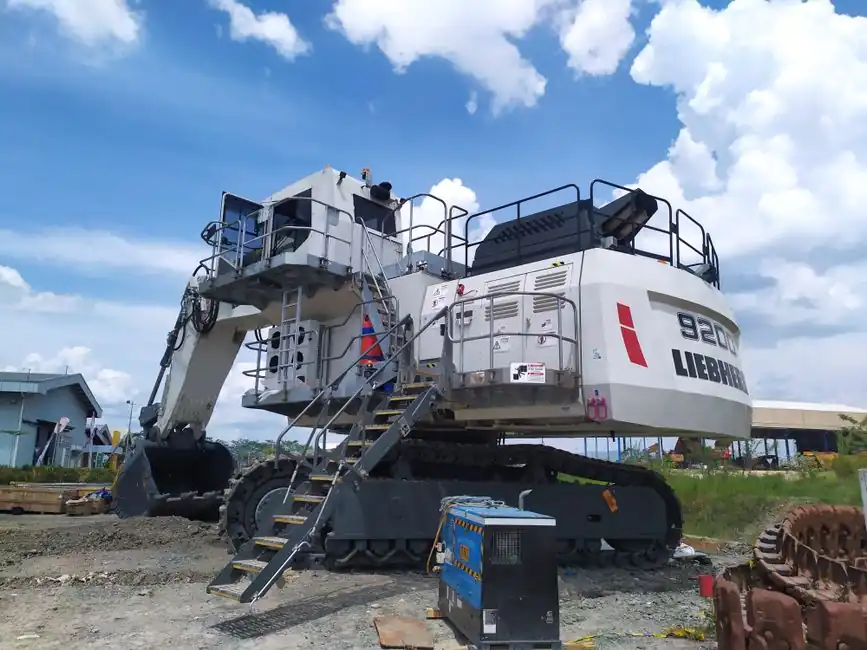
Hydraulic excavator couplers allow operators to change attachments without leaving the cab, while manual couplers require hands-on changeovers.
The practical selection depends on attachment-change frequency, machine hydraulic capability, attachment pin geometry, operating weight, maintenance capacity, and the cost of operator downtime [S2][S5].
Decision Factors for Quick Coupler Selection
A manual coupler is the sensible choice when attachment changes are infrequent, the machine is a compact mini excavator without suitable hydraulic plumbing, and the operator can work at ground level without unacceptable exposure [S2]. A hydraulic coupler may be appropriate when attachments are changed frequently, cab-based operation is important, or minimizing operator interaction with the attachment is a safety priority.
Match the coupler to machine size, weight class, and pin dimensions before comparing systems [S5].
The battery-electric excavator decision does not determine coupler type by itself. Hydraulic couplers consume machine hydraulic power and may require additional plumbing, while a manual coupler avoids hydraulic integration but leaves the change cycle dependent on ground-level work [S2][S5].
Hydraulic and Manual Couplers Compared
Hydraulic couplers provide the fastest changeover and the lowest operator exposure, but they introduce hoses, an actuator, controls, hydraulic circuit demands, and more failure points than a mechanical system [S2][S5]. Manual couplers are simpler, generally cheaper to purchase, and easier to repair, yet every change requires the operator to exit the cab and physically secure the attachment [S2].
Pin-grab and wedge-lock architectures must also be distinguished. Pin-grab systems can engage tools with standard mounting lugs while leaving the attachment pins installed; hydraulic cylinders commonly force one or both jaws to grip those pins, although manual variants use screws, bolts, or cams [S3]. Wedge-lock systems require special attachment lugs, use a wedge between mating surfaces, and are retained with 2 bolts [S3].
The comparison is straightforward: hydraulic wins on change speed and cab access, manual wins on simplicity and purchase cost, pin-grab improves attachment compatibility, and wedge-lock preserves the stick-pin-to-bucket-teeth distance but limits attachment geometry to one mounting pattern [S2][S3][S5].
Where Each Coupler Performs Best
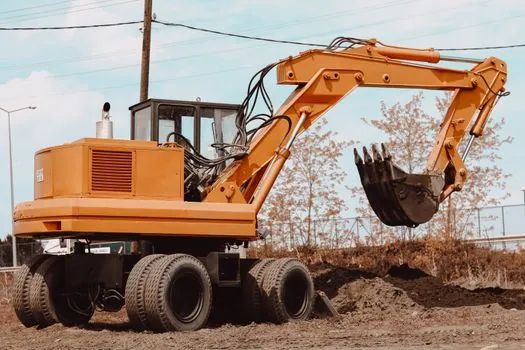
Manual couplers fit dedicated or low-changeover work such as continuous digging, limited demolition, or a project using one attachment for an extended period [S2]. They are also practical for small mini excavators that cannot support a hydraulic coupler without added plumbing [S2].
Hydraulic couplers fit trenching, grading, demolition, and mixed-attachment fleets where changes occur repeatedly during a shift [S5]. In-cab control removes the need to climb down, handle heavy pins, and work beside the attachment interface [S1][S5]. The mechanical coupler's advantage is strongest on machines with infrequent swaps, low hydraulic-system complexity, and maintenance resources focused on simple mechanical inspection [S5].
A manual coupler is a poor fit for a high-frequency rental fleet where every saved minute affects machine utilization. A hydraulic coupler is a poor fit for a small excavator with no practical hydraulic connection, an attachment mix requiring incompatible mounting standards, or an operator who lacks a structured pre-use locking check [S2][S5].
Geometry, Payload, and Compatibility Limits
Pin-grab couplers accept standard-lug attachments more broadly, while wedge-lock couplers require a special set of attachment mounting lugs [S3]. This compatibility decision can dominate ownership cost: a pin-grab arrangement may avoid buying dedicated wedge-lock tools, although the coupler itself may cost more [S3].
For primary excavation work, evaluate the complete tool, coupler, linkage, and hydraulic circuit rather than assuming interchangeable attachments will produce equal productivity [S3].
Inspection must therefore cover the locking elements, fasteners, pin fit, hydraulic hoses, and actuator rather than relying only on a visual locked indicator [S3][S4]. Standard pin dimensions and machine weight class remain essential procurement data, and the research identifies no universal cross-manufacturer fit [S3][S5].
Hydraulic Failure Modes and Maintenance

Do not convert an inoperative hydraulic quick attach to a manual lever without verifying whether the existing frame, attachment interface, locking geometry, controls, and structural provisions are compatible [S4]. The same repair case required 2 distinct orientation corrections, showing why generic bypass instructions are unsafe [S4].
Manual systems have fewer hydraulic components and generally lower maintenance requirements [S2][S5]. Hydraulic systems need closer attention to hose condition, actuator function, electrical control, line routing, and mechanical wear [S4][S5]. Before buying an asphalt paver attachment or other high-value tool, confirm that the attachment's pin and lug pattern matches the selected coupler and that its operating load remains within the excavator and coupler limits [S2][S3][S5].
Installation and Procurement Checklist
A hydraulic installation requires at least 4 verified interfaces: the excavator mounting structure, hydraulic power and return lines, an electrical control path, and the coupler actuator [S2][S4]. A manual installation removes the hydraulic and electrical interfaces but retains the need for a compatible mechanical attachment interface [S2][S5].
Specify 5 items in the purchase record: excavator make, model, serial or serial range, machine operating weight, and attachment pin dimensions [S3][S5]. Add the attachment mounting type, whether the tool has standard lugs or dedicated wedge-lock lugs, and whether existing attachments must remain compatible [S3].
For fleet economics, record the number of planned changes per shift, average operator ground time for each change, attachment weight, and the value of machine uptime [S1][S2][S5]. Select hydraulic only when faster changes or reduced manual handling produce a defensible return against higher purchase, installation, and maintenance burden. Otherwise, the manual coupler remains the lower-complexity engineering choice [S2][S5].
Track 2 operational signals after installation: elapsed minutes per attachment change and the number of failed or aborted changes per month [S1][S2][S5]. If hydraulic changes consistently save meaningful downtime without hose, actuator, or control faults, retain it for high-use work; if utilization is low, a manual coupler limits capital and maintenance exposure [S2][S5].