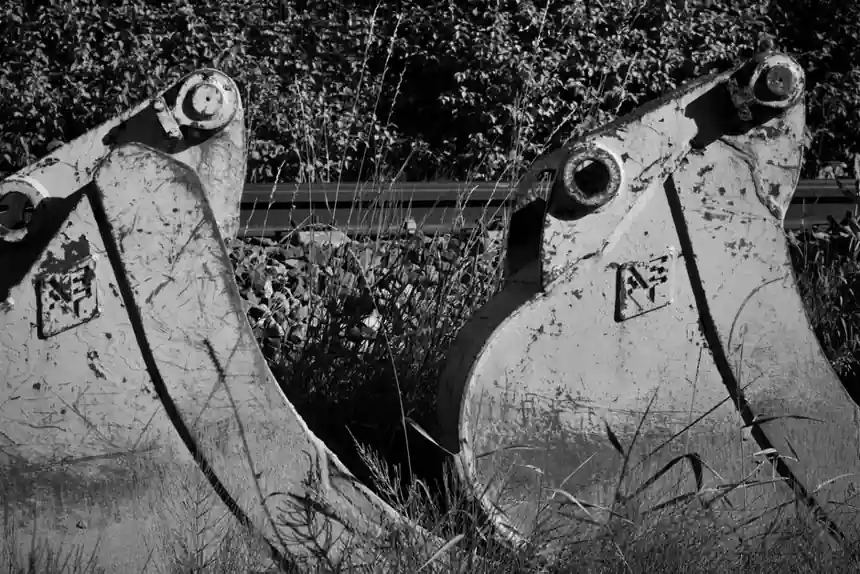
Steel tracks are the stronger default for rock, demolition debris, steep mud, and high-hour undercarriage work, while rubber tracks better protect pavement and reduce vibration [S1][S7].
The decision for an excavator is based on the dominant surface, expected abrasive exposure, maintenance capacity, traction demand, and acceptable ground damage, not simply track price [S1][S3].
Steel Tracks for Abrasion, Traction, and Service Life
Steel tracks tolerate sharp rocks and demolition debris that can cut or tear rubber, and their rigid grousers provide strong traction on rocky, muddy, and uneven ground [S1][S7]. Rubber tracks distribute the machine’s weight more evenly, reducing the risk of sinking on softer terrain, while steel tracks require regular lubrication and track-tension adjustment [S1].
Steel generally lasts longer when properly maintained, particularly in abrasive work, but requires more frequent lubrication and track-tension adjustment [S1]. A field example documents just over 800 operating hours on rubber tracks, expected to be just under 1,000 by the end of the season, with cuts and slashes in natural-stone work [S5]. That experience is machine and site specific, so it should not be treated as a universal service-life figure.
Steel tracks impose harsher loads on the undercarriage and drive components than rubber tracks [S8]. They also generate more noise and vibration and can damage asphalt, lawns, and other sensitive surfaces [S1]. For work dominated by rock, demolition, deep mud, or continuous high-hour operation, steel is the defensible specification despite the maintenance burden.
Rubber Tracks for Pavement and Sensitive Ground
Rubber tracks spread machine weight more evenly, reduce ground marking, operate more quietly, and generally require less intensive maintenance than steel tracks [S1]. Their elasticity reduces transmitted vibration and gives the operator a smoother ride on pavement and firm ground [S1][S2][S3].
Rubber is appropriate for landscaping, urban excavation, pipe work beside sensitive surfaces, and work on lawns where protecting finished ground is part of the job [S1]. Their limitations are sharp-object cuts, lower abrasion resistance, weaker performance on rough terrain, and potentially lower traction on wet mud, snow, or smooth side slopes [S1][S3].
Other operators reported extensive cuts after roughly 800–1,000 hours in natural-stone work [S5]. These cases show why average life is less useful than exposure tracking: rock edges, steel bars, broken glass, and hot-cut debris control the wear rate.
Comparison Across the Main Selection Criteria
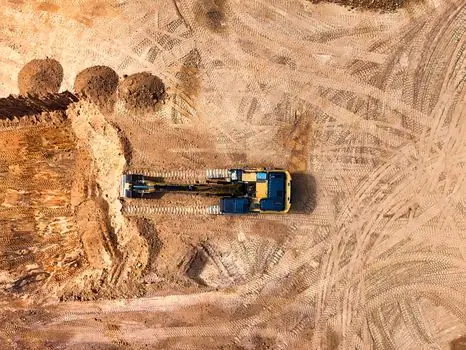
Steel wins on impact resistance, abrasive-duty life, traction on grousers, and service-life potential; rubber wins on surface protection, ride quality, noise, and lower-disturbance operation [S1][S7][S8]. Steel requires recurring lubrication and tension adjustment, while rubber maintenance is usually less intensive [S1]. Rubber can wear or tear faster in abrasive conditions, whereas steel is more likely to damage asphalt and finished landscaping [S1][S3].
Cost should be evaluated as replacement cost and downtime, not the initial track price alone [S3]. One owner estimates that mini-excavator rubber tracks last about 1,200–1,600 hours [S4]. A landscaping-company owner reports just over 800 rubber-track hours on a new CAT 305 in natural-stone work, expecting the total to be just under 1,000 by the end of the season [S5]. Neither estimate is a specification, but both illustrate how abrasive terrain can reverse the apparent economic advantage of a lower-cost rubber track.
Steel Tracks with Rubber Pads: A Conditional Hybrid
Steel tracks with bolt-on rubber pads can reduce surface damage while retaining a steel track structure, but they cost more than either basic rubber or basic steel configurations [S2][S4]. Their traction and ride depend strongly on pad design: rubber pads act as grousers but can be slippery on wet mud or steep side slopes, while flat pads can reduce tractive effort compared with aggressive steel grousers [S4][S5].
Application-Based Selection Rules
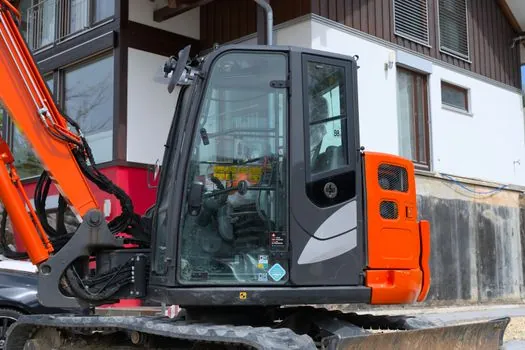
Specify steel tracks on sites with sharp rocks or demolition debris that could damage rubber tracks [S1][S7]. Rubber tracks are suitable for landscaping and other work on delicate surfaces, while their flexibility provides a smooth ride with less vibration [S1].
Do not fit rubber where the work cycle repeatedly crosses sharp rebar, broken concrete, sharp-edged natural stone, or hot debris. Hybrid steel-and-pad undercarriages belong in the middle zone, especially where paved access is frequent but rugged climbing is limited [S4].
For a machine operating mainly in urban landscaping or on pavement, full rubber is the practical default. For a demolition contractor working every day among rubble, steel is the lower-risk choice despite greater driveline loading and maintenance [S1][S7][S8].
Maintenance and Operating Controls
Steel-track maintenance should include regular lubrication and tension adjustment, because the rigid assembly transmits higher shock and vibration into the undercarriage [S1][S8]. Rubber requires less intensive routine maintenance, but operators must still inspect for cuts, longitudinal tears, worn lugs, and exposed reinforcement before damage propagates [S1][S5].
Track tension is not a free operating adjustment for rubber systems. A field discussion identifies the lack of chain slack as a reason rubber can transmit greater driveline loads when debris enters the track [S4]. Avoid carrying debris through the rollers, and inspect the track, rollers, idlers, sprockets, and chaincase as one system rather than treating replacement of the rubber belt as an isolated repair.
Track width, machine mass, ground pressure, and soil bearing capacity also affect the selection. Track width remains an undercarriage sizing decision within the manufacturer configuration, while material choice governs impact resistance, ground protection, and traction. For soft-soil applications, compare machine mass and contact area before assuming that the rubber option will prevent sinking [S1].
Specification Checklist for Procurement
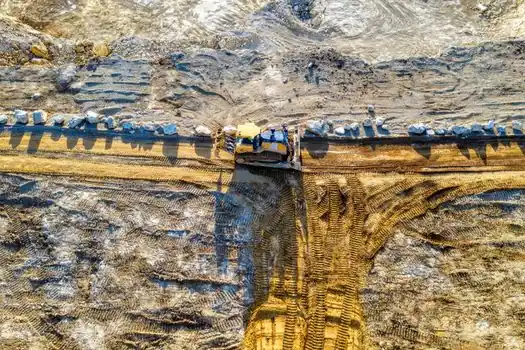
Record the primary surface, secondary surface, average daily operating hours, percentage of excavation versus travel, expected abrasive debris, maximum slope, and required finished-surface protection. Use steel when the terrain matrix contains sharp rock or demolition debris and machine uptime is important; use rubber when pavement, landscaping, noise, and ride quality dominate [S1][S7].
For the hybrid option, require the manufacturer to approve the steel track, pad, roller, sprocket, idler, and finalizer combination, including clearance and attachment security [S2][S4]. Do not infer approval from visual compatibility or from a one-machine owner experience. The procurement package should also specify replacement intervals based on the machine’s own inspection criteria rather than a generic hour figure.
Before delivery, inspect the complete undercarriage, not only the visible track face. Record rubber cuts, exposed reinforcement, grouser depth, and drive-component condition, or for steel, grouser wear, pin and bushing condition, roller and idler wear, sprocket profile, and track tension [S5][S8]. Track material is the last part of a broader undercarriage inspection.