
Food plants handling flour, sugar, cornstarch, cocoa, and grain dust face combustible-dust zones governed by ATEX, IECEx, and NFPA 652, with sugar dust minimum ignition energy as low as 10 mJ making even static discharge a credible ignition source [S3]. Selecting the right explosion-proof electrical package starts with a Dust Hazard Analysis (DHA) and ends with enclosure ratings matched to washdown chemistry.
The economic case is concrete: a DHA is mandatory under NFPA 652, the IECEx scheme is recognised in over 30 countries, and over-specifying a Zone 22 area with Zone 20 hardware typically doubles hardware cost without lifting safety margin [S3]. This guide walks the spec path a process engineer should follow in 2026.
Dust Hazard Profile: Why Food Powders Are Not "Soft" Hazards
Organic food dusts sit in Kst 80-250 bar·m/s with Pmax 6-11 bar, putting them in the same explosion severity class as many chemical intermediates [S3]. Sugar dust's minimum ignition energy of 10-30 mJ is well below the energy a worker can store on a synthetic apron, and cocoa at 50-150 mJ still ignites from a relay contact that has not been suppressed [S3].
Flour milled to fine fractions drops ignition energy to 30-100 mJ, and cornstarch reaches Kst 150-250 bar·m/s, the most violent of the common food dusts [S3]. These numbers, not the dust's "edible" character, drive the equipment spec. A facility that treats its sugar hopper as benign because the contents are food-grade has already failed the DHA step.
Zone Mapping: Zone 20, 21, 22 in a Flour or Sugar Plant
ATEX and IECEx split combustible-dust areas into three zones by frequency and duration of cloud presence, and the spec differs sharply between them [S3]. Zone 20 covers the inside of silos, dust collectors, and mixers where a cloud is continuous; Zone 21 covers the immediate envelope around filling and grinding equipment; Zone 22 covers packaging halls and warehouses where clouds are infrequent and short-lived [S3].
For NEC/CEC users in North America, the equivalent is Class II Div 1 (analogous to Zone 20/21) and Class II Div 2 (analogous to Zone 22), with NEMA 7 enclosures rated for indoor Class I gas environments and NEMA 4X supplying the weatherproof and corrosion-resistant shell needed for washdown [S6]. A spec-first engineer draws the zone map before any purchase order, because the same explosion-proof light fitting can carry a Zone 21 or Zone 22 marking but not both with the same certification cost.
Enclosure and Protection Concept: NEMA 4X vs NEMA 7 vs Increased Safety
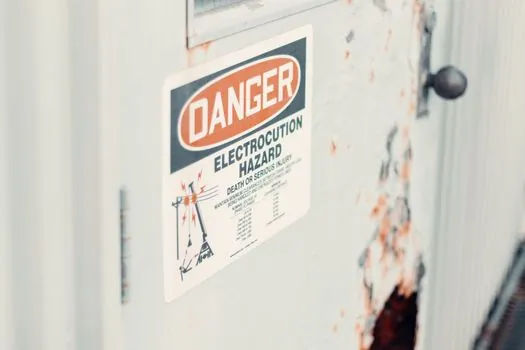
NEMA 4X delivers weatherproof, corrosion-resistant protection and is the right call for washdown aisles and outdoor equipment pads in food plants; NEMA 7 is the flameproof (explosion-proof) enclosure designed for indoor Class I Div 1, containing any internal ignition without propagating it [S6]. The two are not interchangeable, and stainless 304 or 316L is the de facto material for NEMA 4X bodies in CIP environments.
IEC-aligned concepts layer on top: "Ex d" (flameproof) is the closest analogue to NEMA 7, "Ex e" (increased safety) is common for terminal boxes and explosion-proof distribution gear in Zone 21/22, and "Ex t" (dust by enclosure) is the modern dust-specific concept under IEC 60079-31. The selection call is driven by zone, group (IIIA combustible flyings, IIIB non-conductive dust, IIIC conductive dust), and the chemical resistance of gaskets to the sanitiser in use.
Gas and Dust Group Selection: IIA / IIB / IIC and the IIIA-IIIC Series
For gas atmospheres, equipment groups IIA, IIB, and IIC reflect decreasing maximum experimental safe gap (MESG) and increasing hazard, with IIC (hydrogen, acetylene) being the most onerous and automatically covering IIA and IIB on a properly certified unit [S8]. Food plants rarely see IIC gases, but the spec writer should still confirm the worst-case gas or vapour (e.g. ethanol from cleaning or ammonia from refrigeration) before locking the group marking.
For dust, the IIIA (flyings), IIIB (non-conductive), and IIIC (conductive) groups determine whether the enclosure must also resist dust penetration at the joint surfaces, with IIIC requiring the tightest gasket interface. Sugar and cocoa are IIIB, but cross-contamination from metal-recycling lines or fertilizer docks sharing the site can push a zone to IIIC, which in turn rules out several economy explosion-proof button lines.
Selection Criteria Comparison: Which Concept Fits Which Zone

Across the four most common protection concepts used in food dust zones, the spec trade-off is concrete: flameproof Ex d (NEMA 7) handles Zone 1/21 with internal ignition allowed, costs roughly 2-3x the equivalent industrial unit, and is the only concept rated for IIC gases; increased safety Ex e only suits Zone 2/22 where no internal ignition is expected during normal operation; Ex t (dust enclosure) is the cleanest fit for Zone 21/22 dust service with no gas exposure; and intrinsic safety Ex i loops are the right call for low-energy instrumentation and control signals where cabling simplicity outweighs the need for heavy enclosures [S2][S3][S6].
Cost discipline comes from matching concept to zone, not from cutting certification. A Zone 22 explosion-proof light fixture on Ex e or Ex t is typically 30-50% cheaper than the same luminaire on Ex d, but it must not be installed where the DHA has flagged a Zone 21 cloud source. Over-specifying a Zone 22 area with Ex d hardware is a common budget leak in greenfield food plants.
Installation Practices: Receptacles, Cabling, and Grounding
In washdown zones, explosion-proof receptacles paired with Type TC-ER or MC-HL cable and corrosion-resistant stainless hubs are the default [S1]. Conduit seals within 18 in (450 mm) of any enclosure boundary in a classified area remain the NEC requirement, and the use of nickel-plated brass or 316 SS plug bodies prevents the galvanic corrosion that destroys NEMA 4X ratings in CIP areas over a 3-5 year horizon.
Grounding and bonding deserve the same engineering weight as the enclosure. Static discharge on a non-bonded conveyor or duct section can deliver the 10 mJ needed to ignite sugar dust, so the spec should call for dedicated bonding jumpers across flexible joints, anti-static conveyor belting rated to ISO 284 with surface resistance below 1x10^9 ohm, and surge protection on any explosion-proof control panel that crosses a building expansion joint.
Who This Spec Is For, and Where It Is Not

This spec path is for food plants that handle combustible organic dusts in enclosed or semi-enclosed process equipment: flour mills, sugar refineries, cocoa and chocolate lines, cornstarch and starch plants, and dairy powder facilities with spray dryers. It is also for OEMs building skidded mixers, sifters, and pneumatic conveyors that will be installed in Zone 21 or 22 of a customer plant. [S3]
It is not the right fit for a packaged-food assembly room where the only dust is incidental and the DHA returns "no zones", for an outdoor grain silo handled under farm-bin codes rather than NFPA 652, or for a brewery whose hazard is ethanol vapour rather than dust. For those, the gas-group path and the Food-Grade Caliper and Micrometer Spec Map for 2026 companion selection guide cover the adjacent scope.
Traceable Signals to Watch in the Next Two Quarters
Two signals are worth tracking: the publication of the next NFPA 652 revision cycle, which historically tightens DHA documentation intervals and DHA team competency requirements, and the IECEx certified-equipment scheme's ongoing expansion of the Ex t dust-only family, which is gradually displacing Ex d in Zone 21/22 service for cost and weight reasons [S3][S4]. A third, more local signal is the harmonisation status of IEC 60079-0 with regional food-sanitation standards, because stainless 316L enclosures with food-grade silicone gaskets are still a niche sub-category that several major certifiers do not yet list.