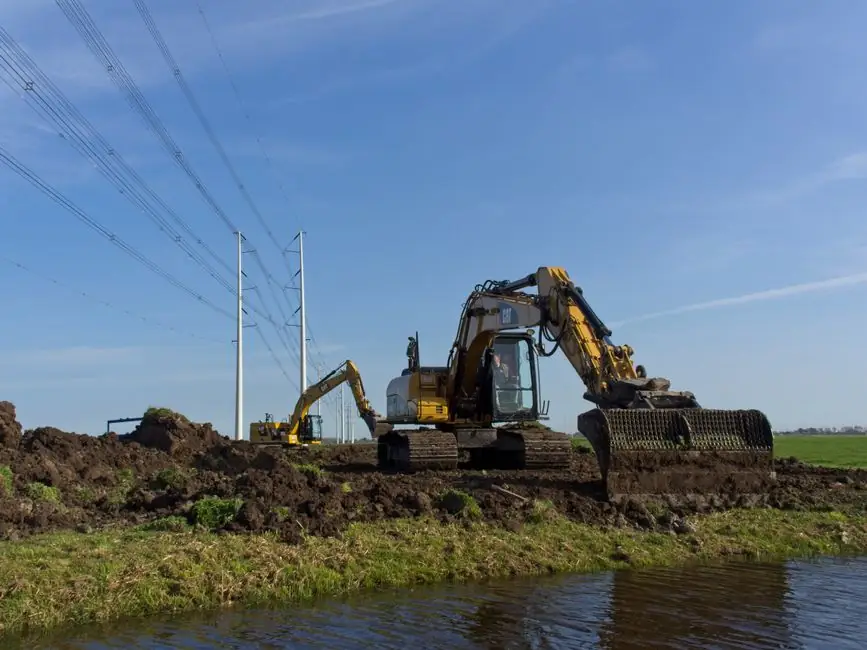
Construction-site temporary power in flammable atmospheres (tank farms, refinery turnarounds, LNG builds, mining prep) is governed by the same Zone/Division logic as a permanent plant, but the equipment itself is often rented, repositioned weekly, and exposed to weather and physical abuse [S2][S3].
On a 2025-2026 build, the package typically includes flameproof distribution panels, increased-safety junction boxes, explosion-proof lighting on towers, and a stack of cable glands, conduit seals, unions, and drains; every item must carry a valid third-party certificate for the Zone or Class/Division it lands in [S2][S5].
Classify the Site Before You Open a Catalog
Under IEC 60079 / ATEX 2014/34/EU, gas zones are split as Zone 0 (continuous), Zone 1 (likely in normal operation), and Zone 2 (unlikely, short duration); dust zones parallel as 20/21/22; a Zone 1 gas site and a Class I, Division 1 NEC site describe the same risk profile but accept different certification marks [S2][S3][S5]. For mining surface work, Group I applies; for surface gases, Group II; for dusts, Group III [S2].
Construction sites are dynamic: a fuel-blending pad built for Zone 2 can become Zone 1 once a temporary solvent line is flanged within 1 m of a junction box, so area classification should be reissued at each phase gate, not copied from the FEED package [S3][S5]. Get this wrong and the AHJ redlines the package, the inspector holds the energization permit, and the schedule slips by weeks, not days.
Pick the Protection Concept by Function
Five protection types dominate site temporary power: flameproof enclosure "Ex d" contains an internal blast, increased safety "Ex e" prevents sparks and hot surfaces, pressurization "Ex p" holds a clean gas blanket, intrinsic safety "Ex i" limits loop energy below ignition threshold, and dust enclosure "Ex t" keeps combustible dust off hot parts [S2][S5].
For a site distribution panel that switches contactors under load, Ex d is the default; for a marshalling box with only terminals and no switching, Ex e saves cost and weight; for instrument loops running 4-20 mA + HART into a hazardous area, an intrinsic-safety barrier on the safe side is often cheaper than a heavy Ex d enclosure on the field side [S2][S5]. IP66 to IP68 ingress is the practical floor for outdoor site gear, since rain, hydrotest water, and dust are guaranteed [S5].
Conduit Seals, Glands, and Fittings: The Failure Hotspot
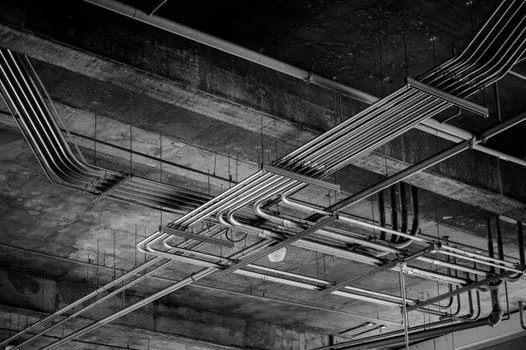
Conduit seals are required within 18 in. (450 mm) of any explosion-proof enclosure entry in Class I work, and that single rule decides whether the install passes or fails [S1]. A seal fitting substituted with a standard connector, or a 3/4-in. fitting cross-substituted purely by size, is the most common redline source on a packaged skid [S1].
Specify seals, unions, breathers, drains, and reducers on the same drawing set as the panel layout, with thread form (NPT vs. metric M) and material called out; stainless AISI 316L is the default for coastal and chemical builds, cast aluminum for dry land, and brass only when budget and corrosion align [S1][S2][S5]. Stopping plugs must match the certification, not just the thread, and breather drains are mandatory where temperature cycling can suck moist air into a sealed enclosure [S1][S5].
Distribution, Controls, and Lights on a Working Site
An explosion-proof distribution panel for a construction site typically uses an Ex d cast enclosure rated to a gas group (IIA/IIB/IIC), a temperature class (T4/T5/T6), and an ambient range of roughly -20 to +60 C; matching the site gas group to the certificate is non-negotiable because hydrogen (IIC) demands tighter flamepath tolerances than propane (IIA) [S2][S3].
Explosion-proof push buttons and indicator stations on crane cabs, compressor skids, and pump houses are usually Ex e or Ex d modules with IP66 housings; pendant control stations on site are commonly Ex d with a reinforced cable and strain-relief gland to survive daily handling [S2][S5]. For tower lighting and area floodlights, explosion-proof light fixtures with Ex d or Ex e body plus tempered borosilicate glass and IP66 to IP68 rating are specified, with the surface temperature class matched to the gas or dust autoignition point [S2][S5].
Materials, Thread Forms, and Standards: A Compact Comparison
Stainless AISI 316L beats AISI 304 on chloride resistance, costs roughly 20-40% more, and is the right call near marine or acid vapor; aluminum alloys cut weight for tower-mounted fixtures but need a powder coat or anodized finish to survive a 12-18 month site campaign [S2][S5]. Brass glands are common but dezincification-resistant grades are mandatory for offshore and chemical sites [S5].
Thread form is a frequent cross-border trap: NPT (ANSI B1.20.1) for North American kits, metric ISO 261 for European and most IECEx-certified gear, and BSP only on legacy oil and gas packages; mixing them requires certified adapters, not field hacks [S1][S5]. Governing standards in practice are IEC 60079-0/-1/-7/-11/-31 for design and test, ATEX 2014/34/EU for EU placement, NEC 500/501 (UL 1203) for North America, and CSA C22.1 in Canada, with IECEx as the global scheme for cross-region acceptance [S2][S3][S5]. A short verbatim rule from the source material: "In Class I work, conduit seals are generally required within 18 inches of the point where conduit enters an explosion-proof enclosure" [S1].
Who This Spec Path Is For, and Where It Breaks
This approach fits EPC contractors, rental-fleet operators, and HSE managers running turnarounds, pipeline spreads, mining prep, and tank-farm construction where flammable vapors or dusts are present or intermittently present; it is the same logic used in Centrifugal Pump Selection for Desalination when pumps land in Zone 1 or 2, and the area-class-first discipline is shared with Warning tape selection for oil and gas facilities, where spec is driven by the same Zone/Division framework [S3][S5].
It is the wrong tool for purely non-classified outdoor sites (no flammable atmosphere expected), for Zone 0 continuous-gas spaces where only Ex ia is acceptable, and for Group I underground mining where MSHA requirements and IEC 60079 Group I both apply; a related but different spec logic governs Anti-Static Equipment Selection for Firefighting, where the ignition mechanism is electrostatic discharge rather than electrical switching [S2][S5].
Trackable signals to watch: AHJ enforcement of Zone 1 vs. Zone 2 boundaries on temporary structures, IEC 60079-0 revision cadence affecting Ex d impact and IP test thresholds, and rental-fleet harmonization of ATEX/IECEx dual-marked explosion-proof electrical skids so a single unit moves between EU, Middle East, and North American projects without re-certification [S2][S3][S5].