
Basic construction harnesses are typically priced at $60–$100, while professional or industrial fall-arrest harnesses are typically priced at $120–$250 for daily use and higher comfort [S7].
The price difference should be evaluated against the work, attachment configuration, environment, fit, and complete fall-protection system, not by label or brand alone [S1][S2].
Price tiers and primary decision criteria
The practical comparison is $60–$100 for a basic construction harness intended for short-duration general work, versus $120–$250 for a professional or industrial harness intended for daily use and greater comfort [S7]. A low listing price does not make a harness suitable for fall arrest unless it has the required configuration, certification, condition, and compatibility with the rest of the system [S1][S4].
Use four criteria in this order: application and required D-ring, work duration and comfort requirement, environmental exposure, and fit adjustment. A construction-grade designation has little value if the model lacks a dorsal fall-arrest attachment or is not compatible with the intended lanyard, lifeline, anchor, or connector [S1][S4].
For application-specific standards differences, compare EN 361 and ANSI Z359.11-2021 full-body harness requirements before approving a model supplied outside North America.
Basic versus construction-grade feature comparison
Basic construction harnesses are priced at $60–$100 and intended for short-duration general work [S7]. Construction-grade professional harnesses commonly add utility features, padding, and a more refined fit, supporting repeated daily use [S2][S7].
Cost: basic $60–$100; professional $120–$250, a $20–$190 spread between the published ranges [S7]. Intended use: short-duration general work for basic models versus daily use with greater comfort for professional models [S7]. Configuration: a basic product is not automatically a fall-arrest product, because attachment location and D-ring count determine the permitted function [S1][S6].
Environmental value follows configuration. Heat-resistant or Kevlar webbing is relevant to hot work, while corrosion-resistant hardware is relevant to corrosive sites; these requirements can justify a higher-priced model even when the task is short-duration [S1].
D-ring configuration determines the price justification
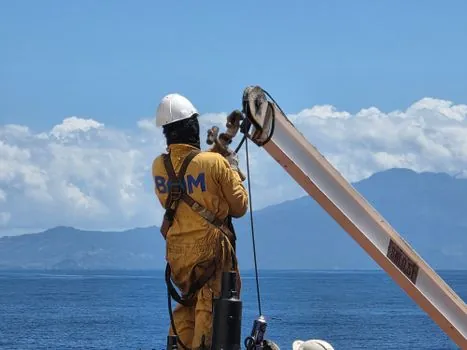
A one-point harness with one dorsal D-ring is configured for basic fall arrest, while a two-point or multipoint harness adds attachment locations for specialized work [S6]. For construction fall arrest, OSHA 1926.502(d)(17) fixes the fall-arrest attachment at the dorsal D-ring [S1].
Side or hip D-rings are for work positioning, not fall arrest; waist or front points can serve climbing systems, and shoulder D-rings are commonly selected for confined-space retrieval [S1]. Pricing should therefore be tied to the actual attachment function. Paying more for extra D-rings is not justified if the wearer will connect the harness to an anchorage or connector in a manner inconsistent with the manufacturer's instructions and the applicable system requirements [S1][S4].
Fit, duration, and environmental requirements
A harness must fit the wearer and the combined weight of the person and carried equipment, with the rating verified by model label or manufacturer documentation [S4]. Fit is more than a size range: shoulder, chest, hip, and thigh straps should be adjustable enough for the crew's body shapes, while remaining snug without restricting movement [S1][S2].
For daily wear, construction-grade comfort can reduce pressure and improve movement compared with an entry-level harness, but the purchaser should test the actual model before standardizing it across a crew [S4].
Environment changes the specification. Hot work may require heat-resistant or Kevlar webbing, and corrosive sites may require an appropriate hardware finish [S1]. A basic $60–$100 model is therefore the stronger candidate for short-duration, low-complexity work only when it has the required attachment, suitable materials, correct fit, and compatible system ratings [S1][S7].
Where each price tier is justified

Choose the $60–$100 basic tier for occasional elevated work, general construction tasks of short duration, and workers who can achieve a secure fit without advanced padding or specialized attachments [S7]. This tier is not appropriate for hot work, corrosive environments, confined-space retrieval, ladder climbing, work positioning, or any task requiring attachment functions beyond the model's certified design [S1][S4].
Choose the $120–$250 professional or industrial tier for daily use, sustained work, greater comfort, or added construction features [S7]. A higher-priced harness does not replace the anchorage, connector, lanyard, self-retracting lifeline, rescue provision, or site-specific clearance assessment [S1]. Price comparison must therefore include whether the complete system remains compatible in size, strength, and function [S4].
Inspection and procurement controls
Used harnesses must be rejected when webbing shows cuts, frays, burns, holes, or broken stitching, and the product label must supply manufacturing and service-life information [S4]. Selection is separate from inspection, so procurement records should identify the exact model, rating, intended attachment, and manufacturer instructions rather than relying on a broad description such as "basic" or "professional" [S1][S4].
OSHA 1910.28 establishes a 4-foot trigger height for many general-industry walking-working surfaces, while OSHA 1926.501 establishes a 6-foot trigger height for construction [S1]. Those thresholds govern when fall protection is required; they do not justify using a body belt for fall arrest, and they do not turn a positioning, climbing, or retrieval harness into a fall-arrest harness [S1][S2].
One retail construction-positioning harness was listed at $597.09 against a regular price of $656.80, illustrating why unusual features or bundled positioning functions can exceed the general $120–$250 professional range [S8]. Confirm the model, configuration, condition, certification, and system compatibility before treating that price as a market benchmark [S1][S4].
Build the next procurement comparison from three records per candidate: verified user and equipment weight rating, permitted D-ring function, and manufacturer inspection or service-life instructions. These records distinguish a genuine construction-grade fall-arrest option from a cheaper general-purpose harness priced with the wrong specifications [S1][S4].