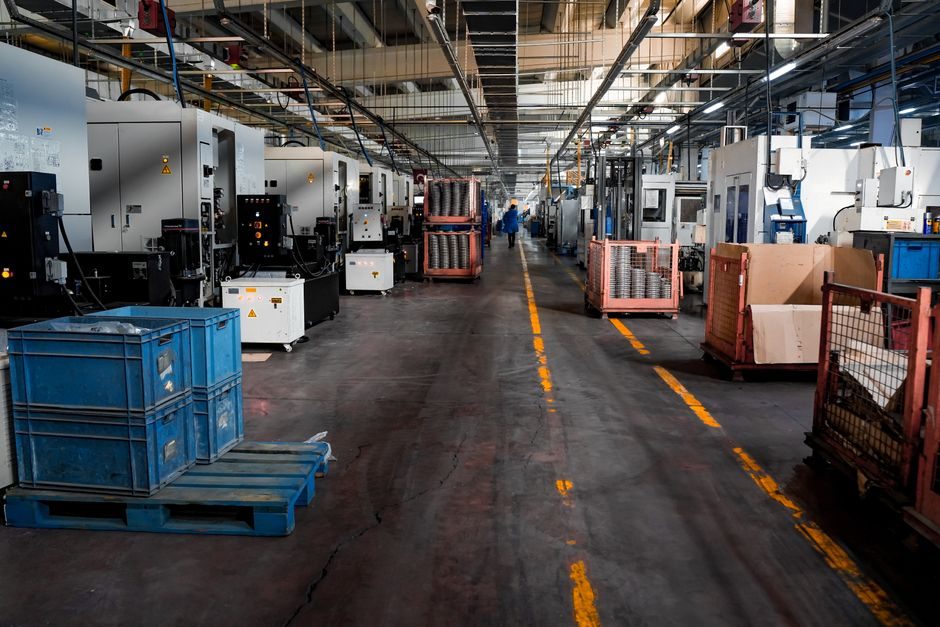
Ferrosilicon is produced by carbothermic reduction of silica in a submerged arc furnace (SAF) operating above 2000 °C, with charge materials of quartz/quartzite, coke plus coal and wood chips, and an iron source such as steel scrap, mill scale, or iron ore [S2]. The primary reduction reaction SiO₂ + 2 C → Si + 2 CO(g) liberates Si that dissolves into the iron bath to form the FeSi alloy, which is tapped, cast, cooled, and crushed to graded lump or powder [S2].
Commercial grades span 15–90 wt% Si, but FeSi 45, FeSi 65, and FeSi 75 dominate steel-mill buying [S2]. In integrated steelmaking roughly 3–5 kg of 75% FeSi is consumed per tonne of steel as a deoxidizer, with secondary use as an alloying agent, cast-iron inoculant, and reductant in magnesium and other low-carbon ferroalloy processes [S3].
Raw Material Charge and Charge Mix Design
The FeSi charge has three functional components: a silica source (high-purity quartz or quartzite) supplying Si, a carbon reductant blend (coke, coal, wood chips) supplying C and electrode-reactive carbon, and an iron source (steel scrap, mill scale, or iron ore) supplying Fe [S2]. Charge stoichiometry is set so that excess C over stoichiometric SiO₂ + 2 C stoichiometry remains to drive the reaction to completion and to maintain a porous, conductive burden around the electrodes.
Wood chips are not filler — they control bed permeability, distribute gas flow, and prevent bridging, which directly affects arc stability and SiO fume losses [S2]. Iron-bearing materials feed the iron content of the alloy; substituting iron ore for scrap alters slag chemistry and energy balance, and operators tune the mix when shifting between FeSi 65 and FeSi 75 output. Coke quality (fixed carbon, ash, reactivity) is the single largest variable in electrode consumption and specific energy, and most FeSi plant audit notes focus on coke moisture, sizing, and resistivity before furnace setpoints.
Submerged Arc Furnace Operation and the SiO₂ + 2 C Reaction
Inside the SAF, carbon electrodes — typically Søderberg or prebaked — are buried in the charge mix; current passes through the burden, creating resistive heating with arc temperatures above 2000 °C (3632 °F) [S2]. The dominant reduction is SiO₂ + 2 C → Si + 2 CO(g), with the Si immediately alloying with Fe in the metal bath; secondary reactions and SiC/SiO gas back-reactions are managed by burden depth, electrode immersion, and slag composition.
Tapping is periodic: the furnace is tilted and molten FeSi is poured into refractory-lined ladles, where the lower-density SiO-Al₂O₃-CaO slag floats and is skimmed [S2]. The exothermic deoxidation benefit downstream — Si + 2 O → SiO₂ releases heat that raises molten-steel temperature — is the metallurgical reason FeSi is preferred over pure Si or CaSi for ladle deoxidation [S3].
FeSi Grade Specification: FeSi 45, 65, 75 and 75A/B/C
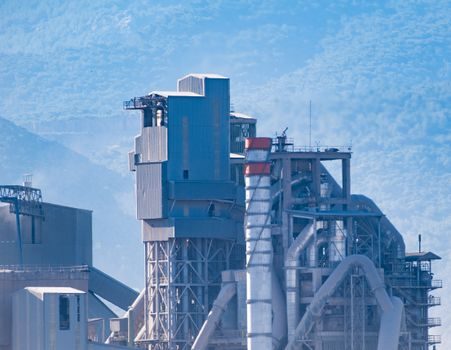
Grade is set by Si content, with the published FeSi75 spec breaking into FeSi75A (75–80% Si, 0.1% C max, 0.035% P max, 0.02% S max, 1.5% Al max), FeSi75B (73–80% Si, 0.1% C max, 0.04% P max, 0.02% S max, 2.0% Al max), and FeSi75C (72–75% Si, 0.2% C max, 0.04% P max, 0.02% S max, 2.0% Al max) [S3]. FeSi65 typically runs 65% Si with 0.6% Mn max, 0.05% C max, 0.04% P max, 0.02% S max, 1.5% Al max [S3].
Selection is decision-driven: FeSi75 is the steelmaking workhorse for deoxidation, FeSi65 trades lower Si for better Mg yield in the Pidgeon process, and FeSi 45 is used in dense-medium plants for heavy-media separation. The Si window inside each grade is tight — a 75A shipment at 74.0% Si is out-of-spec and subject to commercial claim, which is why ladle sampling and SGS / BV third-party inspection are standard purchase terms [S3].
Form Factor, Sizing and Density-Medium Application
Ferrosilicon is supplied in two form factors: lumps (common ranges 10–60 mm and 10–100 mm) and powders (0–3 mm being standard), with custom sizing available from most mills [S3]. Milled FeSi for dense-medium separation must be magnetically clean; readings on dried plant samples routinely come in below theoretical Fe content because fine non-magnetic contamination — predominantly graphite smeared from coke fines, plus minor oxidized surface layers — becomes entrained during milling [S4].
This is a real spec gate, not a theory: dense-medium plants specify a maximum non-magnetic content (often checked by Davis tube) and a Si window tighter than the bulk FeSi75 spec, because media losses are a major operating cost. In steelmaking the particle-size question is the opposite — coarse lumps (10–60 mm) are preferred for ladle addition to control FeSi dissolution rate and minimise Si yield loss to fume.
Process Control, Energy Intensity and Emissions

FeSi smelting is one of the most electricity-intensive ferroalloy processes — typical specific energy is in the 8–12 MWh per tonne range depending on grade and Si recovery, with FeSi75 sitting at the high end. Process control centres on electrode current, burden resistivity, and SiO fume capture; the CO off-gas from SiO₂ + 2 C is captured and often combusted for process heat, but fine SiO fume that escapes the baghouse is the dominant material-loss vector and a key environmental compliance issue. [S2]
Slag composition is tuned for low viscosity at tap temperature; high Al₂O₃ slags from coal ash increase tap temperature and electrode wear, which is why low-ash coke commands a premium. Operational decisions — when to shift from FeSi65 to FeSi75 production on a shared furnace — are usually made on electricity price, Si recovery, and electrode paste inventory rather than on Si demand alone, because rebalancing takes one to two tap cycles and a measurable quantity of off-grade intermediate material.
Comparison: FeSi 45 vs FeSi 65 vs FeSi 75 on Procurement Criteria
On four decision criteria: Si content, primary use, typical impurities (C/P/S/Al), and downstream process fit — the three grades separate cleanly. FeSi 75A (75–80% Si, 0.1% C, 0.035% P, 0.02% S, 1.5% Al) is the steelmaking deoxidizer standard at 3–5 kg/t of steel [S3]. FeSi 65 (65% Si, 0.05% C, 0.04% P, 0.02% S, 1.5% Al) is the Mg-Pidgeon and cast-iron inoculant grade, valued for low C and predictable Mg yield [S3]. FeSi 45 is the dense-medium grade for coal and mineral beneficiation, where density and magnetic recoverability outweigh Si content.
Procurement should spec grade, Si window, max C/P/S/Al, sizing, and third-party inspection (SGS / BV) on every PO [S3]. For dense-medium service, add Davis-tube non-magnetic content and a media-loss rate acceptance limit; for steelmaking, add Si-recovery warranty tied to tap temperature and ladle addition practice. The same furnace can swing between grades, but the tap-to-tap transition generates off-spec intermediate that should be contractually allocated.
Safety, Handling and Quality Verification
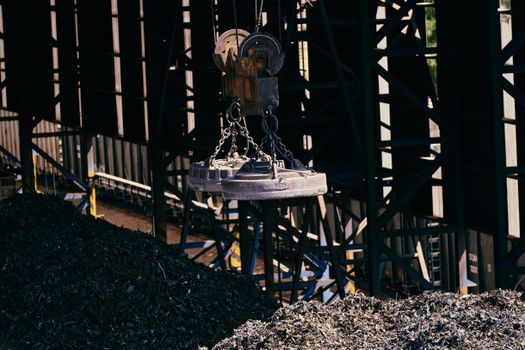
Ferrosilicon dust reacts with moisture and can evolve hydrogen and trace phosphine/arsine; dry storage, inert-handling for fine powders, and bonded-and-grounded silos are baseline controls. Mills expose reactive fines during crushing and milling, so dust collection, ignition-source control, and water-fog suppression are mandatory around sizing circuits. Each shipment should arrive with a mill test certificate stating Si, Al, C, P, S, and sizing, and high-value contracts typically add SGS / BV third-party inspection [S3].
The magnetic contamination that dense-medium operators see on plant samples is a known artefact of the milling process, not a metallurgical defect, and it is correctable by magnetic cleaning on site [S4]. Operators running the Pidgeon process for Mg should spec FeSi65 with tight Al and C limits, since Al and C drag Mg yield down and shift the Si/Fe balance of the retort. Plants running automated additive dosing — for example, modern Molybdenum smart manufacturing stacks on refractory-metal lines — apply the same dosing-discipline thinking to FeSi75 ladle addition, with mass-flow meters and closed-loop trim on Si yield.
The next tracking signals for spec engineers: published updates to ISO 5445 and the FeSi grade tables (FeSi75A/B/C are the spec levels to watch), and any SAF retrofit data covering electrode control and SiO fume capture rates. For a side-by-side view of how refractory-metal plants handle similar furnace-level automation, the Vanadium smart manufacturing 2026 spec gates piece is a useful comparator, and the broader powder-to-AM flow-forming picture in Molybdenum powder, AM and flow-forming routes shows how downstream alloy-powder spec gates differ from bulk FeSi sizing.
For the relevant spec sheets and selection criteria, see additive manufacturing material, multifunction process calibrator, and v process line.