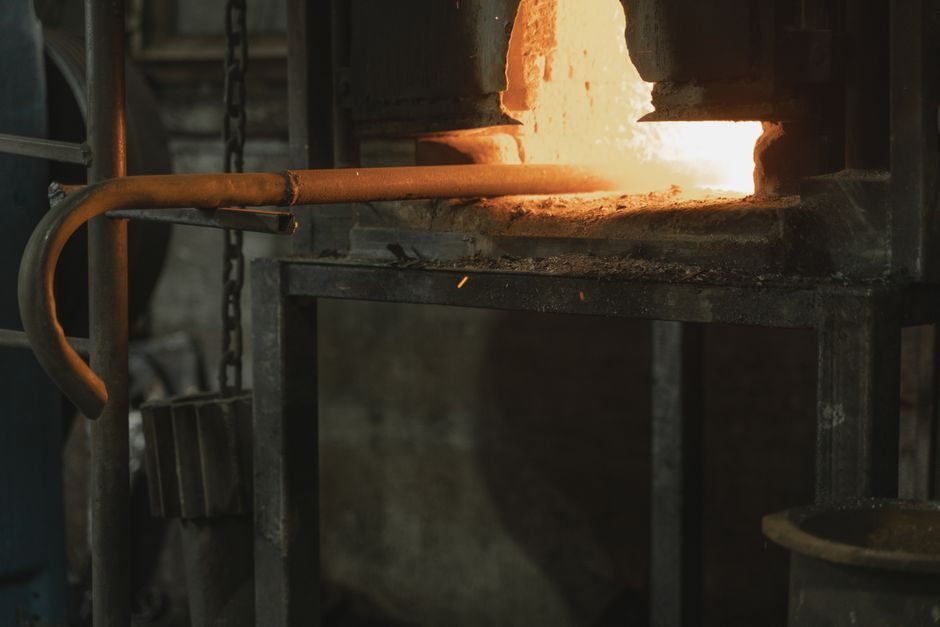
Molybdenum parts reach the market through three principal manufacturing routes: press-sinter powder metallurgy for mill products, Laser Powder Bed Fusion (LPBF) for complex near-net shapes, and warm flow forming for shaped-charge liners [S2][S4].
Chinese refractory-metal OEM capacity is concentrated in Luoyang (Henan) and Zhuzhou (Hunan), where Luoyang Mopei and Zhuzhou Weilai run ISO 9001 / ISO 9001 / ISO 45001:2018 OHSAS lines, with 50+ verified suppliers offering 99.95% pure Mo rods, wire, sheet, tube, threaded nuts, and plasma-spray electrodes at US$15-70/kg MOQ [S1][S3].
Powder Metallurgy Route: Press, Sinter, Roll, Draw
The dominant commercial route for Mo mill products is press-sinter of hydrogen-reduced powder, followed by rolling, swaging, and wire drawing at temperatures typically kept above the ductile-to-brittle transition to avoid cracking [S1].
Luoyang Mopei Tungsten & Molybdenum Material Co. Ltd, located adjacent to the Luanchuan County molybdenum mine where Luoyang's Mo output ranks first in Asia, offers bright and black Mo rods/wire/sheet/tubes plus threaded fasteners at 99.95% purity and US$58-70/kg for 1 kg MOQ [S1]. Purity 99.95% is the industry-benchmark grade for standard mill product; lower 99.9% grades are common for electrode and alloying use, while 99.99% grades are reserved for semiconductor sputtering targets [S1][S3].
Additive Manufacturing Route: LPBF Pure Molybdenum
Laser Powder Bed Fusion of pure Mo is under active characterisation: as a refractory metal, Mo's melting point (~2623 °C) and high-temperature strength make it a candidate for hot-end components, but the same properties make AM processing parameters narrow [S2].
Rebesan et al. reported thermal and mechanical characterisation at room and high temperature for LPBF pure Mo, documenting that powder-bed AM provides design freedom unattainable with wrought stock while inheriting process-specific porosity and residual-stress challenges [S2]. For procurement teams evaluating additive manufacturing material options, LPBF Mo slots between stainless LPBF and tungsten LPBF on density, between Inconel and pure W on service temperature, and ahead of both on raw-material cost per kg.
Warm Flow Forming Route: Shaped-Charge Liners
Warm flow forming is specified when Mo liners must achieve near-theoretical density and uniform wall thickness for shaped-charge warheads, because jet velocity and tip coherence scale with liner density and sound speed [S4].
Springer research established a manufacturing process for Mo liners via warm flow forming, exploiting Mo's high sound speed (~6.4 km/s class) and ~10.2 g/cm³ density to deliver high-velocity coherent jet tips and maximum jet length, both of which degrade sharply with sub-percentage porosity [S4].
Selection Criteria: Which Route for Which Part
Procurement should pick the route against four decision gates: required purity (99.9 / 99.95 / 99.99%), final form factor (mill product / near-net / liner), production volume (kg vs piece), and post-process machining allowance [S1][S2][S4].
For straight mill product (rod, sheet, tube) in standard sizes and < 100 kg lots, press-sinter is the lowest-cost route at US$15-70/kg and shortest lead time from Luoyang suppliers [S1]. For complex geometry with internal channels, LPBF Mo wins on machining elimination but loses on per-piece cost and density consistency [S2]. For defence liner parts where jet performance is non-negotiable, warm flow forming remains the only route that hits the required density and uniformity, with throughput limited by single-piece forming cycles [S4]. The cross-route comparison is: press-sinter low cost / standard geometry; LPBF high cost / complex geometry / variable density; warm flow forming medium-high cost / liner geometry / highest density. The Zhuzhou Weilai portfolio (plasma electrodes, X-ray anodes, tungsten-copper nozzles) illustrates the parallel demand for refractory-mill product from non-powder-metallurgy sectors [S3].
Standards, Certification and Sourcing Signals
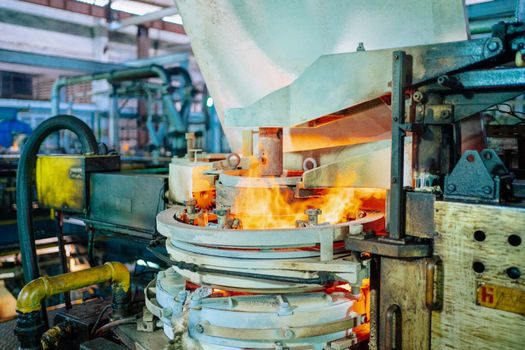
Verified OEM suppliers typically hold ISO 9001 quality systems, with health-and-safety lines increasingly upgraded to ISO 45001:2018 OHSAS, and the ODM service model is standard for plasma-electrode and X-ray-anode custom parts [S1][S3].
The supply chain is geographically tight: Luoyang ties to Luanchuan County mine output, and the same province hosts mill-product, threaded-fastener, and electrode work under one OEM roof, which shortens the inquiry-to-quote loop for buyers bundling multiple Mo SKUs [S1]. Zhuzhou Weilai, located in Hunan's "China Power Valley," layers plasma-spray electrode and rotating-anode know-how onto the same refractory-metal substrate, signalling that finished-part value (X-ray tube inserts, plasma spray nozzles) is moving upstream from the mine [S3]. Sourcing signals worth tracking: new ISO 45001:2018 certifications on supplier lists, expansion of 99.99% Mo sputtering-target capacity, and any published LPBF Mo parameter sets crossing the 99.5% density threshold at production scale [S1][S2][S3].
For a complementary refractory-metal benchmark, the Tungsten Manufacturing Process: Powder Route, FAST Sintering, and Carbide Finishing article covers the W-side powder-metallurgy line that shares hydrogen-reduction and sintering infrastructure with Mo mills, useful when a part is genuinely a W-Mo candidate and the buyer must decide which refractory to specify.
Component reference pages worth checking: multifunction process calibrator, and v process line.