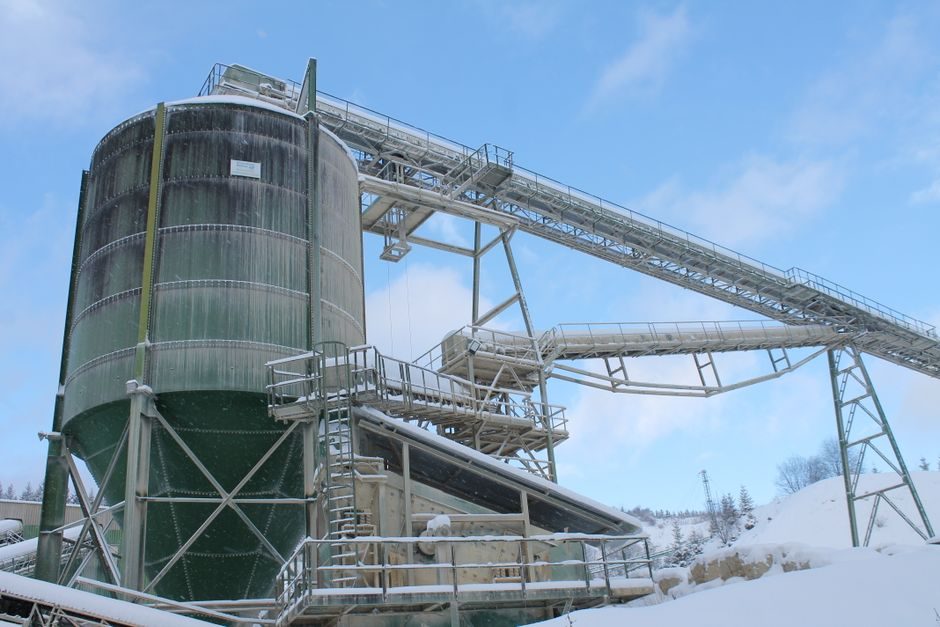
Tungsten's 3422 °C melting point — the highest of all pure metals — forces nearly every commercial tungsten and tungsten-carbide part through a powder-metallurgy route rather than a cast-and-forge path, and the mid-2026 supplier base reflects that constraint directly in how factories are laid out and what equipment they list [S4].
The same refractory behaviour that makes tungsten attractive for fusion first walls, halogen lamp filaments, and high-temperature furnace hardware is also what makes its production capital-intensive: sintering furnaces, hydrogen atmosphere lines, and diamond/EDM grinding cells dominate the capex profile of any shop calling itself a tungsten manufacturer [S1][S2].
Powder Production: APT-to-Blue-Oxide-to-Metal Powder
Ammonium paratungstate (APT) is the dominant intermediate that calcined to yellow or blue tungsten oxide (WO₃ / WO₂.₉) before hydrogen reduction in continuous pusher or rotary furnaces yields sub-10 µm W metal powder, with Fisher particle size typically 0.8–10 µm depending on downstream application [S4].
For tungsten-carbide (WC) production, the W powder is blended with carbon black and carburised at 1400–2000 °C in graphite-tube furnaces or rotary carburisers; the resulting WC is milled with cobalt binder (typically 3–25 wt% Co) and paraffin pressing agent in attritor or jet mills to a final FSSS grain size of 0.4–5 µm before granulation and compaction [S1][S4].
Compaction and Sintering: From Press to Near-Full Density
Compaction is almost universally cold die pressing at 100–300 MPa for simple blanks, with cold isostatic pressing (CIP) at 200–400 MPa reserved for longer rods, mining tool bits, and near-net shapes that would distort in a rigid die, after which dewaxing at 400–600 °C removes the binder before high-temperature sintering [S1][S4].
Vacuum or hydrogen-atmosphere sintering at 1350–1500 °C for 30–90 minutes is the workhorse route for straight WC-Co grades, reaching 90–95% theoretical density, with HIP post-densification at 1350–1450 °C under 100–200 MPa Ar pushing that to >99.5% and closing residual porosity on aerospace and oil-and-gas grades [S4].
FAST and SPS: Field-Assisted Consolidation for Refractory and Fusion Work
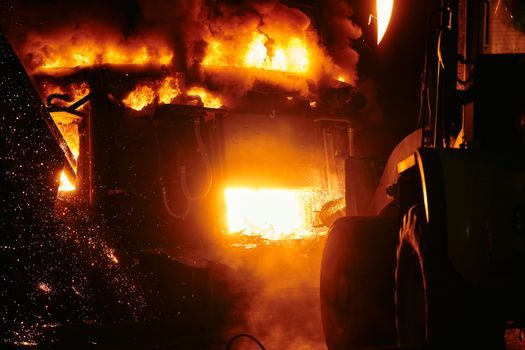
Field-assisted sintering technology (FAST), also marketed as spark plasma sintering (SPS), uses pulsed DC (typically 1–10 ms on, 1–10 ms off) at 1–10 kA through a graphite die under 30–80 MPa uniaxial pressure, reaching 1700–2200 °C in minutes rather than hours [S4].
Densification in FAST is driven by three concurrent mechanisms — localised Joule heating at particle contacts, bulk Joule heating of the compact, and surface activation that enhances diffusion — which together hold grain size below 5 µm even at near-full density, a key reason the technique is being scaled for DEMO first-wall mock-ups using W-Cr-Y and W-V self-passivating smart alloys [S4].
Finishing, Inspection, and Tolerance Realities
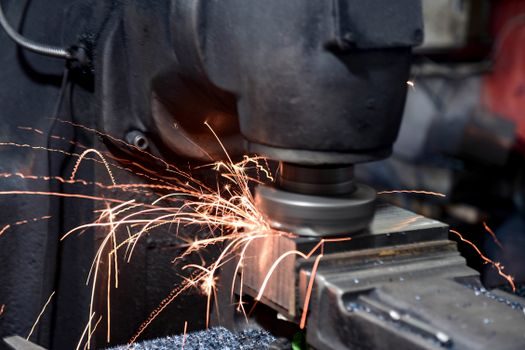
As-sintered tungsten and WC shrink 15–25% linearly from pressed dimensions, so the part a customer draws is not the part that comes out of the press, and a 2026 shop running ISO 9001:2015 typically holds centerless grinding OD tolerances of ±0.0001 in (≈ ±2.5 µm) on carbide rod stock, with surface grinding supporting lengths up to 36 in on flat parts [S1].
EDM wire and sinker finishing is standard for shaped carbide dies and punches because conventional turning of >90% WC-Co with HSS tools is uneconomic; laser etching of part numbers and lot codes is the common traceability step on production parts, and incoming-powder and finished-part inspection usually includes density (Archimedes), hardness (HRA / HV30), coercivity, and magnetic saturation as the four primary grade checks [S1].
Where Tungsten Manufacturing Is Headed in 2026
Two signals worth tracking: DEMO-relevant smart W-alloy joining and FAST upscale work is moving from coupon-scale to first-wall mock-up mock-ups, and Chinese tungsten-molybdenum OEM/ODM capacity remains the dominant low-cost source for nuts, rods, sheets, and tubes used in furnace and vacuum-fixture applications [S2][S3][S4].
Buyers specifying tungsten or WC parts in 2026 should expect to choose between (a) established ISO 9001:2015 carbide shops with hard grinding/EDM in-house for ±0.0001 in tolerances, and (b) FAST/SPS-equipped research-oriented suppliers for sub-5 µm grain, near-net-shape W-alloy components, with overlap on additive-manufacturing material feedstocks growing as binder-jetting of W-Cu and W-Ni-Fe matures [S1][S4]. Process engineers chasing higher upstream yield should also look at how the broader industrial valve trim and seat supply chain is being pulled into similar powder-route consolidation, since shared sintering furnaces and HIP capacity are now a real constraint on both valve and tungsten-part lead times [S1][S4].
Component reference pages worth checking: multifunction process calibrator.
See also our earlier report, Twin vs Single vs Three-Screw Pump Selection: Viscosity, GVF, API 676 Gates.