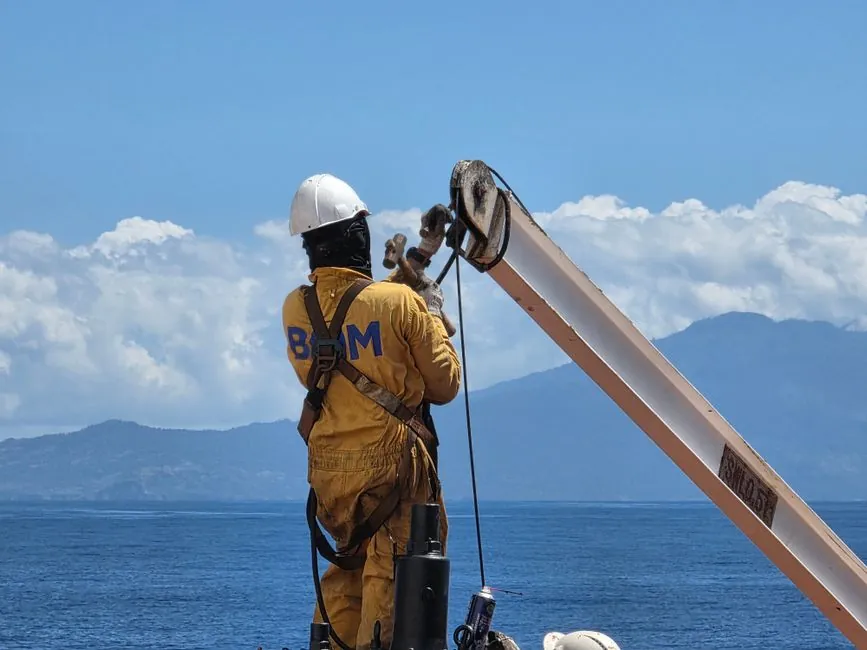
Wedge-socket terminations achieve about 80% of the catalog breaking strength of the wire rope when correctly installed, making them a practical choice for adjustable suspended-platform connections [S3].
Ferrule terminations suit compact, permanent rope assemblies, but their capacity is not a universal 80% value: it depends on the ferrule type, rope material, installation method, and manufacturer-rated working load [S4].
Ferrule and wedge socket capacity comparison
The decisive difference is installation behaviour and load efficiency. A wedge socket grips the rope when load transfers the wedge into the socket body, while a ferrule mechanically compresses or forms around the rope. Properly made swage and spelter sockets can reach 100% termination efficiency; Flemish and turnback eyes reach at least 90%, while rope clips and wedge sockets achieve about 80% [S3].
Against the main selection criteria, a wedge socket offers adjustment, a compact component count, and an 80% nominal termination efficiency [S3]. A ferrule offers a compact permanent connection without a wedge-and-shell assembly, but its allowable working load must be taken from the specific ferrule and rope combination rather than inferred from rope breaking strength [S4]. Installation effort is typically lower with a wedge socket after initial setup, while ferrule tooling and correct crimping quality add fabrication requirements.
Service life is application-dependent. A wedge socket needs inspection for seating, wear, and rope movement, including a retaining clip where movement is possible. A ferrule needs inspection for deformation, cracking, corrosion, and evidence of rope movement. Neither type should be accepted on appearance alone.
Where a wedge socket fits suspended-platform rigging
Wedge sockets are used on mobile, tower, and overhead cranes to terminate lifting rope, with rapid installation and the ability to adjust line length identified as practical advantages [S3]. That makes them suitable for suspended-platform hoist lines when field adjustment is valuable and the platform design permits a positive rope restraint.
Correct sizing is critical because an oversized socket or undersized wedge can allow the wedge to pull too far from the socket under load [S2]. The rope, socket, and wedge must therefore be matched as one assembly rather than selected only by nominal rope diameter. Installation must also place the wedge in the correct load-bearing orientation.
OSHA's 1994 interpretation states that ANSI A10.5c-1992 had not been formally adopted as an OSHA requirement and that OSHA may independently evaluate whether noncompliance with an ANSI provision would violate the general duty clause.
Where a ferrule fits the installation
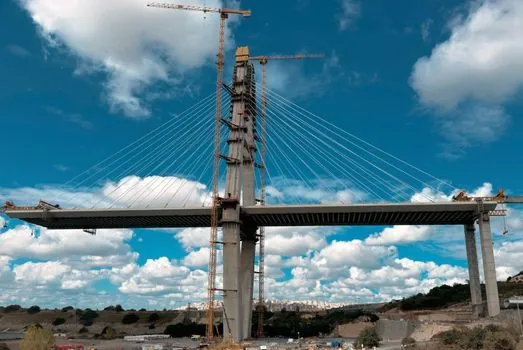
Ferrule terminations are suited to compact permanent assemblies where the design freezes rope length during fabrication and does not require a wedge socket. A ferrule is not interchangeable with a wedge socket at equal rating: ferrule load capacity depends on the fitting, rope grade, lay, material, crimp method, and whether the ferrule is swaged or molded [S4].
Ferrule-based options include swaged sockets and poured sockets. Swaged and spelter sockets can each achieve 100% termination efficiency when properly terminated, compared with approximately 80% for wedge sockets [S3]. The efficiency comparison does not make a swaged socket automatically preferable on a suspended platform. Installation quality, corrosion exposure, fatigue cycling, inspectability, adjustment need, and the connector configuration at the platform attachment determine the better system.
A ferrule assembly is generally less suited where a line must be shortened on site, reopened during commissioning, or checked for wedge migration. It becomes more suitable where the line length is fixed and the terminating component must remain compact near a bracket or anchor. Manufacturer instructions for the selected rope and ferrule remain controlling, including installation sequence and required tools [S4].
Vibration, restraint, and dead-end details
Retirement of the rope tail is a design function, not a cosmetic step.
The two restraint arrangements are not interchangeable in installation instructions. Platform design should therefore identify whether the hoist line experiences shock, cyclic movement, or unstable loading.
Clip count and torque do not carry over from ordinary rope-clip splicing. A general rope termination may use several clips at a stated spacing and torque schedule, but the OSHA interpretation gives a different instruction for a clip used with a wedge socket [S1]. The platform's hoist manufacturer and the rope-fitting instructions should govern the final procedure.
Installation, inspection, and failure modes
Wedge-socket installation requires three inspections at handover: the wedge must be fully seated in the load direction, the dead end must be restrained as specified, and the socket must match the rope size and construction [S2][S1]. A visibly correct assembly can still be unsafe if the socket body or wedge is distorted, the wedge groove is worn, or the rope has been cut or damaged during fitting.
Ferrule installation requires control of the fabrication process. The termination efficiency figures of up to 100% for swage and spelter sockets are conditional on correct preparation and installation [S3]. Damaged wire strands, improper strand preparation, incorrect ferrule length, or nonuniform compression can reduce performance even when the final profile appears regular.
Dynamic loading introduces another limitation. Tests using 12 mm steel wire rope in ground-based logging found that direct loading produced consistent breaking-strength performance for turnback eyes and wedge sockets, while routing through rope sliders significantly reduced connector performance [S5]. This does not transfer a numeric capacity to suspended platforms, but it establishes the engineering principle: the termination cannot be evaluated separately from rope deflection, sliders, and load direction.
Selection criteria for suspended-platform hoists
Select a wedge socket when field adjustment, rapid installation, and an approximately 80% termination efficiency meet the platform design [S3]. Select a ferrule or swaged socket when the line length is fixed, compactness is required, and the manufacturer permits the specific rope-ferrule combination at the calculated load [S4]. Do not select either by rope diameter alone.
The procurement check should cover four items: certified rope breaking strength, connector rated working load, termination-efficiency basis, and restraint method. For wedge sockets, include the compatible wedge and retaining clip in the assembly schedule. For ferrule systems, include the exact ferrule catalog reference, rope grade and construction, installation method, and inspection interval.
Suspended platforms also require an engineered load path from the rope termination to the hoist and anchor. Where the termination is exposed to repeated reversal, shock loading, vibration, weather, or contact with adjacent structure, specify a component arrangement supported by product data and the platform's governing design requirements.
Final selection by use case
Use a correctly sized wedge socket for an adjustable, reusable hoist-line connection where the required working load can be based on an approximately 80% rope-termination efficiency [S3]. Use a ferrule-based swaged or spelter socket for a fixed-length, compact connection where the specific manufacturer-rated capacity and certified installation process are available [S4][S3].
Neither option is appropriate if the rope diameter is the only selection input, if a wedge can pull out of an oversized socket, or if a ferrule is installed without validated tooling and instructions. A practical suspended-platform specification should identify the rope grade and diameter, termination part number, load basis, installation method, and post-installation inspection points.