
A 2,000-3,000 lb woven polypropylene FIBC, four-panel or U-panel body, 5:1 safety factor, 4-loop cross-corner lift, is the working baseline for moving packed garments, hangers, and textile accessories through apparel distribution centers [S1][S5].
Apparel is a non-hazardous, dry, low-dust cargo, which is why the dominant fabric choice is virgin woven polypropylene at 6-7 oz/yd², in standard sizes centered on 35x35x50 in (or metric equivalents around 90x90x120 cm) [S1][S4]. Capacity normally lands between 500-4,000 lb, with the 2,000-3,000 lb band being the practical sweet spot for pallet-jack and forklift handling of finished garments [S1][S5]. For a deeper look at the container category itself, see the bulk bag encyclopedia entry.
Why Apparel Distribution Defaults to Type A or B
FIBCs are classified into Types A, B, C, and D based on static electricity control, and Type A and Type B are the correct picks for non-flammable apparel cargo where no combustible dust cloud is present [S1][S9]. Type A bags are built from plain woven polypropylene with no static dissipation, while Type B have a breakdown voltage below 6 kV to prevent propagating brush discharges; both are adequate for finished garments, packed shoes, and folded textiles because these products do not generate flammable atmospheres [S1][S9].
Type C (groundable, conductive yarn) and Type D (CROHMIQ-style antistatic fabric) exist for flammable powders and solvents, areas covered in our industrial solvents selection guide, and are overspec for a typical garment warehouse. Specifying them adds 20-40% bag cost without a real safety gain on apparel SKUs [S1][S5].
Construction Choices: U-Panel, 4-Panel, Circular, and Baffle
Four body constructions dominate the apparel-trade order book: U-panel, 4-panel, circular (tubular), and baffled [S5]. Circular woven bags are made on a circular loom, cut to length, with no vertical side seams, which is a real advantage for sift resistance on fine textile fibers and lint [S4][S5]. U-panel bags use two U-shaped panels sewn to a base square, balancing cost and shape retention for general warehouse duty [S5].
For stacked apparel pallet builds, baffled bags, with corner baffles that lock the load into a near-cube, are the highest-density option because they hold squareness under stack loads and recover more cubic space per truck [S4][S5]. Fabric weight is typically reported in oz/yd² (for example 6.5 oz/yd²) or g/100 cm², with 12x12 mesh as a common weave density [S4].
Safety Factor, Lifting Loops, and Sizing Math

Single-trip apparel shipping usually runs a 5:1 safety factor (SF), while multi-trip or rented-pool assets in apparel distribution normally require 6:1 SF [S1]. Four lifting loops are the apparel-warehouse standard, each rated roughly 1,500-2,000 lb working load, attached by reinforced stitching, and the standard 4-loop FIBC geometry is widely accepted on forklifts, pallet jacks, and overhead crane hooks in DC operations [S1][S2].
Sizing math is straightforward: apparel finished goods average 12-25 lb per carton, so a 2,200 lb bag holds about 90-180 cartons, which matches a single pallet footprint of around 35x35 in base [S1][S5]. Top fill spouts of 14-16 in diameter (extending 12-18 in) and discharge spouts of 14-24 in diameter give clean loading for most carton and polybag pack styles, and the optional 6x9 in document pouch on the bag body keeps the packing list with the unit [S1][S4].
Liner, Coating, and Food-Grade Considerations
Apparel rarely needs a food-grade liner, but folded garments, hosiery, and undergarments often ship better with an LDP/LLDPE liner or coated fabric to keep out dust, warehouse moisture, and UV during outdoor staging [S4][S5]. Coated (laminated) fabric is called non-breathable in the trade and reduces both moisture intrusion and sifting, while uncoated fabric is breathable and is used when the product itself can off-gas or trap humidity [S4].
For private-label or retail-ready apparel that may be warehoused alongside food or cosmetics, FSSC 22000 / GFSI-compliant bags, built in a clean room on food-safe-lubricated machinery, are now commonly available as a stock option rather than a custom run [S5]. A coated liner also pays back fast when bags sit in long-term storage, which the long-term FIBC storage best practices guide (2026-02) flags as the main failure window for marginal construction [S2].
Comparison: Type A vs B vs C vs D for Apparel Use
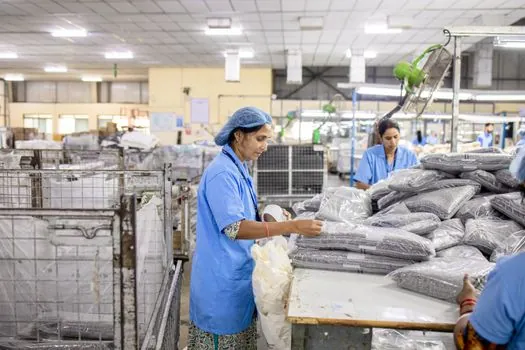
For apparel distribution the relevant trade is between Type A and Type B, with C and D as overspec alternatives. On static protection, Type A offers none, Type B limits breakdown voltage below 6 kV, Type C requires verified grounding, and Type D dissipates without grounding. On relative bag cost, Type A is the cheapest baseline, Type B adds a small premium, while Type C and Type D add roughly 20-40% over Type A for the same SWL. On apparel fit, Types A and B are correct, Type C is acceptable but adds grounding steps on the floor, and Type D is not necessary absent any flammable dust or vapor source [S1][S5][S9].
On storage life, all four perform similarly for non-hazardous dry apparel, but only Type B (or coated Type A with proper UV cover) is recommended for outdoor staging longer than 3-6 months under FIBC long-term storage guidance [S2].
Handling, Stacking, and Warehouse Integration
Apparel DC operations typically stack filled FIBCs two high on the plant floor and rarely three high, because the cube savings stop paying back beyond that point for soft goods [S3]. Forklift handling is preferred over crane for finished garments, and the standard 4-loop FIBC supports both, with consistent loop geometry reducing handling damage during repeated restacks [S1][S2].
Two design details that materially reduce bag failures in apparel DCs: belt patches sewn between the body fabric and the lift belt to improve sift resistance and safe working load, and filler cord (polypropylene rope) sewn into seams to stop fine lint and dust escape [S4]. Both are cheap upgrades relative to the cost of a single contaminated pallet, and they extend the working life of rented-pool bags in long-term storage [S2][S4].
Standards, Certifications, and Sourcing Discipline
UN 13/H2/Y certification matters when the FIBC ships regulated or hazardous goods, not for finished apparel, but the marking still helps auditors confirm that the bag has passed performance testing under recognized standards [S1][S2]. For apparel-only use, the practical checks are fabric weight (oz/yd² or g/100 cm²), 5:1 or 6:1 SF, loop SWL, and either FSSC 22000 / GFSI documentation if the bag is also used near food or cosmetics [S1][S5].
Virgin polypropylene resin is the industry default for contamination control, while recycled-content options exist for sustainability programs when the cargo risk is low and the bag is single-trip [S1][S5]. Sourcing from suppliers that publish a 12x12 fabric mesh, 6.5 oz/yd² base weight, and clear SWL vs SF data is the most reliable way to avoid mis-spec, and the bulk bag reference page gives the full glossary of bag styles, spouts, and closures for cross-checking supplier submittals [S4].
Trackable Next Signals
Two signals worth watching in the next sourcing cycle: a 5:1 SF, 4-loop, 35x35x50 in Type B bag quoted with FSSC 22000 documentation at a price point within 5% of a comparable Type A is a clear sign that Type B has become the apparel-trade default rather than an upgrade. A second signal is the appearance of 6:1 SF rented-pool stock in the apparel sector, which would confirm that multi-trip bulk bag pools are expanding into garment distribution, not just chemicals and minerals [S1][S2][S5].
Component reference pages worth checking: bag filter, and distribution cabinet.