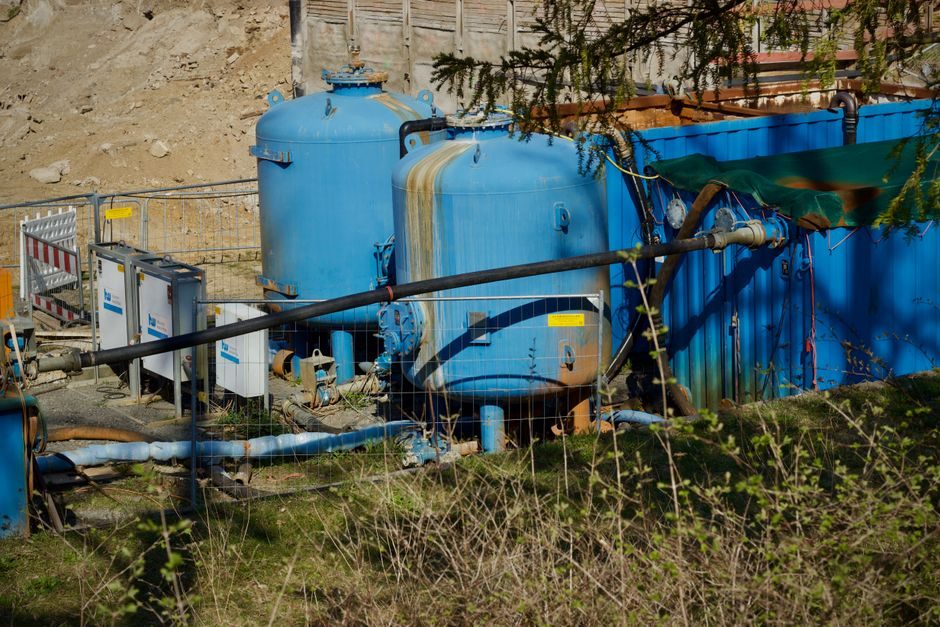
On July 2026 made-in-china listings, 1,000-kg virgin-PP FIBC bulk bags quote at US $2.50-4.95 per piece, with anti-static Type D / Baffled variants running US $6-10 per piece at 1,000-piece minimum order [S1][S7]. An equivalent stainless-frame composite IBC tank in the same 1,000-L class lists in the high-tens to low-hundreds of dollars per unit on the same channels, a 10-30x capital gap before freight, pallet and liner costs are added [S5].
For a process engineer the spec question is therefore not "which is cheaper" but which containment matches the duty: single-trip dry solids, multi-trip dry bulk, or liquid / hazardous cargo. The three bulk bag, IBC tank and tank container reference pages are where the geometry, SWL and test-pressure numbers are nailed down before the procurement call goes out.
Payload, Density and Volumetric Envelope
FIBC bulk bags are rated to a Safe Working Load (SWL) of 1,000-1,500 kg as a stock build, with the 3,300-lb (≈1,500 kg) figure appearing on US-channel supplier sites as the upper commercial ceiling [S3][S7]. Standard 1,000-kg virgin-PP woven bags priced from US $2.50-3.80 per piece, with 1,500-kg variants landing at US $3.86-4.86 per piece for fish-meal, mineral and feed service [S7].
IBC tanks in the 1,000-L class (≈1,000 kg water-equivalent) ship on a galvanized or welded-steel pallet frame with a blow-molded HDPE inner bottle; typical UN31HA1/Y certification covers stack loads of 4-high at 1.6 S.G. for a 1,000-L unit. For 1,500-1,800-kg duties the answer stops being a tote and becomes a tank container in the 14,000-26,000-L ISO-frame class, which is outside the FIBC envelope entirely.
Single-Trip vs Multi-Trip Economics
FIBC economics break into two non-overlapping markets. Single-trip "jumbo" bags used for sand, mineral ore and demolition debris sit at the US $2.50-4.95 per-piece band, MOQ 1,000 pieces, lead time "within 15 workdays" off-season per typical Asian maker listings [S1][S7].
Multi-trip / food-grade and anti-static Type D / Baffled bags command US $6-10 per piece, with the conductive 4-side beige belt Type D bag at US $6-10 per piece and Sift Proofing Seams / Baffle FIBC at US $6-8 per piece on the same channel [S1]. Reusable PP-woven "Super Sack" FIBCs engineered for sand, stone, lime and fertilizer fall in the US $2.55-4.95 band, with the cost premium over single-trip paying back at roughly 3-5 reuse cycles once reverse-logistics and cleaning tabs are absorbed [S7].
An IBC tank, by contrast, is engineered for 20-50 reuse cycles minimum and typically delivers its per-cycle cost only when the contained product value justifies the tare weight (≈55-65 kg for a 1,000-L stainless-cage composite) and the rinse/dip/return logistics.
Duty Matrix: Dry Bulk, Hygroscopic, Liquid, Hazardous
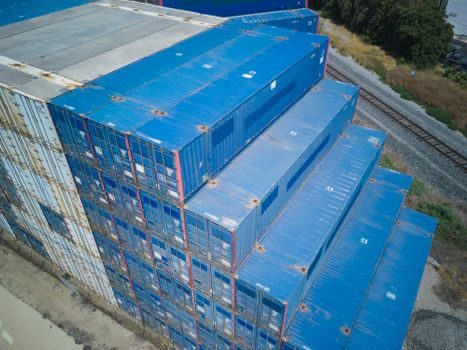
Dry free-flowing solids under 1,500 kg with a bulk density of 0.5-1.2 t/m³ (sand, fertilizer, plastic granules, grain, mineral ore) are the FIBC sweet spot; the bulk bag reference page catalogues the 4-loop cross-corner, duffel-top / discharge-bottom and Baffled geometries used here. [S1]
Hygroscopic or oxidation-sensitive cargo (citric acid, calcium stearate, metal powders, certain catalysts) needs an aluminum-foil or VCI liner inside the FIBC; Anthente lists "Baffle, aluminum foil, and VCI liners for shape retention, moisture barrier, and corrosion protection" as a standard specialty-liner catalogue line, with vertical integration of the FIBC build [S8]. Liquid / viscous product (glue, syrup, juice concentrate, latex, bitumen) is the IBC tank's home turf, not the FIBC's — Shandong Anthente even lists "IBC (Ton Tank)" as a core product alongside PP Bulk Bag, Flexitank and Flexibag for that reason [S5].
Hazardous-area dry powders (carbon black, graphite, metalised powder, activated carbon, chemical compounds) drive the FIBC to Type D / Type C anti-static construction with surface resistivity below 1x10⁸ Ω on the conductive grid; the bulk-bag reference page and the Jebic 4-side beige Type D bag at US $6-10 per piece are the entry point [S1]. Container liners and dry-bulk liners — Uniqpack's product line sits in this band — extend FIBC economics into 20-foot ISO container loads, where a flexitank on a 1,000-1,500 kg-per-bag FIBC system is no longer the right answer and a tank container is [S10].
Standards and Certification Discipline
FIBC conformance is anchored on ISO 21898 (FIBCs for non-dangerous goods) and, for hazardous-area service, the IEC 61340 / CLC/TR 50404 electrostatic classification that splits bags into Types A, B, C and D. IECEx / ATEX zoned plants (Zone 1, Zone 21) typically spec Type C groundable or Type D anti-static bags with documented surface-resistivity test reports per batch — the National Bulk Bag channel advertises 75+ FIBC SKUs in stock with same-day shipping for that reason [S4].
IBC tanks for liquid hazardous goods (UN31HA1/Y) carry UN Packaging Group II / III markings, with hydrostatic test pressure 100 kPa minimum and a 6 kPa air-leak test on the production line. Pallet-frame composite units (galvanized or stainless tube + HDPE bottle) are not interchangeable with UN31A1 (steel-cage) or UN31H1 (plastic-jug) variants; the mark on the nameplate, not the silhouette, decides the duty. Tank-container ISO units in the 14,000-26,000-L class sit under CSC / IMDG / ADR / RID for intermodal hazardous transport, and ADR 6.1 / 6.2 placards become the procurement line item.
Comparison at a Glance

Four-criteria cut, with numbers from the cited channels: [S2]
1) Capital cost per 1,000-kg payload: FIBC single-trip US $2.50-4.95 per piece vs FIBC multi-trip anti-static US $6-10 per piece vs stainless-cage IBC tank roughly 10-30x the FIBC unit price [S1][S5][S7].
2) Reuse cycles: single-trip FIBC 1, multi-trip / Super Sack FIBC 3-5+, composite IBC tank 20-50+ [S7].
3) Hazard coverage: Type D FIBC for Zone 1 / 21 dust, UN31HA1/Y IBC for PG II / III liquids, ISO tank container for intermodal hazardous liquids [S1][S4][S5].
4) Lead time / MOQ: FIBC MOQ 1,000 pieces, off-season lead time "within 15 workdays" per Asian makers; IBC tanks typically project-specific with no stock MOQ on the maker channel [S1].
Who FIBC Is For, and Who It Is Not
FIBC fits operations handling 1-1,500 kg of dry bulk per cycle, with forklift-loop discharge, single-storey warehousing, and the willingness to handle waste-stream or recycle the woven PP. It is the wrong tool for liquid cargo, for ultra-high-purity / food-grade liquid, for any service where the inner liner must be cleaned in place to a validated spec, and for any payload above 1,500 kg where the SWL of the four lifting loops becomes the limiting line. [S3]
IBC tanks fit 800-1,500 L of liquid or viscous product with returnable / trackable logistics, validated rinse, and a year-on-year reverse-pool. They are wrong for cheap dry mineral ore (the steel cage and HDPE bottle are over-engineering for sand), for any product that attacks HDPE (certain solvents, oxidizers, hot bitumen above the HDPE softening point), and for any duty that demands 316L stainless wetted surfaces at a price the FIBC-plus-liner can undercut.
Selection Levers the Engineer Should Pull
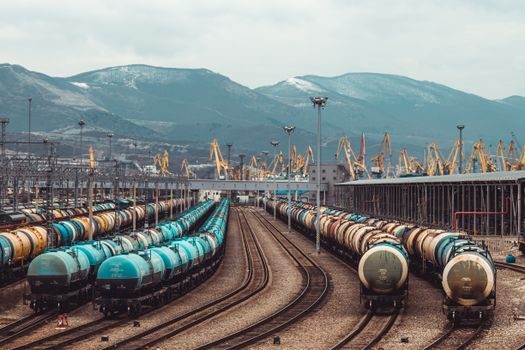
Pull these four levers in order: (a) physical state of the cargo — dry solid vs liquid / viscous — this alone routes you to FIBC or IBC; (b) bulk density × container volume to size the SWL or the L-class correctly, watching the 1,500-kg FIBC ceiling [S3][S7]; (c) hazard class and zone classification to set Type A / B / C / D FIBC or UN31HA1/Y IBC; (d) reverse-logistics cost per cycle, which decides whether a US $6-10 multi-trip FIBC or a reusable IBC delivers a lower 5-year cost-of-ownership [S1][S5].
Where the cargo sits at the boundary — e.g. dry, hygroscopic, food-grade, 1,200 kg batches, shipped on a 20-ft container — the conversation typically lands on a bulk bag with an aluminum-foil liner and a Baffle body for stack stability, not on an IBC. Where the cargo is liquid food-grade, 1,000 L, returnable, with a CIP station, the IBC wins on total cost. The wrong spec in either direction costs more than the container price gap suggests: a Type A FIBC in a Zone 21 dust room is an ignition-source risk, and an IBC on a free-flowing mineral-ore line is a forklift-throughput killer.
The next procurement call that lands in your inbox is the one to test those rules against.