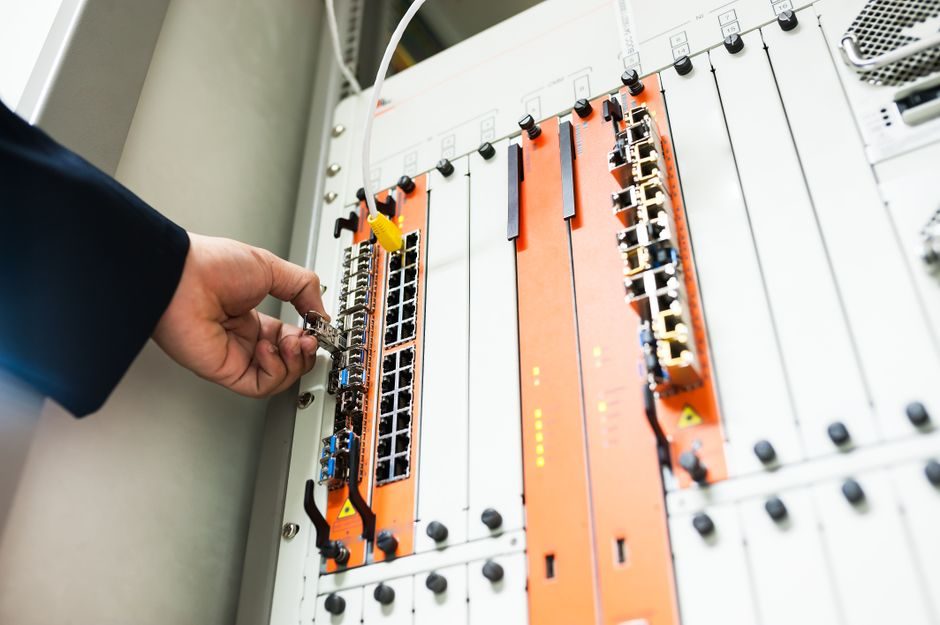
Fiber media converter selection is a port-and-physics decision, not a brand decision: the unit must match the installed fiber mode, the required link budget, the data rate, and the operating-temperature window of the cabinet or DIN rail it bolts into.
Industrial buyers comparing offers on Alibaba, Made-in-China, and DHgate will find over 100 active suppliers shipping 10/100/1000 Mbps single-mode and multi-mode units out of Shenzhen, Guangzhou, and the wider Pearl River Delta [S1][S3][S6]. The trap is treating all of those as interchangeable — they are not, and the wrong pairing will either fail link-up or fail an on-site audit.
Mode and Reach: The First Filter
Single-mode 1310/1550 nm optics are specified whenever the run exceeds the 550 m limit of OM2/OM3 multi-mode fiber, and they routinely deliver 20 km, 40 km, and 120 km link budgets with the right SFP module [S4]. Multi-mode 850 nm converters remain the cheap default for in-building and IDF-to-MDF patching under 300 m, and they tolerate the higher connector loss of low-cost SC terminations.
Industrial buyers mixing 1000Base-SX and 1000Base-LX on the same patch panel must respect the single-mode/multi-mode pairing rule: an SX SFP will not power up a long LX run, and a long-haul LX module dropped into a multi-mode plant will throw the receiver into saturation. The safe move is to pin mode and wavelength to the cable plant on paper before any RFQ is sent.
Data Rate, Port Count, and the PoE Question
10/100 Mbps Fast Ethernet converters are still the volume SKU on Chinese B2B platforms for legacy serial and CCTV runs, while 10/100/1000 Mbps Gigabit units dominate new industrial-Ethernet and IP-camera rollouts [S1][S2]. The data-rate choice should be driven by the slowest device on the segment, not the fastest: a 1000 Mbps converter uplinked to a 100 Mbps camera saves nothing and adds buffering risk.
PoE and PoE+ (IEEE 802.3af/at) fiber media converters add a powered output for an IP camera, wireless AP, or access controller, which is why they are commonly specified in security and ITS cabinets where only fiber reaches the pole. Non-PoE models are the right answer for aggregation nodes and switch rooms; a PoE model deployed where no PD exists just inflates BOM and heat load.
Connector, Form Factor, and the SFP Slot Question
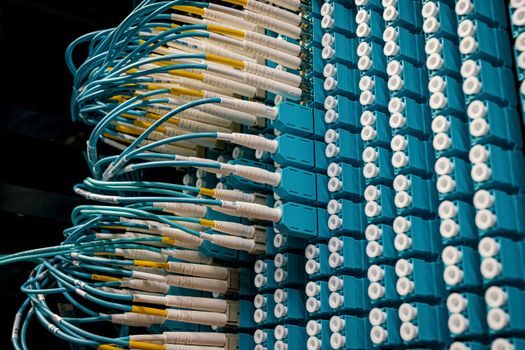
SC, LC, ST, and FC connectors each still ship in volume, but LC has become the default for 1G SFP and 10G SFP+ optics and any new multi-mode OM3/OM4 plant [S2][S3]. Fixed-port converters with hard-wired SC or LC pigtails are the cheapest form factor and are appropriate for permanent runs; slide-in SFP-slot converters add flexibility when the link distance or mode is not yet pinned.
For a long-haul link, the open SFP slot lets the buyer source a third-party 20 km, 40 km, or 120 km module from the open optics market and swap it as the network grows. The fixed-port unit locks the buyer into one wavelength and one reach — fine for a greenfield, painful when a second fiber pair goes in and the link budget changes.
Operating Environment: Temperature, Mounting, and Power
Industrial-grade converters are routinely rated −40 °C to +75 °C with a ruggedized aluminum or steel housing and DIN-rail or wall-mount brackets, while commercial units clip at 0 °C to +50 °C and assume a climate-controlled telecom closet [S1][S3]. The cabinet temperature on a roadside, substation, or factory-floor enclosure can push past 60 °C in summer; specifying a commercial-grade part there is a documented reliability failure mode.
Power input is a second filter: telecom-grade 5 V DC adapters work on a desk, while industrial cabinets want 12 V DC, 24 V DC, 48 V DC, or 100–240 V AC with redundant feeds and an alarm contact for link-down. The 24 V DC input in particular is the default across Chinese supplier catalogs because it lines up with the same DC bus that powers industrial fiber converter gear already in the cabinet.
Management: Unmanaged vs Managed vs Web/SNMP
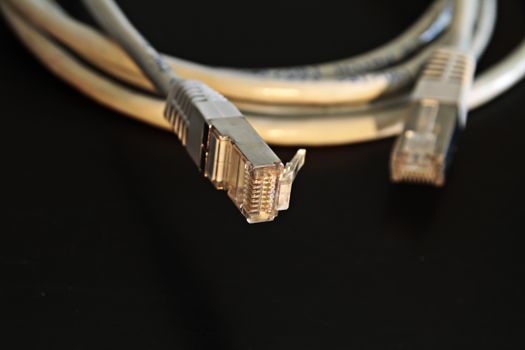
Unmanaged plug-and-play converters are the volume choice on Alibaba, Made-in-China, and DHgate, and they ship at the lowest unit cost [S1][S4][S6]. Managed variants add web, Telnet, or SNMP interfaces, port-based VLAN tagging, and L2 diagnostics such as SFP DDM (digital diagnostic monitoring) for optical power and temperature.
The decision rule: spec a managed converter only when there is an NMS to plug into, when the link crosses a regulatory boundary, or when a single fiber pair is carrying traffic that a hot-standby SFP needs to be health-checked remotely. For a one-off camera run or a factory-floor PLC link, unmanaged is the engineered choice — adding SNMP to a non-monitored segment is BOM with no operator looking at the dashboard.
Who Should Not Pick the Cheapest Unit
Buyers who need a converter to operate continuously outside a temperature-controlled room, to power a PoE load over fiber, to ride through a surge on the DC bus, or to carry traffic that an SLA measures should not pick the bottom-tier Alibaba listing. The same applies when the fiber plant is already OS2 single-mode and a multi-mode-only converter will simply not link up — there is no firmware fix for a physics mismatch. [S1]
The pragmatic shortlist logic used by spec-driven buyers: pin mode, reach, and data rate from the cable plant; pin temperature and power from the cabinet; pin management from the NMS. Everything else — brand, color of the housing, length of the warranty — is secondary, and the only remaining filter is whether the supplier can document a burn-in report and ship to the required Incoterm. For a broader view of how this fits a wider industrial Ethernet build, the industrial router selection checklist for 2026 deployments walks the same decision logic one layer up, while the industrial router vs industrial modem (DTU) decision map is the natural next read when the upstream WAN device is still being chosen.
The underlying component specifications are covered under dc dc converter, and vfd.