
The global laser cutting machine market was valued at USD 4.12 billion in 2025, with a forecast CAGR of 5.99% across 2026-2031 and solid-state laser sources flagged as the fastest-growing technology segment [S1]. For a working definition of the equipment class, see the laser cutting machine reference, which covers process families and source types.
The 2026 baseline matters for procurement because it sets the floor for capex planning, factory-floor layout, and tooling cycles. China remains the dominant supply node: Made-in-China listings for 80-100W CO2 advertising/wood lasers start at USD 7,000 per set with 1-piece MOQ, and 1-2kW CO2 industrial machines range USD 18,900-39,800 per set from Jiangsu-based manufacturers [S2][S3]. For context on adjacent machine tools, the CNC controller vendor map traces the Japan/German/China split that frames this market.
Market Size, CAGR, and Forecast Window
The 2025 baseline of USD 4.12 billion and 5.99% CAGR through 2031 imply the market reaches roughly USD 5.9-6.0 billion by 2031 if the rate holds linearly [S1]. A peer category, the global CNC metal cutting machine market, was valued at USD 53,069.1 million in 2020 and is projected to reach USD 83,364.4 million by 2030 at a 4.2% CAGR (2020-2030) [S4]. The narrower laser cutting segment thus grows faster than the broader CNC metal-cutting envelope, reflecting share migration from mechanical and plasma cutting into fiber and CO2 laser platforms.
Within laser, the Allied Market Research taxonomy splits technology into solid-state lasers, gas lasers (CO2 dominates), and semiconductor lasers; processes into fusion, flame, and sublimation cutting; and end users into automotive, consumer electronics, defense & aerospace, industrial, and others [S8]. That segmentation maps cleanly to procurement: automotive sheet-metal blanks and consumer electronics enclosures drive the volume, while aerospace and defense pull the high-power fiber segment above 6kW.
Technology Segments: Fiber, CO2, and Solid-State
Solid-state lasers are flagged as the fastest-growing technology segment in the 2026-2031 outlook [S1]. In current Chinese export listings, fiber and sealed CO2 sources coexist: Aeon Laser offers an 80W/100W RF-excited CO2 unit with 30W/60W RF options at USD 7,000-30,000 per set, CE-certified, semi-automatic, for advertising, leather, packaging, craft, and wood applications [S2]. Industrial-scale CO2 machines from Nanjing Beke CNC sit at USD 18,900-39,800 per set for 1kW-2kW classes [S3].
Fiber laser cutters typically displace CO2 above 1-2kW wall-plug demand and dominate the metal-cutting envelope where reflective alloys (aluminum, brass, copper) are not the primary workload. CO2 retains share in non-metallic cutting (acrylic, wood, leather, paper, fabric) and in high-speed thin-gauge sheet work, which is why the Made-in-China advertising/wood listings still lead with CO2 [S2]. For readers tracking related instrumentation demand, the laser level transmitter market is projected to grow from USD 136.34 million in 2025 to USD 188.54 million by 2032 at a 4.74% CAGR, a parallel but smaller laser-based industrial segment [S5].
Comparison of Main Source Types by Selection Criteria
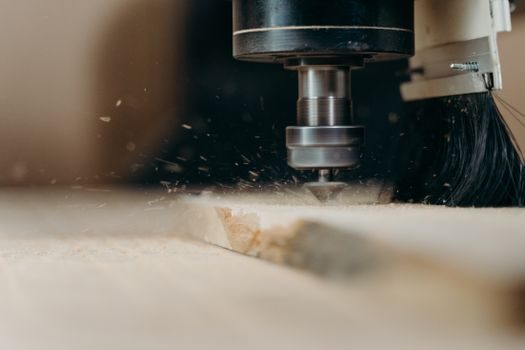
The four main laser source technologies line up against selection criteria as follows, drawing on the Allied taxonomy and current export data [S2][S3][S8]:
CO2 (gas laser, 10.6 µm wavelength): cuts non-metals cleanly, lower capex (USD 7,000-30,000 per set for 80-100W class, USD 18,900-39,800 for 1-2kW industrial class), lower electrical efficiency, higher maintenance on optics and gas. Best fit: advertising, wood, leather, packaging, craft, thin-gauge sheet metal where edge quality matters more than throughput [S2][S3].
Fiber laser (solid-state, ~1.07 µm): high wall-plug efficiency (typically 30-40%), no consumable gas, faster cutting in thin-gauge carbon and stainless steel, weaker on transparent and reflective non-metals. Best fit: metal-fab shops, automotive blanks, consumer electronics enclosures [S1][S8].
Solid-state (Nd:YAG, disc, etc.): fastest-growing segment per 2026 forecast, used in precision micro-cutting and aerospace alloys where beam quality and pulse control outweigh raw watts [S1][S8].
Semiconductor (direct diode): lower brightness, gaining share in selective soldering and heat-treated cladding, less common as a primary cutting source [S8].
Selection hinges on four criteria: material (metal vs non-metal), thickness range, edge quality tolerance, and total cost of ownership per meter cut. For sheet-metal shops running mild and stainless steel under 6mm, fiber is the default; for sign-makers and acrylic fabricators, CO2 remains the rational choice. The market price spread between the two is wide enough that buyers frequently dual-source across both classes rather than standardise on one source technology.
Who This Market Is For — and Who It Is Not
This equipment class fits contract metal fabricators (job shops running 0.5-6mm carbon and stainless), automotive tier-1 and tier-2 suppliers (body-in-white prototyping, chassis brackets, exhaust flanges), consumer electronics enclosure and chassis makers, and advertising/wood/acrylic fabricators. It also fits the aerospace and defense tier where high-power fiber above 6kW cuts titanium and Inconel plate for structural parts and engine casings [S8].
It is not a fit for high-volume structural steel plate above 25mm (plasma and waterjet retain cost advantage), for ultra-high-precision micro-machining below 50 µm (specialty femtosecond or UV sources apply), or for short-run prototyping where a fab shop with a shared fiber bed is more capital-efficient than a dedicated in-house unit. The 2026 cost-of-ownership profile also makes in-house installation uneconomic for shops running fewer than 800-1,200 cut hours per year, given list prices starting at USD 7,000 for CO2 entry units and USD 18,900+ for industrial CO2 or fiber [S2][S3].
Standards, Sourcing Signals, and Adjacent Risks

Machine safety compliance for laser equipment is typically anchored in IEC 60825-1 for laser product classification and in CE marking for the European market, the latter visible on the Aeon CO2 advertising-class unit listed on Made-in-China [S2]. Buyers should also verify regional electrical compliance (UL in North America, CE in EU, CCC in China) and operator-side fume extraction to local occupational exposure limits for cutting of coated or alloyed stock. Supply-chain pressure on adjacent components is rising: the machine vision supply shortage in 2026 affects laser systems that rely on vision-based edge detection and seam tracking, while the PAC supply tightening in 2026 indirectly pressures motion-control retrofit projects that often accompany new laser cutter installations.
Process control instrumentation used alongside laser cutting for flatness, level, and stack alignment is also tracked: the laser screed reference covers concrete-flatness applications adjacent to industrial laser tooling, while laser marker systems share the same fiber source supply chain. For sheet alignment and profiling in production lines, the laser profiler is the more directly relevant class. On the welding side, which competes with laser cutting for joining applications, the TIG welding machine types and classes reference and the arc welding machine trade-offs provide cross-process context.
Pricing Tiers and Lead-Time Signals
Three pricing tiers are visible in current China-origin listings: entry CO2 advertising/wood machines at USD 7,000-30,000 per set, mid-range industrial CO2 at USD 18,900-39,800 per set for 1-2kW classes, and high-power fiber cutting machines typically priced above this band and outside the visible 2025-2026 search result set [S2][S3]. The 1-piece MOQ across both listings reflects the market's tolerance for single-unit orders, which favours small job-shop buyers but creates variability in commissioning and warranty support.
Lead-time signals in mid-2026 remain soft: Made-in-China listings show no extended backorder markers, and the cross-category CNC metal cutting market is expanding steadily at 4.2% CAGR through 2030 [S4]. The downstream effect is that laser cutting machine lead times are tracking closer to 4-8 weeks for standard configurations than to the 16-26 week backlogs seen in semiconductor lithography and some power-electronics categories. Buyers should still lock fiber source model codes early, as the same fiber supply chain feeds adjacent laser marker and laser profiler demand covered by the laser marker and laser profiler references.
Two trackable signals over the next two quarters: (1) the lidar sensor supply chain 2026 update, because shared diode and fiber component constraints flow into industrial laser sources, and (2) any revision to the 5.99% CAGR in the next TechSci Research update, which would re-rate the 2031 endpoint above or below the USD 6.0 billion mark [S1]. For now, the 2026 baseline of USD 4.12 billion growing at ~6% annually is the working number for specifiers and capex planners.