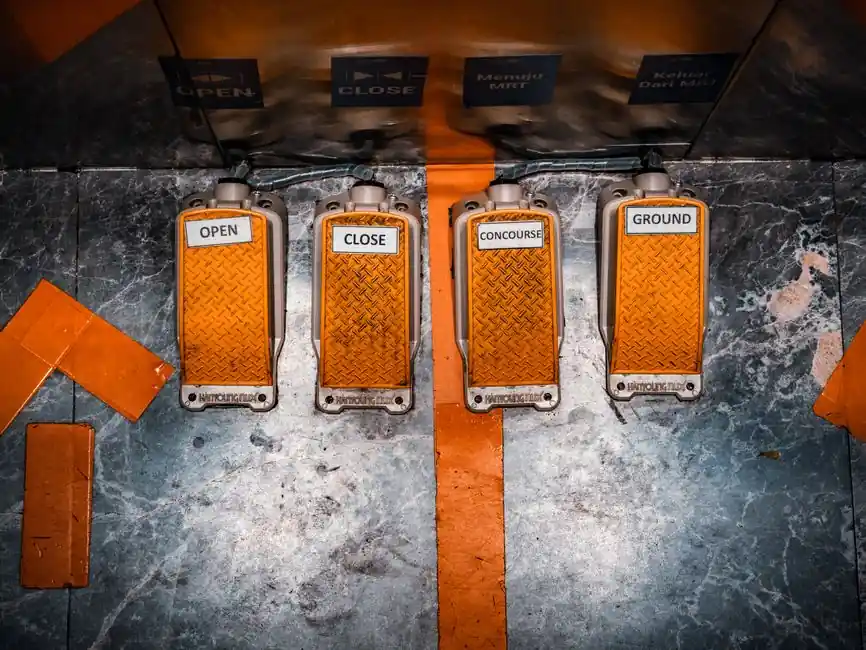
Limit switch TCO should include at least 6 cost categories: acquisition, installation, operation, maintenance, failure impact, and disposal.
The calculation applies to mechanical, magnetic, proximity, and electronic limit switches used to indicate equipment position, so the same framework supports both low-cost replacement decisions and safety-critical applications.
What Limit Switch TCO Measures
Total cost of ownership is the purchase price of an asset or product plus the costs of operation. For a limit switch, purchase price is only one part of that calculation, while operating, maintenance, replacement, and end-of-life costs determine the financial burden over the service period.
TCO is a financial assessment method used to understand all costs associated with acquiring, operating, and disposing of an asset or service over its entire lifecycle [S5].
The analysis must also account for replacement or upgrade costs at the end of the useful life, not merely the first installation [S2]. For recurring assets, applying a discount rate converts future costs into present value and prevents later expenses from being compared against an undiscounted purchase quote [S5].
Cost Drivers That Move the Purchase Price
Material and construction choices influence the initial price because a limit switch for a clean, low-cycle application does not need the same enclosure, sealing, contact, or actuator design as a switch exposed to dust, washdown, impact, temperature extremes, or corrosive conditions. The procurement comparison should therefore separate unit price from the application-specific cost of meeting those requirements. [S3]
Certification and installation requirements create another price layer. A switch selected for a hazardous area can require suitable enclosure, wiring, spacing, and installation practices, while a limit switch installed on moving machinery must be positioned and mounted so its switching repeatability remains usable.
Volume tier affects commercial terms, but a discounted unit price does not guarantee the lowest lifecycle cost. A high-volume purchase with incompatible actuators, extra brackets, field adjustment, or unsuitable electrical interfaces can shift labor into installation and commissioning. The TCO comparison should use a like-for-like bill of materials that includes required accessories, connectors, mounting hardware, and commissioning labor.
Lead time influences cost through schedule exposure. An apparently inexpensive switch with a long delivery period can delay installation or replacement, while a failed device may require expedited freight or emergency maintenance. Delivery delay does not automatically belong in TCO, but it should be evaluated where it produces identifiable labor, overtime, inventory, or production loss.
Choosing the Limit Switch Architecture
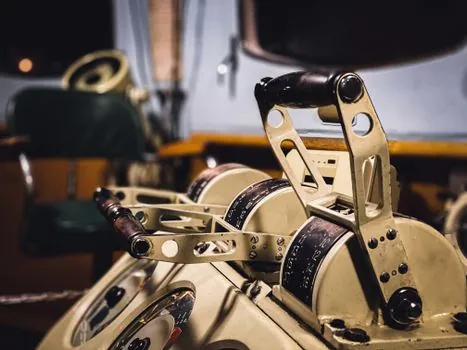
The most economic device is the one that meets the switching application without paying for unnecessary protection or performance. A simple mechanical limit switch can suit basic position indication, while contactless proximity sensors can suit applications where mechanical contact wear, contamination, or frequent operation affects reliability.
For machine-position feedback, a rotary encoder may be required when the process needs continuous angular measurement rather than a discrete limit state. If the requirement is absolute machine position after a power loss, an absolute encoder serves a different function from a limit switch and should not be substituted solely because its initial price is similar.
Use this comparison to align the device with the application rather than with a generic “best switch” label:
Mechanical limit switch versus contactless proximity switch versus electromechanical switch with electronic diagnostics: the mechanical option generally has the simplest structure and lowest device price, the proximity option can reduce contact wear and permit non-contact sensing, and the diagnostic option can add feedback functions that support condition monitoring. Installation complexity, environmental protection, switching life, diagnostics, and failure consequences must then determine which lifecycle cost is lowest.
Mechanical designs often exchange contactless operation for direct mechanical actuation, while non-contact devices depend on target material, sensing distance, and gap geometry. Electronic diagnostic features can add installation and configuration work even when they reduce uncertainty after commissioning. These differences affect labor, consumables, replacement frequency, and downtime, so they belong in the TCO model.
Installation and Commissioning Costs
Maintenance personnel need a repeatable mechanical interface, clear actuator travel, stable mounting, and an electrical arrangement compatible with the control cabinet. If an engineer must redesign brackets, locate the target differently, or troubleshoot an unsuitable switching point during installation, that labor changes the effective cost of each architecture. The model should record engineering hours, contractor hours, installation materials, commissioning time, and operator training separately.
For process equipment, the limit switch may sit beside other sensors such as a photoelectric sensor, but their roles should not be conflated. A photoelectric sensor can detect object presence or position through an optical beam, while a limit switch confirms a mechanical limit. The TCO comparison should evaluate each device against its actual function and include separate mounting, wiring, testing, and maintenance costs.
Commissioning also determines whether the switch can provide repeatable information. Record the actual actuator engagement, margin, electrical load, and test method in the installation file. Future replacement cost depends on those records, because a poorly documented switch installation can require troubleshooting and mechanical rework rather than a like-for-like swap.
Maintenance, Spares, and Failure Exposure
Maintenance TCO includes preventive inspections, corrective repairs, replacements, updates, technical services, and labor [S5]. For a limit switch, the relevant workload depends on switching frequency, contamination, mechanical shock, actuator wear, cable and connector condition, and whether the device is mounted where technicians can inspect and replace it safely.
Keep a standard spare equal to the installed model and actuator configuration if downtime cost is material. Spare inventory is not automatically a separate annual expense: its carrying cost should be recorded, while a consumed spare is transferred into the replacement or maintenance line. The analytical benefit is avoiding double counting the same physical unit in both inventory and repairs.
Failure cost can dominate a low-value device. Hidden TCO includes downtime, productivity loss, opportunity cost, and unforeseen logistics [S5]. For a limit switch on a conveyor, machine guard, or material-handling system, a failed signal can stop production, delay maintenance, or require a temporary bypass. The calculation should use the plant’s documented event cost, including lost output and technician response time, rather than an arbitrary penalty.
The proximity sensor TCO analysis applies the same lifecycle logic to a related discrete-positioning device: acquisition and installation are evaluated alongside operating burden, maintenance, and the consequence of failure rather than the sensor price alone.
Total Cost and Procurement Decision
Use the same analysis horizon for every candidate, such as the planned replacement period or the specified facility and equipment planning horizon. TCO requires a defined time horizon, reliable data, modeled recurring and one-off costs, and a discount rate where appropriate [S5]. Compare each option using net present value, then subtract residual or resale value when the asset can be sold at the end of life [S5].
The purchase decision should follow four gates: application fit, technical compliance, lifecycle cost, and supply risk. A lower acquisition price loses its advantage if it requires additional installation labor, has a shorter service interval, or creates a higher expected failure cost. A higher-priced device can justify its premium when it reduces maintenance visits, replacement frequency, commissioning effort, or production interruption.
Keep a traceable cost register with 8 minimum fields: device model, unit price, quantity, installation labor, operating energy, preventive maintenance, corrective maintenance, and failure or disposal cost. Add training, freight, tooling, spares, residual value, and upgrade expense when they apply. A comprehensive TCO analysis helps organizations avoid hidden-cost surprises and compare vendors fairly [S8].