
Food and beverage processors pair filling machines with bench, checkweigher, and load cell scales across batching, fill verification, and shipping, with the four core dosing technologies being flow meter, level, weight (load cell), and volumetric piston [S3].
Piston fillers are the most effective option for thick, viscous food products like sauces, soups, dips, and condiments, delivering a consistent fill level in every container regardless of particulates [S1]. For high-speed, repeatable fill volumes on free-flowing liquids, flow meter filling using electromagnetic or mass flow meters is the technology specified for carbonated beverages, juices, and dairy-based drinks, with fast changeovers between PET, glass, HDPE, and aluminum formats [S3].
Dosing Technologies Side by Side: Piston, Flow Meter, Level, and Load Cell
Volumetric piston fillers handle both high and low-viscosity items and are commonly selected for high-speed, large-scale operations where particulates or shear-sensitive product behavior rules out timed-flow dosing [S1]. Flow meter filling delivers high precision and high-speed operation simultaneously, with magnetic flow meters measuring the exact product volume dispensed and minimizing waste across carbonated to still product ranges [S3].
Level filling machines fill each container to the same height by closing a valve at a preset fill point, which gives visual uniformity for consumer-facing products but does not compensate for container volume variation [S3]. Load cell (weight) filling uses a per-container weigh cycle, tared or net-weight, to dose the exact mass into each package, which Oklahoma State University extension guidance describes as the standard method for net-weight filler setups where product value or giveaway is a concern [S8].
Matching the Scale to the Process Step: Bench, Checkweigher, and Floor
Bench scales and bench bases cover ingredient weighing, manual batching, and small-container checks across ingredient staging, recipe formulation, portion checks, and packaging verification, with capacity, readability, washdown rating, hygienic design, and legal-for-trade status as the evaluation criteria [S4]. Bench weighing scales monitor fill weights on packaging lines so operators can check that each package meets labeled weights, a step that catches drift before product leaves the floor [S7].
Floor and platform scales cover heavy goods, pallets, bins, totes, and bulk ingredients in goods-in, warehouse, bulk ingredient handling, and shipping, with deck size, stainless construction, washdown requirements, and overload protection as the gating specs [S4]. In-motion checkweighers integrated on conveyor lines handle packaged product checks, line verification, and overfill/underfill monitoring, with line speed, product size, integration needs, reject handling, and data reporting driving the selection [S4].
Static checkweighers and food checkweighers are specified for manual weight verification and production-floor quality control in portion control, under/over/accept checks, grading, and batching, with tolerance setup, operator display, IP69K rating, stainless construction, and data export as the comparison columns [S4]. Avery Weigh-Tronix builds these food and drink weighing solutions for demanding production environments where accuracy, uptime, and reliability directly affect profitability [S4].
Washdown, Stainless, and the Hygienic Environment
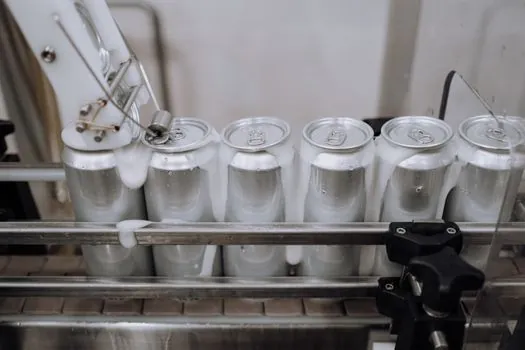
Washdown-safe stainless bench scales, washdown-safe floor scales, and load cells/weigh modules are selected around moisture, cleaning chemistry, corrosion, and durability for wet and corrosive production areas [S2]. In food areas that require varying temperatures, liquid may accumulate on scales and food particles may stick to them as well, which directly affects weight-reading accuracy, so scale surfaces must remain clean at all times [S5].
IP69K-rated stainless construction is the typical gate for in-line checkweighers in food-contact environments, with environmental factors like draft also affecting reading accuracy on sensitive resolutions [S4][S5]. Equipment life shortens when moisture, cleaning chemistry, corrosion, or harsh production conditions are not matched to enclosure and load cell sealing, so calibration frequency has to be built into the operating procedure from day one [S2][S5].
Giveaway, Underfill, and Legal-for-Trade Controls
Product giveaway happens when packages, batches, or fills consistently run heavy because the process does not have enough control around target weight, a problem that a properly sized in-line checkweigher or net-weight filler directly addresses [S2]. Checkweighers sort product and support automated rejection when over, under, or acceptable weight decisions need to happen quickly, and that decision is only as good as the load cell class and the reject mechanism behind it [S2].
Batching and setpoint systems, filling and dispensing solutions, and bulk packaging support keep recipes, formulations, and fills consistent from one run or shift to the next, which protects yield and repeatability on multi-SKU lines [S2]. A robust, high-quality weighing system can help reduce product giveaway, limit manual data entry, improve traceability, support legal-for-trade requirements, and keep production moving with fewer interruptions, so total cost of ownership is the right comparison metric rather than unit price [S4].
Throughput Numbers and Spec Boundaries
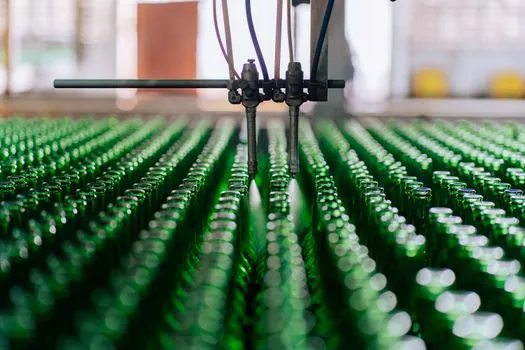
Some sauce filling machines fill 10 to 100 bottles each minute for thick sauces, while volumetric filling machines overall can fill 30 to 150 bottles per minute depending on viscosity and container size, the spread that usually sets the line-balance assumption at the capex stage [S6]. Piston fillers and positive displacement pump fillers are routinely specified for high-speed, large-scale operations, with pump fill stations and overflow liquid fillers managing diverse product viscosities and preventing spillage on shared lines [S1].
Servo PD pump fillers are the option called out for complex formulations where positive displacement pump fillers provide precise product-flow control and flexibility across a wide range of applications, including shear-sensitive and particulate-filled products [S1]. Flow meter fillers keep product changeovers fast, which is the spec gate for plants running multiple SKUs on a single line, and the streamlined design of flow meter systems minimizes contamination risk and simplifies cleaning [S3].
Who Each Configuration Is For, and Who It Is Not
Piston and PD pump fillers are for viscous, chunky, sticky, and shear-sensitive products like sauces, dressings, condiments, dips, spreads, dairy, syrups, batters, fillings, soups, and prepared foods, and they are not the right pick for thin, free-flowing beverages where volume-per-container accuracy and fast changeover dominate [S1][S3]. Flow meter fillers are for carbonated and still beverages, dairy-based drinks, and fruit juices running on lines that demand high precision and high-speed operation across multiple container formats, and they are not the cost-effective option for very viscous, particulate-heavy products [S3].
Level (overflow) fillers are for thin, free-flowing liquids where visual fill level is the consumer-facing quality signal, and they are not for products where the actual dispensed volume must be held to a tight specification [S3]. Load cell (weight) fillers are for high-value ingredients and net-weight regulated fills where give-away and underfill penalties both hurt margin, and they are not the fastest option for high-volume, low-viscosity beverage lines where flow meter filling is the better match [S8][S3].
For broader plant context on how load cell and scale decisions connect to packaging and cold chain operations, see the Filling Scale Selection for Cold Chain Logistics reference for temperature-controlled line considerations, the bench scale encyclopedia entry for resolution and readability fundamentals, and the filling machine encyclopedia page for the mechanical layout families (linear, rotary, automatic, semi-automatic, isobaric) that sit on top of any of these dosing technologies [S3].
Selection Checklist Before You Buy

Lock the product behavior first: viscosity range, particulate size, shear sensitivity, and temperature at the fill point, because the dosing technology choice flows from that, not from line speed alone [S1][S3]. Confirm container format, changeover frequency, and CIP or washdown chemistry, since those three together set the hygienic-design, stainless, and IP rating requirements on both filler and scale [S2][S3][S5].
Define the throughput target in bottles per minute and the reject strategy on the checkweigher, then size load cell capacity, readability, and the tolerance band against legal-for-trade and customer specs, and decide whether the line will run on volumetric, level, flow meter, or load cell dosing [S4][S6][S8]. Plan calibration intervals and self-calibration capability into the spec, since frequent calibration is a hard requirement in food and beverage and slow calibration procedures cost throughput [S5].
The trackable signals over the next planning cycle are servo-driven PD pump filler adoption on multi-SKU viscous lines, IP69K in-line checkweigher integration with automated reject on net-weight regulated SKUs, and self-calibrating bench scale deployment in washdown zones, each of which will show up first in capex line items and in giveaway-reduction reports on existing lines [S1][S2][S4][S5].
Component reference pages worth checking: filling weighing scale.