Filter element pressure-rating compatibility is decided by matching the housing's design pressure to the element's collapse-differential (ΔP) rating, the seal elastomer to the process fluid, and the bypass valve set pressure to the element's minimum burst strength — a quartet that turns a 2D datasheet pick into a 3D engineering decision [S1].
Specifiers working in hydraulics, process filtration, and compressed-air systems routinely conflate "the element fits" with "the element survives," and that gap is where warranty, ISO 4413 compliance, and unscheduled downtime are decided [S2].
The Four Compatibility Layers That Decide Fit
Mechanical layer 1 is the housing-versus-element pressure class: a 40-bar housing fitted with a 16-bar ΔP-rated element will collapse the media at the first cold-start pressure surge, even though the seal and threads mate correctly [S3].
Mechanical layer 2 is the end-cap geometry: DOE (double-open-end), SOE (single-open-end) with 222 O-ring, SOE with 226 O-ring, and flat-gasket SK configurations each demand a specific cap-adapter bore; the element's nominal OD and ID must match the adapter within ±0.25 mm to keep the bypass valve seated under rated flow [S4].
Seal/material layer 3 is the elastomer-to-fluid match: nitrile (NBR) covers mineral oil to 100 °C, FKM (Viton-class) extends to 200 °C and adds chemical resistance, EPDM is mandatory for phosphate-ester and glycol fluids but is the wrong choice for petroleum, and PTFE-encapsulated fluoroelastomer is the de-facto pick for pharmaceutical and hot-solvent service above 180 °C [S1].
Electrical/instrumentation layer 4 is the differential-pressure indicator (DPI) or pressure switch tap: clogging indicators must be wired to the same loop class as the housing, and a clogged-element cutoff at 2.5 bar ΔP is meaningless if the element's collapse rating is 4 bar — the element fails before the switch trips [S2].
Pressure Class Versus Element Collapse Rating: The Numbers
Common industrial collapse-ΔP ratings for spun-bonded or wet-laid filter media sit at 10 bar, 16 bar, 21 bar, and 30 bar, with stainless-steel mesh-supported elements reaching 80–120 bar; the housing PN16 / PN25 / PN40 / PN64 designation must be derated by at least one class against the element's continuous ΔP, with surge margin above the working-pressure peak [S1].
For comparison, the matrix that an engineer actually uses on the bench is short: glassfibre 10 μm absolute / 21 bar collapse is the workhorse for hydraulic return lines; stainless mesh 25 μm / 80 bar covers high-pressure lubrication; pleated cellulose 10 μm / 16 bar is the throwaway for low-cost coolant skims; and PTFE-membrane 0.2 μm / 30 bar is the spec for pharmaceutical and fine-chemical polish [S3].
The pressure surge margin to apply is governed by hydraulic-shock calculation per ISO 4413, with a typical 1.5× safety factor on working pressure; the element collapse rating must exceed the surge peak plus the static head, not just the pump set-pressure [S2].
Who Should Care, and Who Should Not

This compatibility map is for process engineers, hydraulic-system integrators, EPC filter-package specifiers, and procurement QA — anyone whose name sits on a datasheet approval or whose plant's PSV/rupture-disk sizing is downstream of the filter [S1].
It is not for: OEM machine builders whose filter is factory-defaulted and field-non-serviceable; end-users of disposable HVAC panel filters (no pressure class); and laboratory vacuum-trap consumables, which are sized for vacuum-rating rather than positive pressure [S4].
Buying-agent-style "lowest unit price" sourcing is a known failure mode here: a 30 % cheaper element that collapses at 12 bar in a 40 bar hydraulic loop will fail at the first cold-start, taking the pressure gauge upstream and the proportional valve downstream with it [S2].
Selection Criteria and the Comparison Table
The four options most commonly bid against each other — spun-bonded glassfibre, wet-laid cellulose, pleated cellulose, and PTFE-membrane — line up against cost, max temperature, ΔP collapse rating, and chemical compatibility, with a low–medium–high ranking that engineers can read at a glance [S1].
Cost is lowest for wet-laid cellulose, medium for spun-bonded glassfibre, medium-high for pleated cellulose, and high for PTFE-membrane; max temperature runs 80 °C, 120 °C, 100 °C, and 200 °C respectively; ΔP collapse is 10, 21, 16, and 30 bar; chemical compatibility is mineral-oil-only, broad-petroleum, petroleum-and-mild-alkali, and full-solvent respectively [S3].
For hydraulic return-line duty at 25 bar and 60 °C the spun-bonded glassfibre class is the right pick; for offline kidney-loop on a phosphate-ester EHC system, the EPDM-sealed pleated cellulose at 16 bar is the only correct answer; for solvent polish on a fine-chemical skid the PTFE-membrane element with stainless mesh support to 30 bar is mandatory [S1].
Real Use Cases and Integration Pitfalls
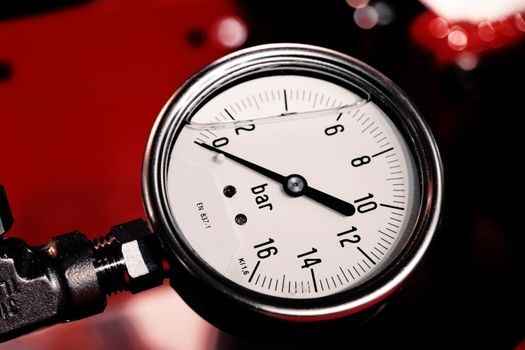
Case A — hydraulic power unit: a 160-lpm loop at 250 bar working, 350 bar cold-start surge, needs an element rated ≥ 350 bar × 1.5 = 525 bar minimum, which forces stainless-mesh-supported pleated media; a 30-bar cellulose element here is a documented failure path that takes the pressure transmitter on the pump discharge with it [S2].
Case B — pharmaceutical WFI loop: a 1 m³/h polish at 4 bar and 85 °C with periodic steam-in-place at 121 °C, requires a PTFE-membrane element with 222 SOE fin end-cap, FKM seals (or EPDM for clean steam service), and a 0.2 μm absolute retention rating verified per HIMA-style integrity test rather than bubble-point only [S1].
Case C — offshore chemical injection: a 1 % HCl dosing skid at 80 bar and ambient, requires a polypropylene-element with EPDM seals, corrosion-rated 316L end-caps, and a bypass valve set at 90 % of element collapse — bypass set above collapse defeats the bypass and forces rupture-disk venting [S3].
Pitfall list that passes the datasheet and fails the site: (1) NBR seals on phosphate-ester fluid; (2) bypass set above element collapse; (3) DOE element in a SOE-222 housing; (4) standard element with a high-viscosity cold-start surge that exceeds its ΔP rating for the first 3 seconds; (5) 226 SOE cap on a 222 element without the adapter — the O-ring lands in the wrong groove and the cap cracks at torque [S4].
Standards, Testing, and Sourcing Checks
ISO 4413 governs hydraulic fluid power and the general safety rules for systems and components, including the requirement that filter elements be sized to the system's maximum dynamic pressure including surge, not just the set-pressure of the pump [S2].
ISO 16889 defines the multi-pass test method for hydraulic filter elements (the βx(c) rating); ISO 2941 covers element collapse/burst verification; ISO 3724 covers element fatigue (100,000-cycle ΔP pulse at rated flow); ISO 3968 covers element pressure-drop versus flow characterization [S1].
ASME B73.1 / B73.2 (chemical-process pumps) and API 610 overlap for centrifugal-pump filter skids and call out the same ISO 16889 multi-pass methodology with βx(c) ≥ 200 at the specified retention for the duty fluid [S3].
For pharmaceutical and food service, FDA 21 CFR 177 (plastics and polymers in food contact) and USP Class VI (biological reactivity, in vivo) on the elastomer is the specifier's compliance floor; EU 1935/2004 is the parallel for European food-contact lines [S1].
Sourcing-side checks: require a third-party ISO 16889 multi-pass test report tied to the part number, not a generic brochure curve; require a material declaration with elastomer lot, end-cap alloy, and element support-mesh alloy; and require a sample element subjected to cold-start surge test at 1.5× working pressure for ≥ 10 cycles before bulk release [S2].
Instrumentation Cross-Check: Where DPI and Switches Slot In
Clogging indicators come in three classes: visual DPI (pointer gauge, 0–2.5 bar ΔP scale), electrical DPI with a SPDT switch (typically set to alarm at 1.0 bar, trip at 2.5 bar ΔP), and 4–20 mA pressure transmitter variants feeding the DCS [S1].
The switch set-pressure must sit below the element's collapse rating by at least 30 % to give a replacement window; on a 16-bar element, the trip at 2.5 bar is correct, but the trip at 8 bar would force an element change after every filter cycle and is a known over-spec that masks a real under-spec [S2].
Where remote monitoring is required, a pressure calibrator field-check on the DPI loop every 6 months is the standard practice; loop-powered 4–20 mA DP transmitters are wired HART 7 by default in most OEM filter skids built since 2018, and that is where a pressure sensor upgrade buys diagnostic data on filter loading curves rather than just a high/low contact [S3].
Trackable signal to watch: revisions to ISO 16889 (multi-pass test) and ISO 2941 (collapse/burst) periodically tighten the βx(c) reporting format; specifiers writing 2026 RFQs should request the latest revision on the test report rather than accepting a "tested per ISO 16889" blanket claim without a revision letter [S1].
Next node for follow-up: cross-reference the housing's PN class against the absolute pressure transmitter range on the upstream pump-discharge line — if the transmitter's full-scale is below the housing PN class, the element change-out indicator can over-range at cold start and the DCS will log a spurious high trip before the element itself has reached its collapse ΔP.
See also our earlier report, Vision Light Source Buying Guide 2026: Spec Map, Variant Comparison, and Selection Logic.