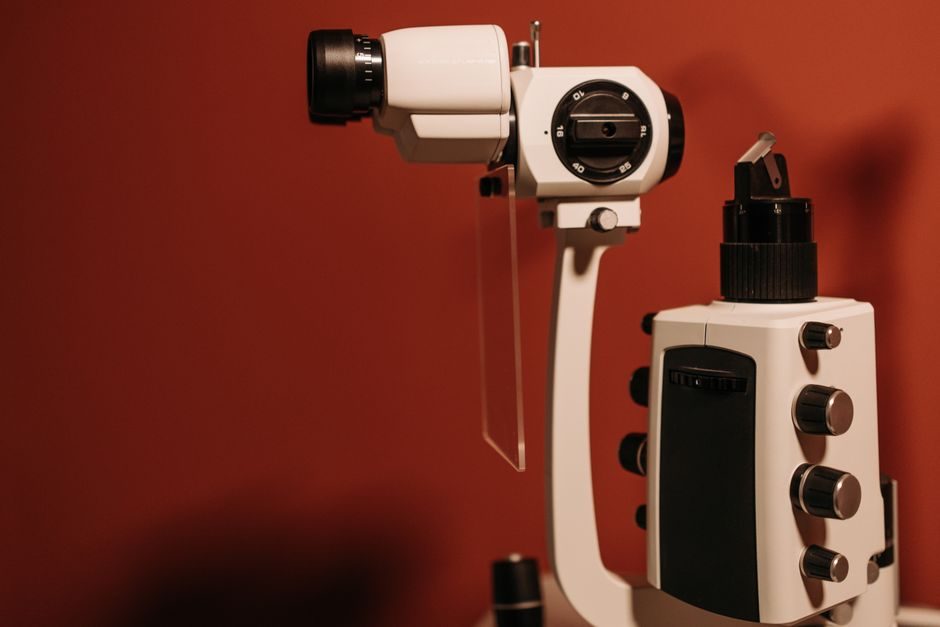
Industrial buyers evaluating a vision light source in 2026 should size the decision by three engineering axes: spectral band, illumination geometry, and drive topology — and LED dominates the shortlist on all three [S1].
Common geometries on the buyer's bench are ring, bar/linear, backlight, coaxial, dome, and dark-field low-angle; common spectral bands are white (typically 5500-6500 K correlated color temperature), red 620-660 nm, blue 460-470 nm, green 520-530 nm, IR 850/940 nm, and UV 365-405 nm [S1].
Spectral Band: White vs Monochrome vs UV/IR
White LEDs at CRI 70-95 cover roughly 80% of contrast-detection jobs and remain the default for general part-presence and color verification, while single-wavelength red 660 nm LEDs cut through red-packaging translucency in pharmaceutical and food lines [S1]. Blue 470 nm delivers the strongest contrast on orange/yellow solder-mask and bare copper on PCBs, and 365 nm UV-A is the standard band for UV-curable adhesive inspection, NDT dye-penetrant work, and currency or document verification [S1].
IR 850 nm is the workhorse for silicon-wafer backside inspection and for suppressing visible ambient in outdoor traffic and railway optical systems; IR 940 nm trades a small signal-to-noise loss for invisibility to human eyes in security applications [S1]. Buyers should match LED binning to a single wavelength (±10 nm for red/blue, ±5 nm for UV-A is typical), since cross-bin drift is the single most common cause of repeatability failures between lots [S1].
Geometry: Ring, Bar, Backlight, Coaxial, Dome, Dark-Field
Ring lights at working distances of 50-300 mm are the general-purpose workhorse for top-down part presence and label reading, and they pair natively with 25-50 mm C-mount lenses on a vision measuring machine station [S1]. Bar/linear lights are specified for line-scan and conveyor illumination; a 2-LED bar at 30° incidence is the default for cylinder and bottle surface-defect work, and 4- or 8-LED bars cover wider web widths [S1].
Backlights — flat-panel diffused LED arrays — deliver silhouette and dimensional measurement with edge sharpness typically inside 5-20 µm at the object plane, making them the standard for go/no-go gauging when a vision controller is running sub-pixel edge extraction [S1]. Coaxial lights collimate through a half-mirror to eliminate shadowing on shiny or specular surfaces (semiconductor wafer, polished metal, glass LCD inspection), while dome/diffuse lights from 4 to 12 inches wrap highly curved, reflective parts in 360° Lambertian flux [S1]. Dark-field low-angle bars are purpose-built for scratch, edge-defect, and surface-texture inspection on flat metal or glass, where the surface specular reflection must be excluded from the lens pupil [S1].
Drive Topology: Constant-Current vs Strobe vs Analog
Analog 0-10 V or manual potentiometer dimming is the standard 0-100% intensity range on CC units, useful when integrating with a linear guide stage and a high-magnification zoom lens where heat and photon shot-noise must be tightly managed [S1].
Strobe / pulsed drive overdrives LEDs at 2-10× the continuous current for 10-200 µs pulses synchronized to the camera exposure window; the LED junction cools between pulses, so apparent brightness rises while mean diode current — and therefore lifetime — is held constant [S1]. Strobe is mandatory for high-speed line-scan (typically >10 kHz line rate) and for any application where motion blur is unacceptable, and the trigger source is usually a 5-24 V PLC or encoder pulse [S1]. Overdrive ratios above roughly 3:1 require thermal derating curves from the manufacturer, because junction temperature above 85-100°C accelerates the dominant L70 lumen-depreciation failure mode [S1].
Criteria-Based Comparison of the Six Main Geometries
Ring lights score low on specular/part-curvature jobs (dome beats them by 4-8× on contrast for polished metal), but high on cost-per-Watt for general presence detection [S1]. Bar/linear lights are the only practical answer for line-scan and conveyor web; segmented bars with 2-8 independently addressable zones let the integrator compensate for 1st-surface vs 2nd-surface reflectivity on multilayer webs [S1].
Backlights deliver the highest edge fidelity for gauging, with 1-D edge uncertainty routinely inside 1/4 pixel at a working distance equal to the panel diagonal, but they require the part to be physically transported between light and lens, which constrains mechanical layout [S1]. Coaxial lights are specified only when the part is highly specular, flat, and small (≤ lens field of view) — outside that envelope, half-mirror vignetting destroys the geometry's advantage [S1]. Dome lights are bulky and inefficient, drawing typically 3-5× the LED count of a ring light for a similar working distance; they pay for themselves only on mirror-polished, doubly curved parts [S1]. Dark-field bars are a niche geometry, but a crossed-roller-guide stage paired with a dark-field bar at 8-15° incidence is the textbook setup for edge-defect inspection of glass and polished metal at sub-100 µm feature sizes [S1].
Who Should NOT Pick the Mainstream Ring Light
Ring lights fail on three job types: highly specular or polished parts (use coaxial or dome), dimensional gauging of small features below roughly 50 µm (use backlight), and full-body defects on a moving web wider than 200 mm (use bar or large-area backlight) [S1]. A ring light on a shiny stainless medical part is the single most common misapplication a 10-year process engineer will see, and it is the lighting decision — not the camera or lens — that caps inspection yield in that case [S1].
Interfacing, Thermal, and Lifetime Discipline
Connector pattern is M12 5-pin on the European industrial side and flying-lead / JST on the Asian OEM side — buyers should standardize on M12 for any plant-floor deployment [S1].
Lifetime is quoted as L70 (time to 30% lumen depreciation) and typically lands at 20,000-50,000 hours for industrial LED panels at rated continuous current and 25°C ambient; L70 halves for every ~10°C rise in junction temperature above 40°C, so a panel on a sealed NEMA 4X head in a 50°C ambient will hit its L70 roughly 2-4× faster than its datasheet rating [S1]. MTBF figures from datasheets assume the LED is driven at rated current, not overdriven — strobe duty cycle must be counted as an equivalent DC current when applying thermal derating [S1].
Standards, Compliance, and Sourcing Signals to Track
Vision light sources are not pressure equipment, so they fall outside ATEX/IECEx category 1 hazardous-area certification on most lines, but they do fall under the IEC 62471 photobiological safety family for LED risk-group classification (RG0/RG1/RG2/RG3) — buyers integrating any UV, IR, or high-intensity white light into a worker-facing station should require the manufacturer's RG classification in writing [S1]. CE marking under the EU Low-Voltage Directive and EMC Directive is standard for European procurement; RoHS and REACH compliance is standard for European and most Asian OEM channels [S1].
Watch the next 6-12 months for two sourcing signals: tighter IEC 62471 enforcement on RG2-classified blue and UV light sources in EU machinery, and a wave of M12-connector standardization as Japanese and Korean OEMs align to the German automotive-vision connector pattern [S1]. For deeper procurement context on adjacent automation categories, the industrial barcode scanner selection map and the weighing-indicator 2026 selection map follow the same LED/24 VDC/M12 mechanical logic and serve as useful cross-references for a single-vendor automation bill of materials [S1].