
Addressable panels dominate 2026 fire-alarm spec lists: the MAVILI Maxlogic ML-125XX series scales to 2032 addresses across up to 16 loops on a VIP communication protocol [S1], the Siemens FC361 supports a single loop of 126 C-NET devices with auto-configuration [S2], and the OZH4800E ships in 2/4/6/8-loop variants with 192 devices per SLC loop at 24 VDC, 5.0 A output [S9].
Conventional panels remain the default for small retail and light-commercial builds: the Siemens FC121-ZA covers 2 zones, IP30, with an integrated operating unit [S5]. Across 11 manufacturers and 31 product lines on the DirectIndustry index, addressable architectures are the bulk of the new catalog and conventional zone-count panels are the minority [S4].
FACU vs FACP: Naming, Scope and the Code Path You Inherit
The Fire Alarm Control Unit (FACU) and the Fire Alarm Control Panel (FACP) describe the same hardware role: the central decision and power-routing node for initiation, notification and off-premises signaling, as NFPA framing in the 2021 fire-alarm basics guide makes explicit [S7]. The label difference is regional, not functional — UL 864 listings cover both naming conventions in U.S. practice, while EN 54-2 / EN 54-4 governs the equivalent European product family.
For 2026 retrofits, treat the FACU/FACP as the equipment that drives every downstream choice: detector type, NAC class, voice evacuation, and the pathway to the monitoring station. Skipping the FACP spec and starting at the detector is the most common mistake on small projects, because detector count and SLC topology cascade directly from the loop count and device-per-loop limit the panel supports [S8].
Selection Criteria That Lock the Build
Loop count and per-loop device cap are the first gate. MAVILI Maxlogic specifies up to 16 loops and 2032 addresses [S1]; the OZH4800E ships 2/4/6/8 loops with 192 SLC devices each (24 VDC, 5.0 A PSU, 4 A available for system power) [S9]; the Siemens FC361 is a 1-loop, 126-device panel for compact jobs [S2]. Over-spec'ing loops wastes cost; under-spec'ing locks you into an early panel swap.
Power and standby sizing come next. The OZH4800E uses DC24V 4AH sealed rechargeable standby on a 120/220 VAC primary [S9]; conventional 2-zone panels typically run a smaller battery pack matched to the zone count. NFPA 72 chapters on secondary power drive the ampere-hour math; treat standby as a calculation, not a default [S7].
Enclosure rating is a real spec gate. Most panels in the 2026 catalog default to IP30 (FC121-ZA, FC361, FT724) [S2][S3][S5]; plant rooms, wash-down areas and outdoor kiosks need IP54 or higher, which excludes most of these enclosures and forces a different SKU or a dedicated cabinet.
Networking and remote terminals change the topology. The Siemens FT724 is a remote operating terminal — installation slots for RS232, RS485 and SAFEDLINK networking — designed to sit on the same C-NET backbone as the central [S3]. For multi-building campuses, the SAFEDLINK-style fiber ring is the differentiator between a single FACP and a coordinated fire network.
Conventional vs Addressable: A Side-by-Side Decision Matrix

Conventional 2-zone FACPs (FC121-ZA, IP30) suit small retail, kiosks and any build with under ~20 initiating devices where zoning granularity and per-point identification are not required [S5]. Cost per device is low, but fault location is limited to the zone.
Single-loop addressable FACPs (FC361, 126 C-NET points, auto-configuration) suit small commercial, schools and single-floor offices where per-point ID matters but the device count is bounded [S2].
Mid-range addressable FACPs (OZH4800E 2/4-loop, 192 devices/loop, 24 VDC 5.0 A) suit mid-rise offices, hotels and hospitals where 384–768 points cover the floorplate with room to grow [S9].
Large-scale addressable FACPs (Maxlogic ML-125XX, up to 16 loops, 2032 addresses, VIP protocol) suit campuses, high-rises and process buildings where loop redundancy, cause-and-effect and remote terminals are non-negotiable [S1].
Power, Battery and HMI Subsystems
Texas Instruments frames the FACP power chain as a multi-rail problem: power-factor-corrected AC input, isolated DC rails, hot-swappable expansion modules, and a human-machine interface that survives brownouts [S8]. The OZH4800E exposes the same architecture concretely — 24 VDC output at 5.0 A with 4 A available to the system, 120/220 VAC primary, 24V/4AH standby — and adds a 15-line × 40-character LCD (600 characters) for status and event log [S9].
Standby battery sizing is the part that bites in commissioning. NFPA 72 requires the FACP to supervise battery health and alarm on degraded cells; design the AH to cover the worst-case alarm load for the code-defined duration, not just the quiescent load [S7]. Skipping the math is the most common cause of failed acceptance tests.
Networked Fire Terminals and Multi-Building Sites
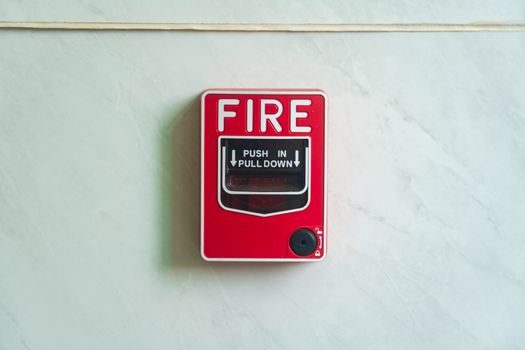
For sites with multiple buildings, the FACP turns into a network. The Siemens FT724 acts as a remote operating terminal with its own power supply, RS232, RS485 and SAFEDLINK networking modules — a typical pattern for campus fire networks [S3]. The FT724 does not replace the FACP; it extends the human interface and the cause-and-effect logic to a remote fire station.
MAVILI's Maxlogic platform uses the VIP communication protocol to push the same logical model to 2032 addresses across 16 loops [S1] — relevant when comparing networking topologies side by side, because proprietary protocols limit cross-vendor mixing. For mixed-vendor retrofits, pin the protocol and the permitted device list in the spec.
Standards, Listings and Acceptance Path
UL 864 (U.S.), EN 54-2 / EN 54-4 (Europe) and the regional equivalents are the product listings; NFPA 72 is the installation/commissioning code that ties detector placement, NAC class and monitoring to the FACP [S7]. For voice evacuation, add EN 54-16; for aspiration detection, add EN 54-20.
On a 2026 retrofit, an addressable FACP is also the easiest place to land EN 54-13 compatibility-level requirements because the panel exposes per-point diagnostics — a conventional 2-zone panel cannot [S1][S5]. Indian and Middle East code paths often route through IS 2189 or UAE Fire and Life Safety Code; the FACP's evidence trail (event log, drift compensation, calibration date) is what the inspector will read first.
Failure Modes and Field Cautions

Loop topology mistakes dominate the field ticket queue: T-taps, exceeding 192 devices per loop on a panel like the OZH4800E [S9], or mixing isolator and non-isolator bases on the same segment. The FC361's auto-configuration is useful here — it reads every C-NET device at commissioning and flags the missing ones immediately [S2] — but the pre-design loop load calc is still required.
IP30 rating surprises the project team when the panel lands in a plant room with hose-down cleaning or outdoor exposure; the FC121-ZA, FC361 and FT724 are all IP30 only [S2][S3][S5]. Specify the IP rating on the same line as the panel model, not as an afterthought.
Battery chemistry drift is the second-most common field failure. Sealed lead-acid at 24V/4AH is the default in this catalog [S9]; lithium packs are lighter but require a different charger curve and a panel firmware that recognises them. Mixing chemistries on a retrofit without re-checking the charger is a recipe for a failed inspection.
How FACP Sits With the Rest of the Fire System
The FACP is the integration point for initiating devices (detectors, pull stations), notification appliances (horns, strobes, speakers), monitoring (DACT, IP communicators) and the wider building systems (HVAC shutdown, elevator recall, smoke control). NFPA's basics guide lays out the FACU as the hub that ties these subsystems together [S7].
On larger sites the FACP feeds the linear guide and crossed roller guide logic of the broader spec through the same cause-and-effect engine — the panel's role is to make the right decision and route the right outputs when a single detector, a zone, or a network event fires. The fire alarm control panel page in this encyclopedia covers the architectural variants in more depth.
For a narrower spec workflow, see the Fire Alarm Control Panel Spec Gates: 7 Criteria That Lock the Build companion article, and the Fire Hydrant Price and Cost Guide 2026 for the wet-pipe side of the same code path.
FAAS in Mumbai lists the same product family as Indian FAC361/FC121-equivalent builds and bundles audio-evacuation into the same cabinet, which is the typical small-project pattern in South Asia [S6]. For U.S. and EU retrofits, the safer approach is to keep voice evacuation on a separate EN 54-16 amplifier rack and let the FACP supervise it.
What a 2026 Spec Should Pin in Writing
Pin the FACP architecture (conventional or addressable), the loop count, the per-loop device cap, the standby battery chemistry and AH, the enclosure IP rating, the display size, the networking protocol and the listing/standard path (UL 864 or EN 54-2/4) on the same line. The Maxlogic 16-loop / 2032-address model [S1] and the FC361 1-loop / 126-device model [S2] are the bookends for most 2026 spec lists; the OZH4800E family sits in the middle at 2–8 loops and 192 devices per loop [S9].
Watch two 2026 signals: SAFEDLINK-style fiber-ring networking on mid-range panels (FT724 exposes it as a slot) [S3] is now the default for multi-building sites, and addressable panels with auto-configuration (FC361) [S2] are pushing the single-loop class into buildings that five years ago would have run conventional 8-zone FACPs. Both trends reduce commissioning time but raise the bar on the loop load calculation that has to land before the order.