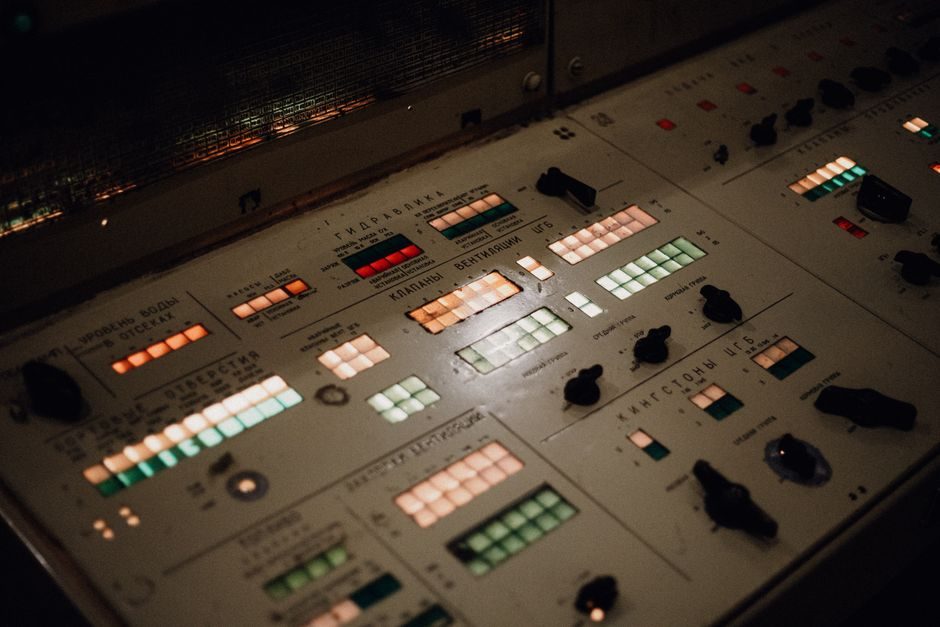
A 16-loop addressable panel such as the MAVILI ML-125XX.D series carries a 2032-address capacity and modular 16-loop expansion [S2]; the comparable conventional/extinguishing Siemens XC1001-A lists at EUR 2,470 indicative, weighs 4.1 kg, and ships in a 370 x 286 x 90 mm IP30 enclosure rated for -5 to 40 °C operation [S1]. Both reference points sit in the same cost band that frames any fire-alarm TCO conversation.
Total cost of ownership covers "purchase, use, maintenance, support, and disposal" across the full life cycle, with TCO = P + PV(O + T + M + W + E - S) per USPS supplying guidance [S3]. For a Fire Alarm Control Panel, the panel-head hardware is the line item procurement teams see first, but on a 10-15 year horizon it is the smallest of the cost blocks.
Cost Stack: Where the Money Actually Goes
On a 10-15 year TCO model for an EN 54-2 / EN 54-4 system [S1], five blocks dominate: design and engineering (5-10%), panel hardware (1-5%), cable and field-device infrastructure (20-35%), installation labor and commissioning (25-40%), and inspection/testing plus battery replacement over the service life (20-30%). A 16-loop addressable architecture — like the MAVILI Maxlogic platform supporting 2032 addresses on up to 16 loops [S2] — concentrates more cost in the loop cable and devices, but reduces the panel count and downstream integration points.
Conventional architectures (XC1001-A: 3 conventional lines, 4 monitored inputs, 1 alarm relay at 30 V / 1 A [S1]) cut loop-cable cost but require more panels in larger footprints, pushing panel-hardware and labor percentages up. The panel itself, at indicative prices clustered between EUR 700 (Siemens FC121-ZA) and EUR 4,725 (FC361 series) per panel [S1], is rarely the cost driver once cabling, detectors, notification appliances, and 10+ years of annual inspection are summed.
Driver Map: Purchase, Operating, Maintenance
Purchase (P) covers the FACP head, loop cards, network cards, and the backup battery set. The XC1001-A draws 150 VA and ships with 2 x 12 V / 4.5 Ah sealed lead-acid batteries, which in mid-2026 wholesale channels still define the 24-72 hour standby requirement on a typical EN 54-4 system [S1]. Operating (O) is mostly negligible for the panel itself — the AC 115-230 V mains feed at 50/60 Hz [S1] costs a few dollars per month; the meaningful operating cost sits at the building level (notification appliance draw, fan-stop and damper controls, elevator recall).
Training (T) and Maintenance (M) are where TCO surprises engineers. T covers initial commissioning plus turnover as facility staff rotate; M covers annual inspection, detector cleaning, re-acceptance after any field change, and two to three battery replacement cycles over 10-15 years (sealed lead-acid at 4.5-17 Ah typically lives 4-6 years). Warranty (W) and End-of-life disposal (E) are smaller but non-zero — disposal of lead-acid batteries is regulated in the EU, the UK, and most US states. Salvage (S) on a properly documented system is usually limited to the network-interface hardware at end of life.
Selection Criteria That Move the TCO Curve

Architecture choice is the single biggest TCO lever. An addressable panel at 2032 addresses and 16 loops [S2] lets one cabinet replace several conventional panels; conventional panels in the EUR 700-EUR 2,470 band [S1] cost less per head but multiply across the building. For a 50,000 m² facility, addressable typically wins on TCO by 15-25% over a 10-year horizon despite higher panel-hardware cost, because the loop count, cable runs, and panel-to-panel integration points all shrink.
Protocol and integration: VIP-protocol loop-powered addressable sounders and I/O modules [S2] reduce external power supplies and the extra cable pair they need. Siemens' FDnet/C-NET I/O modules on the XC1001-A allow integration to FS20/FS720 panels [S1], which matters on retrofit jobs where new panels must coexist with existing field devices — a major TCO trap when a "lowest panel bid" forces a full detector swap. Standards compliance: EN 54-2/A1 and EN 54-4/A2 (power supply) plus EN 12094-1 (extinguishing) on the XC1001-A [S1] is the European baseline; UL 864 / NFPA 72 governs the North American equivalent, and inspectors will fail a non-listed panel regardless of panel-head price.
Enclosure and environment: IP30 is appropriate for indoor mechanical/electrical rooms [S1]; lower IP ratings fail in plant rooms, food-processing wash-down areas, and most exterior installations, and replacing a failed panel at year 7 wipes out any panel-cost saving. Operating-temperature range of -5 to 40 °C (storage -20 to +60 °C) [S1] is the standard indoor envelope; outdoor and freezer-room applications need a heated/cooled cabinet, which is an installation line item often missed in TCO models.
Total Cost of Ownership Comparison: Conventional vs Addressable
Across four decision criteria on a 10-15 year horizon, conventional and addressable systems split clearly. (1) Panel hardware cost per covered area: conventional is lower per head (EUR 700-EUR 2,470 examples [S1]), but more heads are required. (2) Cable and field-device cost: conventional uses more cable per detector, while addressable loops carry up to 2032 points on 16 loops [S2]. (3) Labor for installation and commissioning: addressable commissioning software (MAVILI's Loop Manager, three-language menu [S2]) cuts commissioning hours by 20-40% vs conventional point-to-point testing. (4) Lifetime inspection and battery cost: roughly equivalent per point, but addressable's point-level diagnostics cut troubleshooting labor. Net: addressable wins on most TCO models for buildings above ~3,000 m² or with more than 200 points; conventional wins on small single-sector jobs where the XC1001-A form factor is a clean fit [S1].
Mid-range addressable panels (MAVILI ML-125XX.D, Maple Armor FW106S) sit alongside the Siemens FC721/FC722/FC361 family in the same procurement tier [S1][S2][S5]. Maple Armor's Canadian-engineered addressable systems target commercial, industrial, and institutional buildings across North America [S4]. The FireWatcher FW106S/FW106SC is described by the vendor as "ideally suited for both new and retrofit commercial, institutional, and industrial fire detection and notification applications" [S5], which is the typical addressable sweet spot.
Who TCO Analysis Is For — and Where It Misleads

TCO modeling is genuinely useful for facility owners, MEP consultants, and fire-system integrators making 10-15 year capital decisions. The USPS SPP guidance is explicit: "A TCO analysis exposes the hidden costs easily overlooked during budget planning" and "is not a one-time event; accuracy and inclusion must be maintained throughout the life cycle" [S3]. For a Fire Alarm Control Panel specifically, the framework forces the design team to put a number on inspection labor, battery replacement, and disposal — line items that the panel-vendor's quote never includes.
Where TCO can mislead: on small single-panel jobs (a single XC1001-A serving one zone [S1]) the TCO overhead is not worth the modeling effort; just spec correctly and inspect annually. It also misleads when used to compare a panel quote to a fully-installed turnkey bid, since the labor block is double-counted or omitted depending on who builds the model. Useful reference treatments from outside the fire-alarm domain — the Microsoft TCO calculator for cloud workloads [S6], the Toolshero definition piece [S7], and a Springer TCO study on medical-device procurement in perinatology [S8] — all share the same lesson: TCO is sensitive to which cost lines the analyst remembers to include, not to the math.
Standards, Sourcing, and Failure Modes
Hard sourcing rules: the FACP must carry EN 54-2/A1 (control and indicating equipment) and EN 54-4/A2 (power supply) for the European market, with EN 12094-1 added when the panel drives gaseous extinguishing [S1]. For North America, UL 864 listing and compliance with NFPA 72 (National Fire Alarm and Signaling Code) are the equivalent gate; CE/EN-listed European panels are not auto-accepted by US AHJs and vice versa — a cross-border retrofit that ignores this burns the panel-cost saving in re-submittal cycles.
Common failure modes that blow up the TCO curve: (a) undersized batteries — the EN 54-4 minimum 24-hour standby plus 30-minute alarm must be calculated against the full connected load, not the panel's nameplate; (b) panel-to-panel integration gaps on phased retrofits, where the new addressable front end [S2] cannot read the existing legacy detectors, forcing a multi-year detector swap; (c) IP rating mismatch in plant rooms (IP30 [S1] fails in most process areas); (d) software-license lock-in on commissioning tools [S2] that ties the owner to a single integrator for the next 10-15 years; (e) ignoring disposal cost for sealed lead-acid batteries, which is regulated in the EU under the WEEE/battery directives.
Sourcing reality: a brand-name FACP head is 1-5% of the 10-15 year TCO and 100% of the specifier's risk. Run a competitive quote across at least three of {Siemens (XC1001-A, FC721/722/361 family) [S1], MAVILI Maxlogic (ML-125XX.D) [S2], Maple Armor (FW106S/FW106SC) [S4][S5]} to bracket the panel-hardware line, then build the cable, labor, inspection, and battery-replacement blocks bottom-up from the building drawings rather than as a percentage of the panel quote.
For deeper reading on the panel side, see the FACP installation guide covering spec map, wiring, power, and acceptance, and for cost-stack methodology on adjacent capital equipment, the Total Station TCO breakdown and the Automatic Level TCO stack follow the same lifecycle math. To ground the architecture decision, the fire alarm control panel reference and the access control and perimeter alarm pages cover the adjacent life-safety subsystems that typically share a TCO review with the FACP.