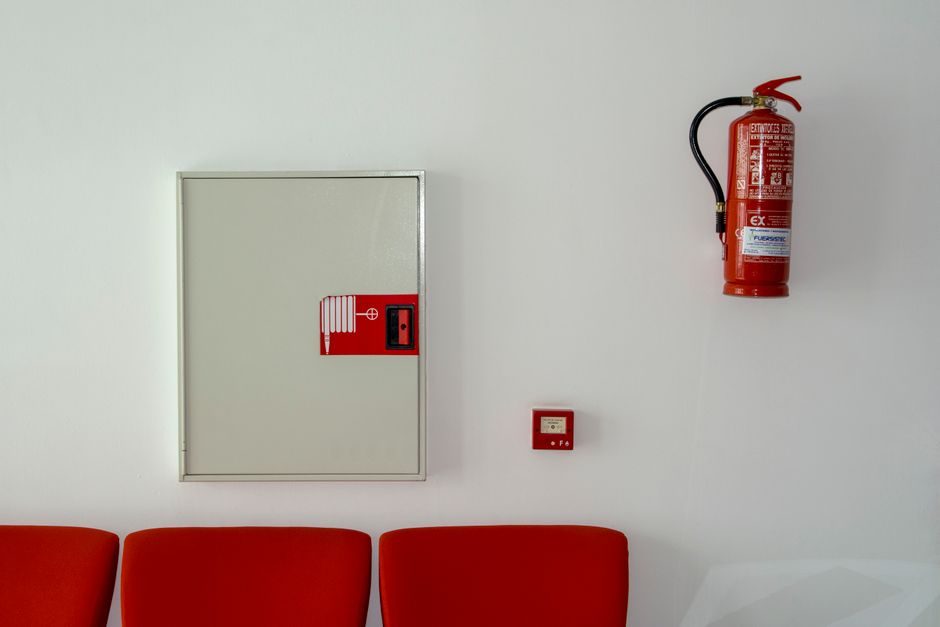
A fire alarm control panel (FACP) is the decision and power-routing hub of a detection loop, while a heat detector is one of several initiating devices that feeds the panel. They are not competing products — they sit at different layers of the same life-safety chain, and procurement specs for one routinely dictate what the other must deliver [S2][S6].
Recent 2026 sourcing listings confirm the split clearly: panel builders list 120/220 VAC primary supplies with DC24V 4AH sealed lead-acid standby batteries and 15-line displays, while detector makers price 2-wire conventional heat detectors at US$5.00 per piece at 1,000+ piece volumes from Nanjing [S2][S7]. Fire-safety catalog platforms in June 2026 still group "Smoke Detector, Fire Sprinkler, Heat Detector, Fire Alarm Control Panel" as a single purchasing category, which is exactly the confusion that drives mis-spec'd systems [S5].
Role split: panel = brain, heat detector = sensor
The fire alarm control panel is the loop-powered controller that polls initiating devices, drives notification appliances, switches relay outputs and runs on a battery-backed DC rail. Okorder's 2026 conventional panel listing specifies a 120V or 220 VAC 50/60 Hz primary with DC24V 4AH sealed rechargeable standby — a fairly typical 24V rail for small-to-mid conventional loops [S2]. The same vendor's addressable FACP listing shows 10,000 sets/year supply capability and TT/LC terms, signalling addressable panels are stocked as configurable builds rather than off-the-shelf units [S3].
A heat detector is a single-point or multi-point sensor that changes state at a fixed temperature (fixed-temperature, typically 57°C, 70°C or 90°C) or on a rate-of-rise of about 8-10°C/minute. The Orena 2-wire conventional heat detector listed in May 2026 is exactly the kind of 4-wire/2-wire initiating device that draws loop current from the FACP and reports one of two states back [S1]. Selection between fixed-temperature, rate-of-rise, and combination types is driven by ceiling height, ambient temperature swing, and whether smoke or steam false-load the space — not by panel brand.
Electrical interface: what the panel must supply to the detector
A conventional 2-wire heat detector shares the same two conductors that power the device and carry the alarm current back to the panel. That is why the detector listing from Orena is filed as "2-Wire Conventional Heat Detector" — it cannot run on a 4-wire panel circuit that expects an isolated contact, and it does not speak the addressable digital protocol that an addressable FACP loop expects [S1]. The Nanjing-based optical smoke/heat detector line at US$5-7 per piece at 1,000-unit volume is similarly loop-current-driven, with a 5,000,000 pieces/year production capacity — large enough to confirm that low-voltage 24V loop-powered detectors remain the volume tier [S7].
Addressable loops change the math. Each addressable heat detector on a mapped loop has its own short-address and reports an analog value or a digital status word; the FACP then runs an alarm-decision algorithm per point. This is why panel capacity is sold as "points per loop" and "loops per cabinet" rather than as a detector count — see the 2026 buying guide framing of loop capacity, voltage, IP and code path for the same logic [S1][S3].
Selection criteria that differ between panel and detector
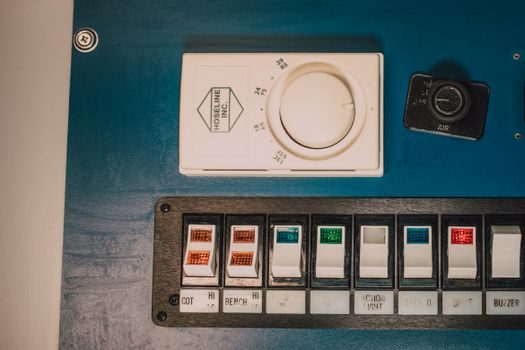
For a fire alarm control panel, the gates in 2026 spec sheets are: primary AC voltage (120 or 220 VAC at 50/60 Hz), standby battery (DC24V 4AH typical for small conventional units), number of loops and points per loop, display type (15-line LCD is a common baseline [S2]), relay output count, enclosure rating, and listing/approval path. The FW106 panel listed on a Chinese fire-safety portal in May 2026 is published without price — a typical signal that panel pricing is project-quoted, not catalog-listed, because every build is configured to a bill of materials [S4].
For a heat detector, the gates are: fixed-temperature set point (commonly 57°C, 70°C, 90°C), rate-of-rise threshold (about 8-10°C/min), element type (thermistor, bimetallic strip, or eutectic alloy), voltage range (16-32 V DC loop is the norm on 24V systems), quiescent current, and IP rating. Detector pricing is published because the device is fungible across panels; panel pricing is not, because the cabinet configuration is project-specific [S1][S2][S4].
Decision matrix: which to spend engineering time on first
On a small conventional system, the heat detector cost is low (US$5-7 at 1,000-piece volumes) and the panel is the dominant cost line; engineering time should therefore concentrate on the FACP's loop count, battery autonomy, and listing path [S2][S7]. On an addressable system, the panel is the larger spend and the heat detector pricing climbs because each unit carries a short-address ASIC, so the reverse holds — panel spec leads, detector selection follows the panel's loop protocol [S3].
The 2026 supply-side data also shows detector makers running 5,000,000-piece/year capacities for conventional units, while panel makers cap out around 10,000 sets/year for addressable builds — a roughly 500:1 volume ratio that explains why detector lead times are typically 2-4 weeks and panel lead times stretch to 6-10 weeks on configured orders [S3][S7]. Both Shenzhen Orena (heat detectors) and Shenzhen Zoanco (mixed detection portfolio) operate from the Guangdong/Shenzhen cluster, where most of the world's conventional-loop detector capacity sits in 2026 [S1][S6].
When a heat detector is the wrong choice
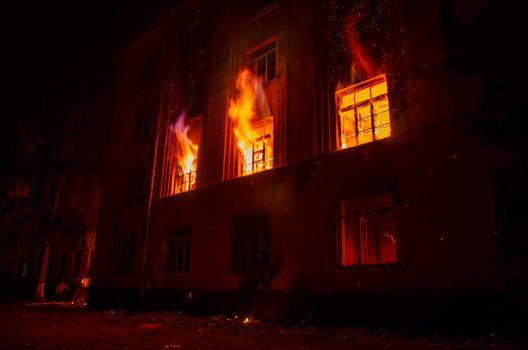
Heat detectors should be ruled out where the fire signature is smouldering rather than flaming, where the ceiling height exceeds the detector's coverage radius (typically about 30-50 m² for a fixed-temperature point), or where ambient temperature swings cross the fixed set point — a 57°C fixed-temperature unit in a boiler room with 50°C ambient is a false-alarm waiting to happen [S1]. In those spaces, smoke, aspirating, or flame detectors are the correct initiating devices and the FACP loop must accept them in parallel with any heat points elsewhere on the same circuit.
Conversely, a heat detector is the right pick in kitchens, paint booths, garages and other smoke-loaded or steamy environments where ionization/optical smoke detectors nuisance-trip, and in outdoor or high-dust conveyor enclosures where particle detectors false-alarm. The 2026 Made-in-China multi-category listing still groups "Smoke Detector / Heat Detector / Fire Alarm Control Panel" together because the buy decision is per-space, not per-system [S5].
Code path: panels carry the listing, detectors ride on it
On certified systems, the FACP and its listed compatible detectors are evaluated as a system; mixing an unlisted detector onto a listed panel can void the system approval. This is why panel datasheets publish a "compatible devices" list, and why distributors like the FW106 channel publish the panel certificate on the product page even when price is left blank [S4]. The 2026 FACP spec-gate framing — 7 criteria that lock the build, including listing path — applies to the panel first and propagates downward to every detector and notification appliance on its loops.
Detector pricing reference points to lock in for 2026 budgets: US$7.00 per piece at 1-99 pieces, US$6.00 at 100-999 pieces, US$5.00 at 1,000+ pieces for conventional photoelectric/heat detectors ex-Nanjing [S7]. Panel reference points are project-specific, but conventional small-cabinet builds in 2026 still cluster around 120/220 VAC primary with DC24V 4AH standby and 15-line LCD displays as the de facto baseline [S2].
Sourcing workflow that avoids the panel-vs-detector confusion
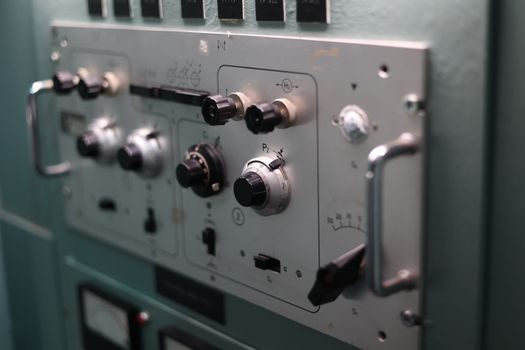
The cleanest 2026 sourcing flow: (1) lock the panel spec — loop count, point count, listing, battery autonomy, enclosure, IP — first; (2) pick the detector types and quantities per zone from the panel's compatible-device list; (3) quote the panel and detectors on the same RFQ so the supplier can confirm compatibility in writing; (4) check detector MOQ against the project — the Nanjing line is willing to ship 1-99 pieces but the per-piece price roughly doubles at that tier versus 1,000+ [S7]. The 2026 FACP buying guide on loop capacity, voltage, IP and code path is the right upstream document for step 1.
Trackable next signals: addressable panel supply capability around 10,000 sets/year per major China maker, conventional detector capacity around 5,000,000 pieces/year per Nanjing line, and continued 120/220 VAC + DC24V 4AH as the conventional FACP baseline across new 2026 listings [S2][S3][S7]. Any shift in panel default standby (e.g. DC24V 7AH becoming the new small-cabinet norm) or a change in the 2-wire/4-wire split on heat detectors would be the next data point to watch.
For component-level specifications, see heat treatment furnace.
For related coverage, see Fire Alarm Control Panel Buying Guide 2026: Loop Capacity, Voltage, IP and Code Path.