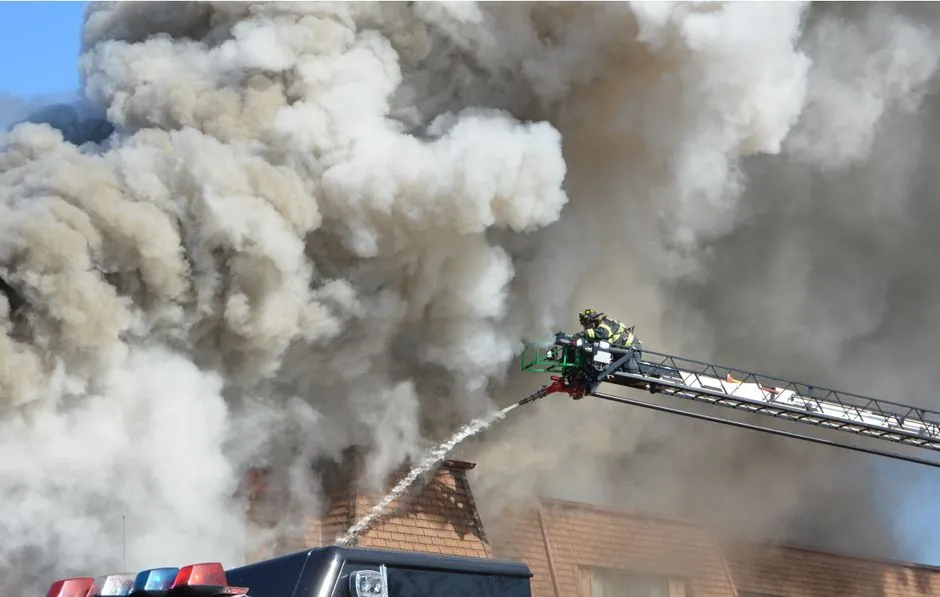
Fire extinguisher selection is a hazard-matching exercise: every portable unit is rated for one or more fire classes (A, B, C, D, K/F), and each extinguishing agent (water, foam, CO2, dry powder, wet chemical, clean agent, Class D dry powder) suppresses a fire by a different physical mechanism, so the wrong agent can be ineffective or actively dangerous [S1][S5].
The standard portable lineup in 2026 covers water, foam (AFFF), CO2, dry powder (ABC), wet chemical, clean agent (halocarbon), Purple K, and Class D dry powder, with NFPA-style colour-coded labels in some markets (red for water, cream for foam, black for CO2, blue for ABC dry powder) that speed up selection under stress [S5][S1]. Sizing for a given room is driven by the largest credible fuel load, the floor area, and the travel distance to the unit, not by a single national rule [S2].
Fire Class Taxonomy and What Actually Burns
Class A covers ordinary combustibles: wood, paper, cloth, cardboard, and many plastics, and these fires are the most common in offices, schools, and homes [S1][S3]. Class B covers flammable liquids such as petrol, oil, solvents, paint, and grease, and these fires spread quickly and should never be hit with water because water can flash to steam and throw burning fuel [S1][S5]. Class C, in US taxonomy, covers fires involving live electrical equipment, while UK/EU taxonomy often folds this into the fire-class list as a non-class category, but the practical rule is identical: the agent must be non-conductive [S3][S5].
Class D fires involve combustible metals such as magnesium, aluminium, titanium, sodium, potassium, and lithium, and they require specialised dry powder agents matched to the specific metal, since a standard ABC powder will not reliably knock down a magnesium fire [S1][S5]. Class K (US) or Class F (UK/EU) covers cooking oils and fats in commercial kitchens, which burn hotter than most flammable liquids and need a wet chemical agent that cools and saponifies the oil [S1][S5].
An electrical incident rarely stays electrical for long: a short or arc ignites cable insulation, plastic housings, or dust, and the fire can transition into Class A within seconds, or into Class B if flammable liquids are nearby, which is why electrical zones are usually protected with a layered extinguisher choice rather than a single unit [S2].
Agent-by-Agent Comparison: Suppression Mechanism, Coverage, and Limits
Water extinguishers are red-labelled, Class A only, and work by cooling the fuel below its ignition temperature; they are the most common type in offices, schools, and shops but must never be used on live electrical equipment, flammable liquids, cooking oils, or metal fires [S5]. Foam (AFFF) units are cream-labelled, cover Class A and Class B, form a blanket over liquid fires to starve them of oxygen, and many modern AFFF units are rated for limited electrical use up to about 35 kV, but you must check the label [S5].
CO2 extinguishers are black-labelled, cover Class B and electrical fires, displace oxygen and leave no residue, which is why they are the standard for server rooms, comms rooms, and offices with sensitive electronics; however, they provide no cooling effect, so a smouldering Class A fire can re-ignite, and the horn gets extremely cold on discharge and must not be held [S5][S2]. Dry powder (ABC) units are blue-labelled and cover Class A, B, and C, with monoammonium phosphate as the active agent, making them a versatile general-purpose choice for vehicles, outdoor sites, and industrial yards; the downside is that the powder cloud reduces visibility indoors and leaves residue that damages sensitive electronics [S5][S1].
Wet chemical extinguishers are designed for Class K/F cooking-oil fires and discharge a fine mist that cools the oil and reacts with it to form a soap-like layer (saponification) that blocks re-ignition; Purple K extinguishers are potassium-bicarbonate-based dry powder rated for Class B and C and are widely used in oil, gas, chemical, and utility industries for faster knock-down on hydrocarbon fires [S1]. Clean agent (halocarbon) extinguishers leave no residue and are specified for Class A, B, and C or B and C depending on the model, which makes them a fit for server rooms, laboratories, and museums where powder contamination is unacceptable [S1][S2].
Selection criteria ranked for typical facilities: coverage (how many classes the agent handles), residue tolerance (CO2 and clean agent for electronics, foam and powder where contamination is acceptable), electrical safety (only CO2, dry powder, clean agent, and foam rated to 35 kV), and operator ergonomics (CO2 discharge time is short, typically 8 to 30 seconds for a 2 to 5 kg unit, so a single CO2 may not be enough for a sustained liquid fire) [S2][S5].
Zone-Based Sizing: Panels, Server Rooms, Workshops, Kitchens
For electrical panels, DB boards, and switchgear rooms, CO2 is the common specification because it is effective on live equipment and leaves no powder contamination on contacts, busbars, or breakers; a 2 kg CO2 unit is often considered sufficient for home or office use, while 5 kg models are commonly specified for industrial panels, electrical rooms, and data environments where more discharge time may be required [S2]. In server rooms, comms rooms, and UPS areas the priority is stopping the fire while minimising contamination and downtime, and CO2 is widely used, with clean agent (halocarbon) units specified where the discharge residue and ozone-depletion profile of CO2 are unacceptable [S2][S1].
For workshops and light-industrial areas where flammable liquids, paints, or solvents are stored, foam (AFFF) or ABC dry powder are typical, sized to the largest credible spill area; one common rule of thumb is a 6 kg ABC unit for every 200 m² of light-hazard floor area, but this must be verified against the local fire code and the actual fuel load [S1][S5]. For commercial kitchens, wet chemical (Class K/F) units are mandatory for fryer lines, and ABC dry powder is a poor substitute because it does not saponify and the fire will re-light; many codes require a Class K unit within 30 ft (about 9 m) of any deep-fat fryer [S1].
For vehicle and field use, ABC dry powder is the default because it covers Class A, B, and C, tolerates vibration, and works in any orientation within limits, but a field report from a tractor owner in Idaho found that two small Kidde ABC units failed in service after a couple of years, with one discharging 80% on its own and the other losing pressure, a reminder that dry powder units need annual inspection, stem o-ring service, repressurisation, and certification rather than a mount-and-forget approach [S4]. A practical field setup is a 2.5 to 6 kg ABC unit for the cab, with a larger pump-action water extinguisher for vegetation and brush work where powder contamination is irrelevant [S4].
Standards, Inspection, and the Recharge Reality
Selection in regulated environments is anchored to NFPA 10 in the US and BS 5306-3 in the UK, which specify the minimum rating per floor area, mounting height, signage, and the 30-day visual inspection plus annual maintenance cycle; for example, one US township code requires every home to carry a minimum 1A10BC extinguisher mounted in the kitchen, and the same logic scales up to commercial and industrial facilities [S3]. The 1A10BC rating is a numeric code: 1A means a Class A extinguishing capacity equivalent to 1.25 gallons of water, 10B means a Class B extinguishing capacity of 10 square feet of flammable-liquid fire, and C means the agent is non-conductive for live electrical use [S3].
Annual maintenance on dry powder units is not optional: a working dry powder extinguisher is opened, emptied, the stem o-ring is replaced, and the unit is repressurised and certified, because the pressurising gas slowly leaks past the o-ring and the powdercakes at the bottom, both of which cause a unit to fail exactly when it is needed [S4]. A simple gauge check is not a service; the gauge can read pressure while the powder has solidified into a brick and the unit will discharge a useless puff, which is what the field report describes in operational terms [S4].
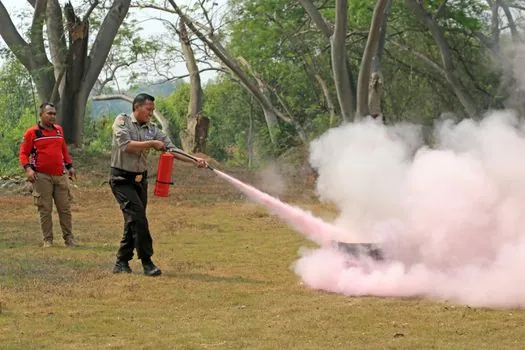
Operators should also follow the PASS method (Pull, Aim, Squeeze, Sweep) and only fight a fire if it is contained to a small area, the room is not smoke-filled, the building is being evacuated, and the fire service has been called; any escalation means evacuate immediately and let the fire service handle it [S3][S2]. The framing is consistent across sources: portable extinguishers are a first-line tool for incipient-stage fires, not a substitute for a fixed suppression system or a fire brigade response [S1][S2][S3].
Failure Modes and Misuse You Must Design Out
Water on a live electrical fire creates a shock and arc-flash hazard and is the most common misuse; foam and ABC powder are usually non-conductive in the fresh state but can become conductive if contaminated, so the only universally safe answer for an unknown live-electrical fire is CO2 or a clean agent [S5][S2]. Water on a cooking-oil fire causes a steam explosion that throws burning oil across the kitchen, which is why wet chemical (Class K/F) is the only correct choice for fryers and why water mist is sometimes substituted only if explicitly listed for Class F [S1][S5].
Using a CO2 extinguisher in a confined, unventilated space displaces breathable oxygen and can asphyxiate the operator, which is why some sites pair CO2 with a clean agent or restrict CO2 to ventilated electrical rooms [S5]. ABC dry powder in an enclosed room creates a dense cloud that drops visibility to near zero within seconds and contaminates every surface, including electronics and HVAC returns, so for indoor office, lab, or data environments ABC is a poor default despite its class coverage [S5].
For Class D metal fires, an ABC dry powder can actually make the fire worse by reacting with burning magnesium or lithium, which is why dedicated Class D agents (sodium chloride, copper powder, graphite-based dry powder) must be matched to the specific metal on site, and these units are only normally found in machine shops, laboratories, and battery storage rooms [S1][S5]. A related practical limit: CO2 and ABC units have very short discharge times (often under 30 seconds for portable sizes), so they are only useful for incipient-stage fires, and a facility should plan for a fixed system or multiple units in series for any fire larger than a wastebasket [S2][S5].
Decision Matrix and What to Specify on the Next PO
A concise comparison for procurement: water covers Class A only and is cheap but unusable on electrical, liquid, oil, or metal fires; foam (AFFF) covers A and B, often rated to 35 kV, and is the general commercial default; CO2 covers B and electrical with zero residue but no cooling; ABC dry powder covers A, B, and C, is the outdoor and vehicle default, but messy indoors; wet chemical is mandatory for cooking-oil fires; clean agent is the residue-free choice for electronics and archives; Class D dry powder is mandatory for combustible-metal hazards [S1][S5].
A practical minimum kit for a mixed-use facility is: a 6 kg ABC dry powder per 200 m² of general floor area, a 5 kg CO2 next to each electrical panel and each server rack, a 6 L wet chemical within 9 m of any deep fryer, and a Class D unit within reach of any metal-machining or battery-charging area, all mounted on brackets with signage and inspected monthly with annual certified service [S1][S2][S3][S5]. For a more detailed food-plant spec covering ABC versus Class K placement, ratings, and the standards behind them, see the site guide on fire extinguisher selection for food processing plants, and for confined-space risks where CO2 displacement and NFPA 10 sizing get specific, see the confined-space extinguisher selection guide.
For the broader fire-protection context, including fixed systems and overall facility planning, the fire safety reference page is the right starting point, while the fire extinguisher page covers ratings, labels, and inspection cycles in detail. Watch the next revision cycle of NFPA 10 and BS 5306-3 for any tightening of Class K placement and lithium-ion battery storage rules, and track EN 3-7 for any change to the European colour-code harmonisation that would affect how ABC, CO2, and wet chemical are labelled in the field.
For the relevant spec sheets and selection criteria, see fire door.