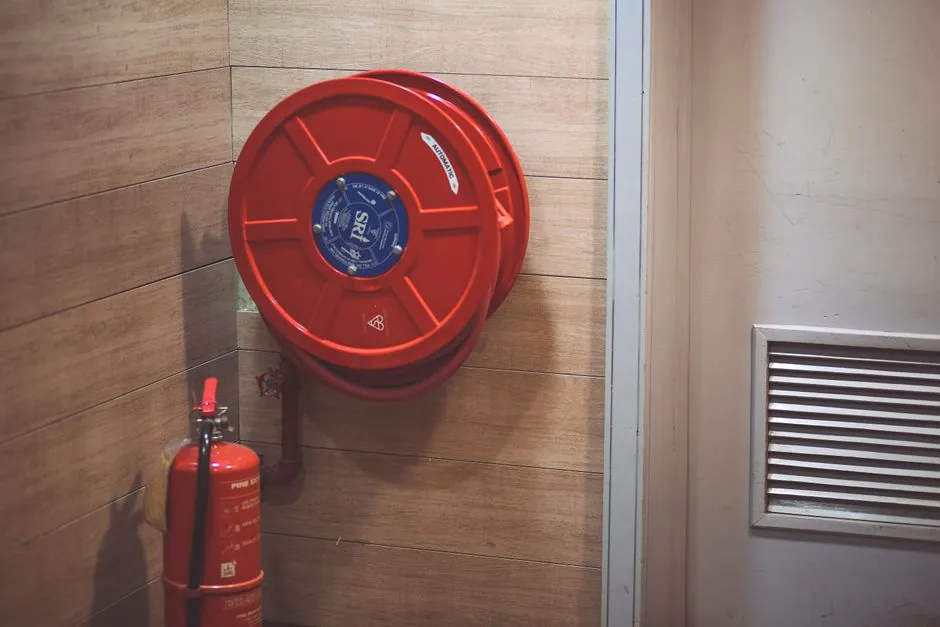
Portable fire extinguisher selection for confined-space entry is driven by two competing physics problems: the fire class inside the space, and the change in breathing atmosphere the extinguishing agent itself causes when it discharges into a small, poorly ventilated volume.
For most general-industry and construction permit spaces, an ABC dry chemical extinguisher covering Class A, B, and C fires is the default specification, with CO2 and clean agents reserved for electrically energised equipment only when forced ventilation is in place and the attendant can verify oxygen above 19.5 percent before re-entry [S1][S6].
Code Stack: 1910.146 Permit Space, 1910.157 Extinguisher, NFPA 10 (2026)
OSHA 29 CFR 1910.146 governs the entry programme itself, requiring atmospheric testing in the order oxygen, then flammables, then toxics, and a written permit that names rescue resources, communication, and the PPE an entrant will carry into the space [S3].
OSHA 29 CFR 1910.157 governs the extinguisher hardware: travel distance of 75 ft or less for Class A hazards and 50 ft or less for Class B hazards measured along the walking path, monthly visual checks, annual maintenance, and training at assignment plus at least annually [S3].
NFPA 10 (current edition 2026) sets the selection, rating, and placement rules the adopted fire code (IFC Section 906) points to, and the 2024 edition of NFPA 820 overlays the wastewater-specific hazardous-area classification on top of both [S3].
For Canadian operations the parallel rule is the Canada Occupational Health and Safety Regulations, Part XI (Confined Spaces), which requires the employer to ensure a qualified person provides a list of confined spaces, including those identified as hazardous [S7].
Agent Comparison: ABC Dry Chemical vs CO2 vs Clean Agent vs Water Mist
ABC dry chemical (monoammonium phosphate) covers Class A, B, and C in one unit, which is why it is the most commonly specified extinguisher for a standby entrant or attendant station at a confined-space opening [S1].
CO2 leaves no residue, which is why it is preferred on live electrical gear, but the same discharge that smothers a fire displaces oxygen in a tight space, and OSHA-aligned guidance flags a danger that the user may become overwhelmed by the sudden increase in carbon dioxide concentration when a CO2 extinguisher is used in a confined space [S6].
Clean agents (halocarbon replacements and inert gas blends) and water mist address the residue and oxygen-displacement problems, but the extinguisher hardware still has to be sized to the Class A, B, or C hazard inside the space, and the entrant still needs forced ventilation on discharge to keep the LEL monitor and oxygen sensor in a readable range [S3][S6].
Class D combustible-metal extinguishers (sodium chloride, graphite, copper powder) are specified only where the permit identifies a metal-dust or molten-metal hazard; they are not a general-purpose substitute and the wrong agent on a metal fire can make the reaction worse.
Sizing and Placement Rules Inside a Permit Space
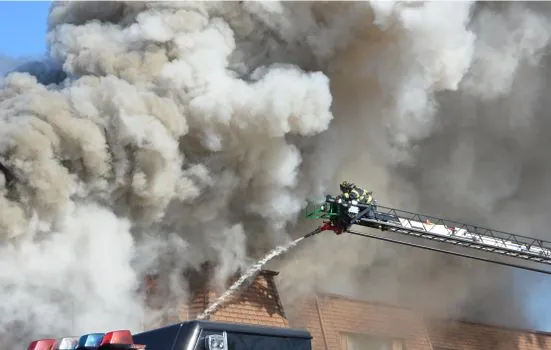
OSHA 1910.157(g)(1) sets a maximum travel distance of 75 ft for Class A hazards and 50 ft for Class B hazards, measured along the walking path employees would actually use, not as the crow flies [S3].
For Class C, the extinguisher must be rated for the underlying Class A or Class B hazard present, since Class C is a hazard to the operator, not a fuel class, and the minimum rating is normally 2-A:10-B:C for a portable ABC unit on a multi-hazard job [S3].
Where the extinguisher sits is a decision in itself: a small ABC unit staged at the entry portal, rather than inside the space, lets the attendant grab it without entering a potentially IDLH atmosphere, and lets the entrant exit to a known safe point before any discharge.
Atmospheric Hazards That Override the Extinguisher Choice
Selection starts with atmospheric testing, not with the fire class, because the extinguisher only matters if the entrant and attendant are still alive to use it. OSHA 1910.146(d)(5) requires testing in this order: oxygen first (target 19.5–23.5 percent), then flammable gases (below 10 percent LEL), then toxics, with a calibrated four-gas monitor [S3].
In wastewater and digester work, H2S is the typical toxic override: the four-gas monitor carries an H2S sensor with a 10 ppm alarm setpoint, and entry is suspended above that setpoint regardless of what extinguisher is staged, because the fire risk is secondary to the asphyxiation risk [S3].
The P.A.S.S. technique (Pull, Aim, Squeeze, Sweep) only applies at a safe distance and only when the entrant has a clear retreat path, and confined-space training programmes now drill that order together with the 1910.146 rescue plan rather than as a stand-alone fire response [S5].
Where ABC Fits vs Where It Does Not
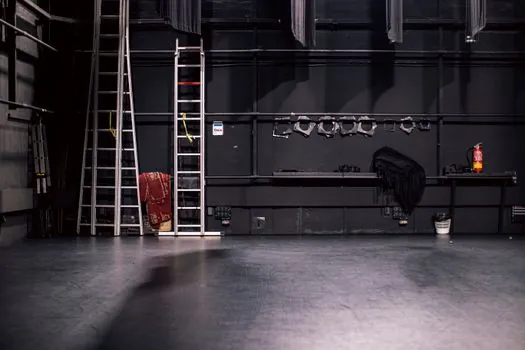
ABC dry chemical is the right call for general permit spaces such as valve vaults, pump pits, cable trenches, and storage tank interiors where the likely fire class is ordinary combustibles or flammable liquid on a small scale, and where the extinguisher is staged at the opening rather than carried in [S1].
ABC is the wrong call around sensitive electronics in a control room, where the monoammonium phosphate residue will corrode boards and connectors, and a CO2 or clean-agent unit is preferred, with the CO2 discharge only used after forced ventilation is verified [S1][S6].
ABC is also the wrong call on Class K cooking-media fires in a food plant, and on Class D metal fires in a foundry or battery room; a recent selection walkthrough for food plants walks through the same Class K reasoning, and the same ABC-versus-CO2 trade-off shows up there [fire-extinguisher-selection-for-food-processing-plants].
Inspection, Training, and Documentation Cycle
Monthly visual checks, annual maintenance, and 12-year hydrostatic test intervals (with 6-year internal examinations for stored-pressure dry chemical) are the minimum NFPA 10 service cycle, and the tag on the extinguisher is the audit artefact the OSHA inspector will ask for [S3].
Training is required at assignment and at least annually under 1910.157(g), and confined-space programmes layer 1910.146 rescue and communication drills on top, so the same crew member may sit both refreshers in the same calendar year without one substituting for the other [S4][S5].
Records to keep on file include the permit, the atmospheric-test log, the extinguisher inspection tag, the trainee certification with date, and the rescue plan with the named rescue team or fire-service contact, all of which are required to be retrievable on the authority having jurisdiction's request [S3].
Selection Decision Flow for a Permit-Required Confined Space
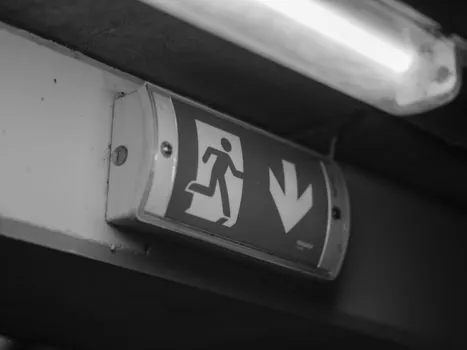
Step 1: run 1910.146 atmospheric testing and document oxygen, LEL, H2S, and CO; if the entry is not permitted, the extinguisher question is moot. [S5]
Step 2: identify the worst-case fuel class inside the space (Class A ordinary combustibles, Class B flammable liquid or gas, Class C energised electrical, Class D metal, or Class K cooking media) and pick the extinguisher rated for that class [S1][S2].
Step 3: decide where the unit lives, at the entry portal or inside the space, and run the OSHA 75 ft / 50 ft travel-distance check from the entrant's working position to the extinguisher [S3].
Step 4: if the chosen agent is CO2 or inert gas, confirm forced ventilation is in place and the oxygen sensor is reading above 19.5 percent before any discharge, because the agent itself can push oxygen below the safe entry threshold in a tight volume [S6].
Step 5: tag, log, and train, with monthly visual inspections, annual maintenance, and annual refresher training filed against the permit [S3][S5].
The single most common failure mode in the field is not the wrong extinguisher rating, it is the agent choice that ignores the confined-space atmosphere: a CO2 discharge in an unventilated permit space can drop breathable oxygen below 19.5 percent within seconds, and the extinguisher becomes the hazard [S6].
Two trackable signals for the next planning cycle: any update to NFPA 10's 2026 edition placement tables for Class C and Class K hazards, and any change to OSHA 1910.146 enforcement guidance on rescue-plan documentation for permit spaces where fixed suppression overlaps with portable extinguisher staging [S3][S5].
For component-level specifications, see fire extinguisher, fire door, and fire hydrant.
For related coverage, see Laser Level Selection for Bridge Construction: A 2026 Spec Map.