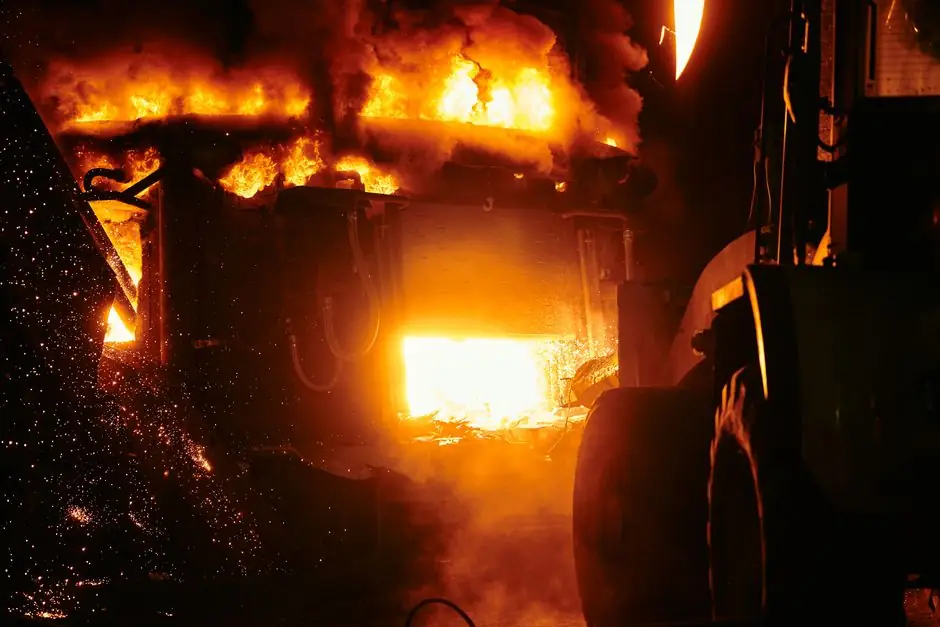
A non-cooking food plant covers production and dry storage with UL 299 listed ABC dry chemical extinguishers placed per NFPA 10, adds Class K coverage only at fryer lines or combustible cooking oil stations, treats dust zones as Class A with housekeeping as the real control, and keeps tagged monthly inspections plus annual certified service on file for FDA, OSHA, and the property carrier [S1].
Selection is driven by fuel class, not brand: a single bakery, dairy, or snack line can be inspected by FDA, USDA FSIS, OSHA, the local fire marshal, and an FM Global-aligned carrier, and a failed extinguisher program shows up in all of those records [S1]. For facility managers mapping the fire safety rule stack, the extinguisher list is the visible artifact of a much larger compliance file.
Which Standards and Agencies Stack on a Food Plant
OSHA 29 CFR 1910.157 incorporates NFPA 10 by reference for portable extinguisher selection and distribution, requires annual maintenance by trained personnel, and mandates documented training for any employee expected to fight an incipient-stage fire [S1]. FDA covers most human-food facilities under the Food Safety Modernization Act preventive-controls rule and FD&C §415 facility registration, and while FDA does not write an extinguisher rule, discharge residue, water damage, or a fire event that contaminates product creates a food-safety finding on top of any fire-safety finding [S1].
USDA FSIS jurisdiction is narrow, covering only meat, poultry, and egg product processors, so a potato, dairy-only, bakery, or grain handler is not under FSIS and should not be over-scoped to it [S1]. Cold storage and dairy sites with ammonia refrigeration also pull in IIAR-2, and grain, flour, sugar, and starch operations pull in NFPA 660 for combustible dust [S1]. The agency stack maps directly onto the fire extinguisher spec list, because each agency cites the others.
Fire Classes and the Right Agent for Each Zone
UK and US classifications use the same fuel logic: Class A is solid combustibles (paper, wood, cardboard, textiles, packaging), Class B is flammable liquids (solvents, diesel, cooking oil off the line), Class C is flammable gases, Class D is combustible metals, and Class F (UK) / Class K (US) is cooking oils and fats, with electrical risk treated by suitability marking rather than its own letter [S2][S3]. A wet chemical extinguisher is the standard match for deep fat fryers, hot cooking oils, and frying equipment because it cools and saponifies the oil surface rather than just smothering it [S2].
Foam covers Class A and Class B flammable liquids, CO2 covers live electrical hazards and small flammable-liquid spills, dry powder is the multi-risk workhorse (Class A, B, C), and water mist is the clean-agent option for areas where residue is unacceptable [S2][S3]. A working comparison of the four agents most plants will see:
ABC dry chemical: covers A, B, C; cheap per unit; leaves corrosive monoammonium phosphate residue; poor for cooking oil [S2][S3]. Wet chemical (Class K / Class F): required at fryer lines, saponifies hot oil, higher unit cost, narrow use profile [S2][S6]. CO2: clean, non-conductive, suits electrical cabinets and control rooms, short discharge time [S2]. Foam: Class A and Class B liquids, better than dry powder on solvent spills, not for live electrical [S2].
Where ABC Is Enough and Where Class K Is Required

Most non-cooking production lines and dry storage areas are protected by UL 299 listed ABC dry chemical extinguishers on an NFPA 10 placement plan, with no Class K needed [S1]. Class K is required only where a fryer line or combustible cooking oil is present, and a dry powder unit at a deep fat fryer is the wrong call because it does not cool the oil and can re-ignite [S6][S7]. One reference site specifically warns against dry powder near cooking oil because it can spread the burning oil rather than suppress it [S7].
For an Indian-commercial-kitchen context, the same rule applies: a wet chemical Class F or CO2 is the right pick, and dry powder should not be placed near cooking oil [S7]. In US commercial kitchens, the wet chemical Class K extinguisher is a portable unit designed for cooking-oil risk and is the only agent that handles re-ignition through saponification [S6]. A useful rule of thumb is that any Class K or Class F extinguisher in a food plant also has to be paired with a fixed suppression system at the cooking station under NFPA 96, so the portable is a back-up, not a substitute [S1].
Dust, Ammonia, and the Hazards That Change the Spec
Combustible dust areas (grain, flour, sugar, starch) are treated as Class A risk, and the real control is housekeeping and NFPA 660 dust management, not the extinguisher [S1]. A discharge of ABC powder into a dust-handling zone is itself a cleanup problem, so placement and zoning matter as much as agent type. Ammonia refrigeration rooms on dairy and cold-storage sites add IIAR-2 to the stack and usually call for a separate extinguisher strategy around the machinery room, where electrical cabinets dominate and CO2 is the standard pick [S1].
Lithium-ion battery risk, from pallet jacks to automated guided vehicles, is not covered by any standard extinguisher class, and traditional agents can fail on a runaway cell [S3]. The FIA reports that 93% of fires are successfully extinguished using portable extinguishers, but that figure covers ordinary incipient-stage fires, not lithium-ion or combustible-metal events [S3]. The deeper context for industrial-scale extinguishers, including oil and gas facilities that face similar agent-selection questions, is covered in Fire Extinguisher Selection for Oil and Gas Facilities.
Inspection Cycles, Training, and the File That Survives an Audit
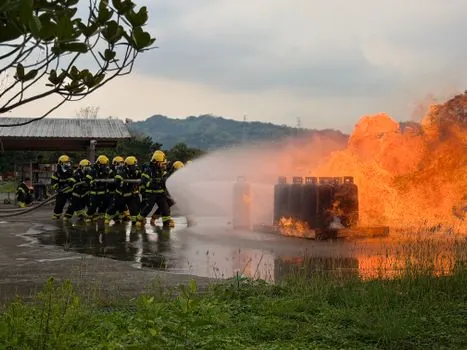
OSHA 29 CFR 1910.157 requires annual maintenance by trained personnel and documented training for any employee expected to use an extinguisher during an incipient-stage fire [S1]. NFPA 10 sets monthly visual inspections with tagged records, plus the annual certified service, and a 6-year hydrostatic test interval for stored-pressure units, with a 12-year test for certain dry chemical types [S1]. One California school district service contract covers about 1,300 extinguishers, illustrating the scale of the inspection load even outside food processing, and the same vendor pattern of annual empty, inspect, and refill applies to private industry [S4].
For audit readiness, the file needs to show extinguisher type, UL listing, placement per NFPA 10, monthly tags, annual service records, training rosters, and a hazard map that ties each extinguisher to the fuel class it covers [S1]. A second useful cross-reference for facility teams is the broader fire safety rule stack, because extinguishers are only one of several overlapping programs (alarms, sprinklers, suppression, egress) that show up on the same inspection.
Market Signal: Specs Are Shifting Toward Hazard-Specific Units
The global fire extinguisher market is projected at USD 4,410.2 million in 2026, growing to USD 7,048.1 million by 2036 at a 4.8% CAGR, with water extinguishers holding about 25% share and Class A coverage accounting for 33.2% of fire-type demand in 2026 [S5]. China is the fastest-growing country at 6.6% CAGR and India at 6.1%, driven by construction and industrial expansion rather than retrofit [S5]. Analyst commentary in the same report notes demand is moving from basic compliance purchases toward application-specific safety planning, with lithium-ion battery safety, industrial readiness, and commercial building compliance shaping the next product cycle [S5].
For a food plant spec writer, the practical read is that hazard-specific units (Class K at fryers, CO2 at electrical cabinets, wet chemical mist where residue is unacceptable) are no longer special orders, and the major suppliers (Hochiki, NAFFCO, AMEREX, Kidde, Fike) are all in this segment [S5]. The Fire Industry Association's 93% success figure for portable extinguishers is a reminder that the right agent, properly placed and inspected, still does most of the work [S3].
Common Selection Mistakes to Avoid
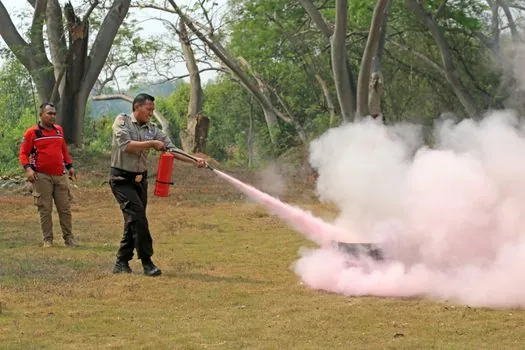
Placing ABC dry powder near a deep fat fryer is the single most common spec error, and it both fails to suppress re-ignition and disperses burning oil [S6][S7]. Using water on a Class F cooking-oil fire is the next-worst, because water flashes to steam and ejects burning oil [S3]. Specifying CO2 for an open production line is also a mistake, because CO2 has a short discharge time, no cooling effect on solids, and a personnel hazard in confined spaces [S2].
Over-scoping USDA FSIS coverage to non-animal-origin plants creates false findings on paper and burns audit time [S1]. Storing dry chemical powder in humid conditions causes clumping, which is why service vendors use drying ovens for recovered powder and why monthly visual checks matter, not just annual service [S4]. A dry chemical unit in a dust-handling zone is technically rated for Class A, but the discharge itself becomes a contamination event, so placement and zoning should drive the spec, not generic ABC coverage [S1].
The next nodes to track are the 2026 NFPA 10 revision cycle (any change to Class K placement rules or training intervals), the FM Global data-sheet updates for combustible-dust food operations, and the pending UL 299 listings for next-generation clean agents aimed at lithium-ion battery storage, all of which will shift the agent mix on a 2027 spec sheet. For a deeper comparison of agent selection in an adjacent high-hazard industry, see Fire Extinguisher Selection for Oil and Gas Facilities.
For the relevant spec sheets and selection criteria, see fire door.