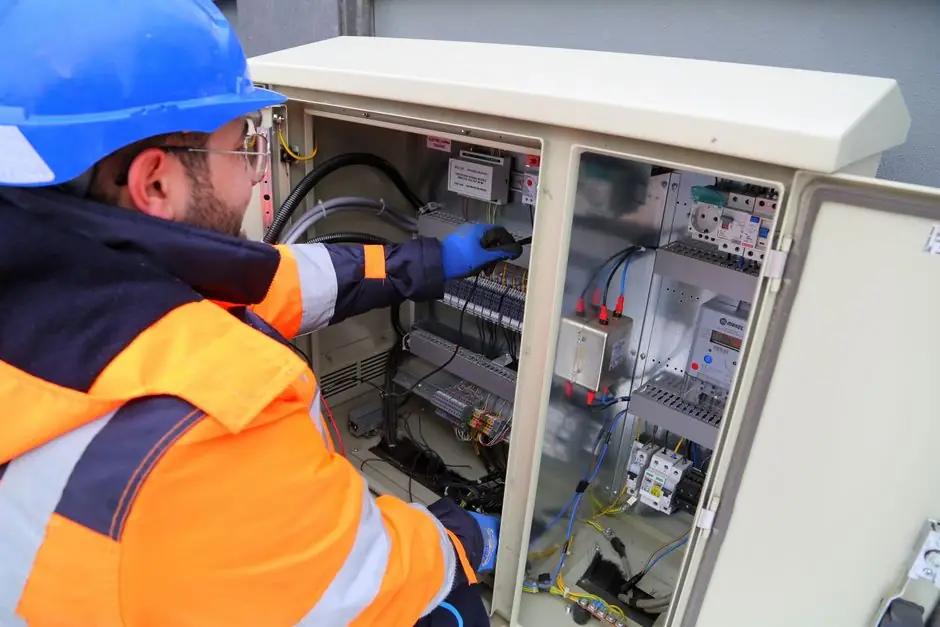
Electrical-worksite fencing splits into two material families with opposite safety logic: non-conductive FRP/GRP barriers that isolate workers from energized parts, and non-combustible galvanized steel or aluminum systems that survive arc-flash and transformer fire events [S3][S4][S7]. Selection between them is driven by voltage class, fault exposure, and the applicable electrical code working-clearance rules.
The most active spec movement through 2026 centers on retractable and telescopic FRP barriers in the 1.2 m × 2.5 m to 3–6 m extended formats, with stated dielectric performance up to 10 kV, used to define safe zones during live-line maintenance, substation switching, and overhead hot-stick work [S3][S5][S8]. For fixed perimeter and transformer enclosures, fire-rated galvanized G90 steel frames with 6063-T5 aluminum infill carrying an ASTM E84-24 Class A rating and Flame Spread Index of 0 are the current North American benchmark [S4].
FRP/GRP Retractable and Telescopic Barriers for Live Work Zones
FRP retractable safety fence panels sized 1.2 m high × 2.5 m long define safe zones around energized equipment, with FRP marker posts, magnetic retractable reels (5/8 cm web, up to 100 m), and warning-line tape used together as a layered area-control system [S3][S8]. Telescopic guardrail variants extend 3–6 m, weigh in the single-person-deploy range, and carry a stated 10 kV insulation rating, making them the default for substation switching, transformer maintenance, and high-voltage cabinet isolation [S5].
GRP (glass-reinforced plastic) systems are explicitly specified for substation perimeters because the dielectric behaviour removes the touch- and step-potential hazard that a metal fence would introduce during a fault [S7]. For broader electrical safety fence applications including LV switch rooms and MCC line-ups, FRP's corrosion resistance in coastal and chemical atmospheres is a secondary but decisive advantage over painted steel, which loses dielectric margin as its coating degrades [S3].
Non-Combustible Steel and Aluminum Systems for Fixed Enclosures
Around pad-mounted transformers, switchgear, and generators, codes typically require non-combustible fencing. Wood and vinyl are commonly prohibited because they become fuel inside the heat radius of an arc-flash or transformer rupture [S4]. FenceTrac's reference build pairs a galvanized G90 steel frame with 6063-T5 aluminum infill and is certified to ASTM E84-24 Class A with Flame Spread Index 0, a combination that satisfies both the International Fire Code non-combustible material rule and the utility provider's own material restrictions [S4].
Three codes stack on top of each other for these enclosures. NEC / NFPA 70 Article 110.26 requires a minimum 3 ft deep working space in front of equipment for systems up to 600 V, extending the full width of the equipment, and the fence must not encroach on that zone. NESC / IEEE C2 governs utility-owned gear and sets the clearance envelope around pad-mount transformers. The IFC restricts combustible materials in the same fire-rated envelope. Individual utilities layer on additional rules, commonly a 10–12 ft minimum gate width for vehicle entry and lockable access with utility-approved hardware [S4].
Selection Criteria: When to Specify FRP vs Steel
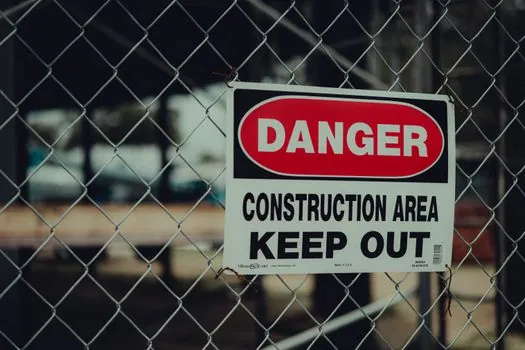
The decision is governed by four measurable criteria. Dielectric class: FRP retractable and GRP perimeter panels are used where workers may contact the fence while adjacent parts are energized; steel systems are used only when the fence is bonded and grounded as part of the site earth grid. Fire exposure: any fence within the arc-flash boundary of a transformer, generator, or LV switchboard should carry an ASTM E84 Class A rating, which forces a steel-and-aluminum or all-aluminum build. Mobility: retractable FRP and telescopic 3–6 m units are specified for temporary live-work zones, while fixed steel panels are specified for permanent utility enclosures. Working clearance: NEC 110.26's minimum 3 ft depth and full-width rule must be preserved by either system, with gate widths sized to utility vehicle access (commonly 10–12 ft) [S4][S5].
For hazardous-area and oil-and-gas plants, the zone-mapping logic in safety fence selection for oil and gas facilities follows the same FRP-versus-steel split, with FRP dominant in Zone 1 live-work areas and fire-rated steel dominant at the perimeter. Construction-zone fence gauges and height bands are covered separately in construction site safety fence selection, which is the right cross-reference for the temporary-road-work and road-closure use cases that also draw on these FRP retractable systems.
Standards, Ratings, and Component Architecture
ASTM E84-24 Class A with Flame Spread Index 0 is the headline fire rating for fixed non-combustible utility enclosures, paired with galvanized G90 steel framing and 6063-T5 aluminum infill [S4]. NEC / NFPA 70 Article 110.26 defines the 3 ft minimum working clearance for equipment up to 600 V. NESC / IEEE C2 defines the clearance envelope for utility-owned pad-mount transformers and switchgear. The IFC restricts combustible materials in the same fire-rated envelope [S4].
For portable systems, the practical spec bands reported in current vendor literature are: 1.2 m height × 2.5 m length FRP panel, retractable reels with 5/8 cm web up to 100 m of belt, telescopic rails extending 3–6 m, and a stated 10 kV insulation rating on FRP tubes [S3][S5][S8]. The wider component ecosystem around these barriers includes FRP marker posts, magnetic retractable reels, warning-line tape (yellow/black stripe and yellow edge variants), and insulated rubber mats as complementary personnel protection [S3]. The 1.2 m × 2.5 m FRP panel is the closest thing to a de-facto portable spec for indoor switch-room and MCC line-up isolation.
Limitations and Common Failure Modes

FRP barriers are not a substitute for lockout/tagout or for the NEC 110.26 working clearance; they only define the visible boundary, and a dielectric rating stated as 10 kV does not cover higher distribution voltages without explicit OEM confirmation [S3][S4][S5]. Coated steel loses its safety case the moment the galvanizing or paint is cut through, which is why galvanized G90 with 6063-T5 aluminum infill is preferred over field-painted carbon steel for utility enclosures [S4].
Wood and vinyl fences are commonly prohibited near transformers and switchgear because they ignite from both internal failure and external fire, turning the fence into the vector that damages otherwise-survivable equipment [S4]. A retractable reel with a 100 m belt is only as reliable as its rewind mechanism; a stretched or kinked web on a magnetic reel leaves a gap a worker can walk through, so a redundant warning-line tape run is standard practice for live-work envelopes [S3]. For sites that mix live electrical work with heavy vehicle traffic, fence placement has to preserve the utility's required gate width (commonly 10–12 ft) or the enclosure fails its own access case on the day a transformer needs replacement [S4].
Trackable signals to watch through the rest of 2026: tighter NEC 110.26 working-clearance enforcement on retrofit substation builds, broader adoption of ASTM E84-24 Class A documentation in utility procurement specifications, and continued displacement of painted carbon steel by G90-galvanized frames with 6063-T5 aluminum infill for fixed enclosures near transformers and generators [S4].
The underlying component specifications are covered under aerial work platform, and aerial work truck.