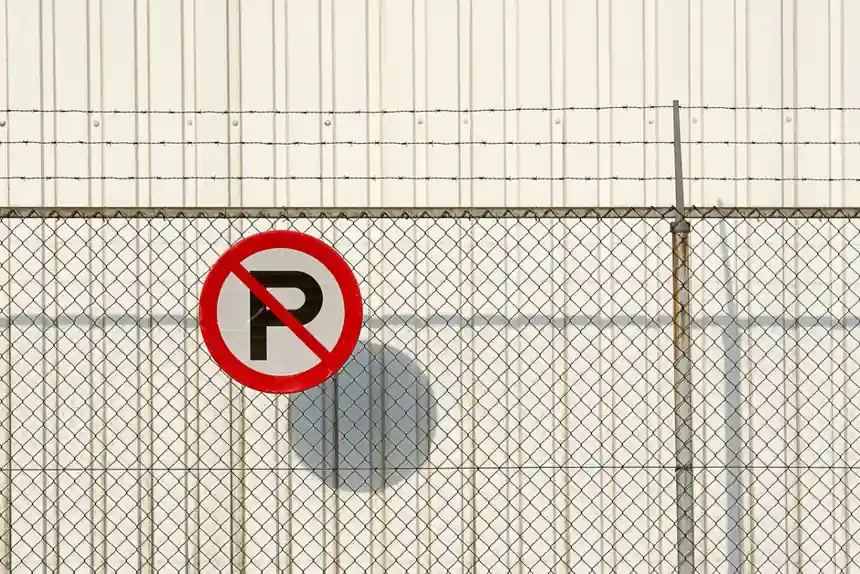
Safety fence selection in a food plant is driven by four hard numbers: rated impact energy in joules, mesh aperture, post-centre span, and the chemistry of the surrounding washdown environment [S2]. A 2,500 J panel on 2.5 m centres is the workhorse for robot cells, while AGV aisles carrying 1.5 t vehicles at 1.5 m/s should be specced at 4,000 J minimum on 2.0 m centres [S2]. Anything below 1,600 J belongs on pedestrian dividers, not on machine perimeters [S2].
For food and beverage halls the duty cycle is harsher than dry-industry cells: CIP foam, 80 °C rinse cycles, and daily chemical sanitizers. Stainless 304 or 316 is the pharma/food line, where the panel passes those cycles without coating breakdown, while PVC-coated galvanized chain link handles dry sanitation zones and perimeter demarcation [S2][S4].
Material, Mesh Aperture, and the 30 mm Finger-Reach Gate
Rated impact energy and mesh aperture are the two non-negotiable gates on any food-line fence datasheet, with EN ISO 13857 establishing the safe-distance tables that pair a hazard height with a minimum opening [S2]. The commonly cited floor for personnel protection is 30 mm × 30 mm square or 40 mm diamond mesh to keep finger reach out of the crush zone, and a 2,200 mm panel with no kick plate fails most robotic-cell audits because a 12 mm socket can roll under a 30 mm mesh gap [S2].
For non-hazard sanitation-zone demarcation rather than machine guarding, chain link mesh in 50 × 50 mm or 60 × 60 mm openings with 3.0-4.0 mm wire diameter is the standard supply from Hebei-based vendors, sold in 4-50 m roll lengths and 2-6 m panel heights with 50-76 mm round posts and PVC-coated finishes [S3][S4]. That 50-60 mm opening is too coarse for a hazard fence, but it works as a zone boundary separating raw-material handling from cooked lines [S4].
304 vs 316 Stainless in a Washdown Zone
Grade 304 may perform well in an indoor food-processing facility, but it is not the best choice for a fence exposed to airborne salt beside the ocean, and CIP chemistry that includes chlorides will punish 304 in the same way [S1]. 316 with 2-3 % molybdenum is the upgrade whenever chloride-bearing cleaners, brine rooms, or coastal air sit in the duty cycle, and the 185 °C / 15 min powder-coating cure on aluminum frames adds a second corrosion barrier for splash-prone indoor cells [S1][S5].
Material choice must also align with the surrounding PPE and area equipment: a safety mat in front of a washdown press still needs a 316-stainless frame so the mat's edge seal does not trap water against a corroding post [S2]. For operator-side residuals a fence cannot block, the safety glasses and machine safety layers close the PPE loop, while the safety barrier page covers adjacent perimeter hardware.
Aluminum-Alloy Frame as a Practical Middle Ground
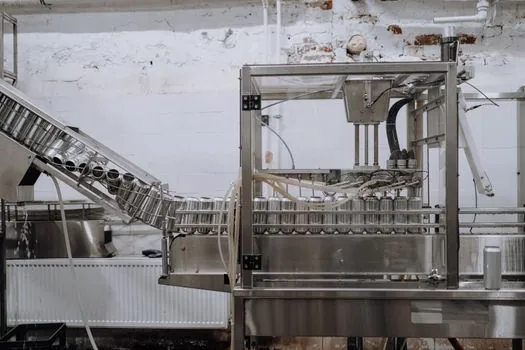
Aluminum is corrosion resistant by nature, and a 185 °C / 15 min powder-coating cure adds a second barrier, so an aluminum profile safety fence with powder coating is the typical answer for indoor food, beverage, and pharma lines that need fast wipe-downs without shedding rust [S5]. The 40×40 mm and 45×45 mm post options, 20×100 mm mesh grid layouts, and common heights of 1,000 / 1,800 / 2,000 mm let the fence sit close to the hazard at the 120 mm safety distance referenced in EN ISO 13857 [S5].
Single doors up to 1,500 mm and double sliding doors up to 6,000 mm keep access from becoming the bottleneck, and floor-fixed installation with expansion bolts and foot connectors avoids on-site welding during retrofit guarding [S5]. The safety fence encyclopedia entry gives the rated-energy ladder these frame sizes are designed around.
PVC-Coated Chain Link for Sanitation-Zone Demarcation
Food Factory Chain Link Fence Sanitation Zone is built from galvanized steel wire in 1.0-6.0 mm diameter, with mesh openings of 20×20, 50×50, 60×60, and 80×80 mm, knuckle or twist edge types, and PVC-coated surface treatment for moisture-rich bakery and meat-plant environments [S4]. Heights span 2-6 m, lengths 4-50 m, with 50 / 60 / 76 mm round posts at 3.0 / 4.0 / 5.0 mm wall thickness [S4]. This is a zone-boundary system, not a 4,000 J machine guard, and it is meant to separate high-risk from low-risk sanitation areas with smooth non-porous surfaces that resist bacterial growth and clean alongside the production line [S3][S4].
Coating Stack and Service-Life Map by Environment

Powder-coated mild steel is the default for dry indoor cells: 1.2-1.5 mm wire, 4 mm verticals, 60×40 mm post, RAL 1023 yellow or RAL 9005 black topcoat over zinc primer, with an 8-12 year expected service life in an ambient factory [S2]. Hot-dip galvanising to ISO 1461 adds a 70-85 µm zinc layer for outdoor or washdown exposure, with a 15-25 year floor life [S2]. Stainless 304 or 316 is the pharma and food line where the panel must pass CIP foam and 80 °C rinse cycles without coating breakdown [S2].
For plants that run frequent AGV and forklift traffic inside a washdown zone, the [safety certification page is the right next stop because impact-class documentation is what auditors check first. Cross-referencing the fire safety page matters where CIP chemical storage sits inside the same fence line, since some sanitizers are themselves flammables.
Selection Rules and Comparison Table
For a 2,500 J / 2,200 mm-tall robot cell in a CIP zone, specify 316 stainless or aluminum with powder coat, mesh ≤ 30×30 mm, posts on 2.5 m centres, kick plate 100-150 mm. For AGV aisles with 1.5 t vehicles at 1.5 m/s, step to 4,000 J on 2.0 m centres in the same material [S2].
For dry sanitation-zone demarcation, PVC-coated galvanized chain link with 50×50 mm mesh, 3.0-4.0 mm wire, and 50-76 mm round posts covers separation between raw and cooked lines at the lowest cost per metre [S4].
Limitations and Failure Modes in Food Service

Stainless 304 will pit and brown-stain under chloride cleaners if misapplied, and welded-steel fences that were never specified for humidity will shed rust flakes long before the rated service life [S1][S5]. Chain link in 50-80 mm mesh openings is too coarse to serve as a machine-guard fence, so it cannot be the only barrier around a robot or palletiser cell [S2][S4].
For related industrial guarding on a different duty cycle, the Mining Safety Fence Selection: Mesh, Posts, and Zone Match write-up applies the same rated-energy-and-mesh gate logic to high-impact outdoor cells, while Reach truck selection for food and beverage warehouses covers the MHE side of the same washdown environment.