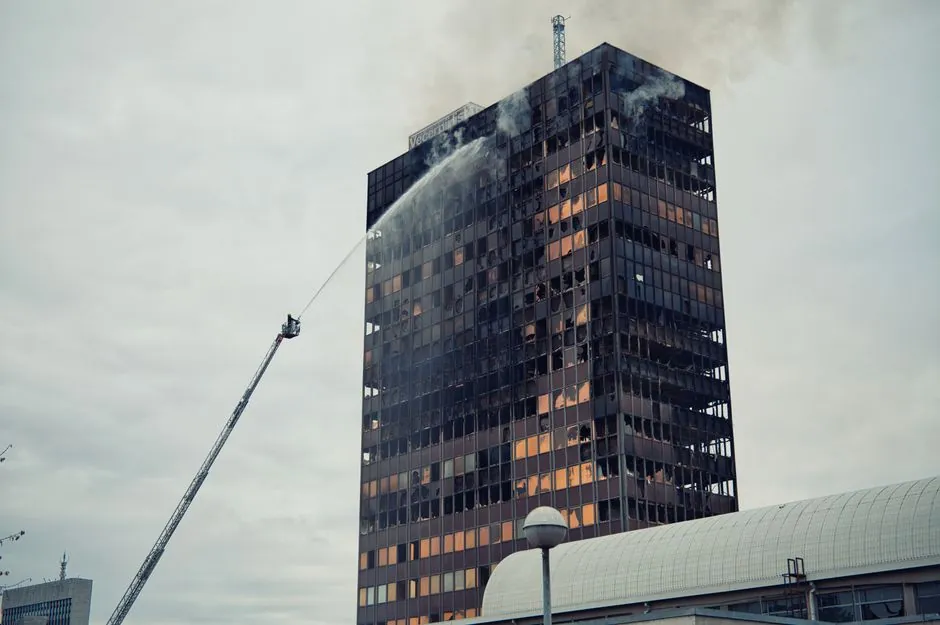
A 2-A:10-B:C dry-chemical unit rated for Class A, B, and C fires is the default extinguisher carried onto a boom lift, scissor lift, or scaffold platform, because the fuels above grade (lumber, diesel, thinners, temporary wiring) match the same fire classes a ground floor would face [S1][S4].
Selection is driven by the fuel on the platform and the travel distance back to a staged unit, not by the lift itself, and the same OSHA 29 CFR 1926.150(c) and NFPA 10 rules that govern ground placement apply once the platform is in use [S1][S5].
Class match: which extinguisher goes on the platform
Class A (ordinary combustibles: lumber, packaging, insulation), Class B (flammable liquids: diesel, solvents, propane), and Class C (energised electrical: temporary power, leads, corded tools) are the three fire classes a height work crew will actually meet, and a single 2-A:10-B:C multipurpose dry-chemical extinguisher covers all three on a typical platform [S1][S4]. Class D (combustible metals such as magnesium or titanium swarf) and Class K (cooking oils) are not normal platform hazards and rarely need to be carried up [S4]. The 10-B rating means the unit must be capable of extinguishing at least 10 square feet of a flammable-liquid fire, the same numerical floor OSHA 29 CFR 1926.150(c) applies within 50 ft of any spot using more than 5 gallons of flammable liquid or 5 lb of flammable gas [S1].
Quantity, travel distance, and the OSHA 1926.150(c) floor
On any U.S. construction site, OSHA 29 CFR 1926.150(c)(1)(i) requires one extinguisher rated not less than 2-A per 3,000 sq ft of protected building area (or major fraction thereof) with travel distance capped at 100 ft, plus at least one 2-A unit on every floor, and in multistory work at least one adjacent to the stairway [S1]. Where flammable liquids or gases are present, a 10-B or higher unit must be within 50 ft of the work point [S1]. The practical reading for a work-at-height crew is two units per active platform or scaffold bay: a 2-A:10-B:C on the platform itself for the operator, and a staged 10-B or larger unit at the floor or mast base within 50 ft of the fuel source. NFPA 10 mirrors this with a 75 ft travel distance for Class A hazards and 30 to 50 ft for Class B depending on hazard severity, with area caps that force minimum counts regardless of layout [S5].
Weight, mounting height, and the 5 ft / 3.5 ft rule
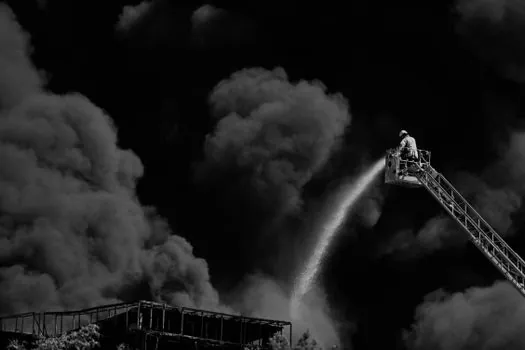
OSHA 29 CFR 1910.157(c)(1) and NFPA 10 Section 6.1.3.8 set the same mounting envelope, and it is the rule that determines which units are physically carryable on a platform: extinguishers weighing 40 lb or less must be mounted with the handle no higher than 5 ft (60 in) above the floor, units over 40 lb no higher than 3.5 ft (42 in), and the bottom of every unit at least 4 in above the floor to clear standing water, chemicals, and forklift traffic [S2][S5]. On a boom or scissor platform that translates to a hard rule of thumb: a 5 lb CO2 or a 2.5 to 5 lb ABC dry-chemical unit rides the platform with the operator, and anything 20 lb or above stays on the deck or at the mast base. The 4 in floor clearance is a real failure mode; platform gratings, scissor-pack debris, and rainwater collect at exactly the height the rule is written for [S2].
What a CO2 unit does on a platform, and where it does not belong
CO2 extinguishers are the right answer for live electrical and server-class fires because the agent leaves no residue, and AS 2444 guidance places a CO2 unit outside the server-room entry rather than inside it so the operator does not breathe the discharge [S7]. Translated to work at height, a 5 lb CO2 is a sensible secondary on platforms that are doing live-cable work or terminating panels, but it is not a substitute for the dry-chemical unit: a 5 lb CO2 carries no Class A rating and will not control a lumber or packaging fire, which is the most common platform fire [S1][S4]. Practical pairing on an aerial work platform is a 2-A:10-B:C dry-chemical primary plus a 5 lb CO2 secondary, with both visible from the operator's station and clipped against the rail so a slip does not throw them off the basket.
Inspection cycle and the maintenance trap at height
OSHA 1910.157(e) and NFPA 10 require monthly visual inspections, annual professional maintenance, and hydrostatic test intervals that depend on the cylinder type, and that obligation does not pause because the unit lives on a boom lift instead of a wall bracket [S2][S5]. The pattern of violations seen in 2026 is portable units on platforms that never get the monthly tag check because the platform is rented, moved, or parked at varying heights across the site [S2]. The fix is procedural, not a different extinguisher: assign the monthly visual to the operator pre-shift, lock the inspection tag to the platform rail rather than the cylinder, and treat any unit that has been partially discharged as out of service even if the pressure gauge still reads in the green [S2][S6].
Selection comparison: which unit for which height task
The three unit types that cover almost every work-at-height scenario, lined up against the criteria that actually drive the choice, are a 2.5 to 5 lb ABC dry-chemical, a 5 lb CO2, and a 10 lb or larger ABC staged at the mast base. On weight the 5 lb CO2 and the 2.5 lb ABC both clear the carryable-on-platform bar, the 10 lb ABC is borderline and is usually decked, while anything over 20 lb is almost always deck-staged; on Class A coverage only the ABC units qualify, the CO2 carries no Class A rating; on Class C / live electrical both the ABC and the CO2 are rated, the CO2 leaves no residue; on Class B the ABC is the practical answer because the 10-B numerical floor set by OSHA 1926.150(c) is straightforward to meet with a dry-chemical unit [S1][S4]. For most platform work the right combination is a 5 lb ABC on the rail and a 10 lb or larger ABC at the base, with a 5 lb CO2 added only when the task is live electrical termination.
Who this rule set is for, and where it does not apply
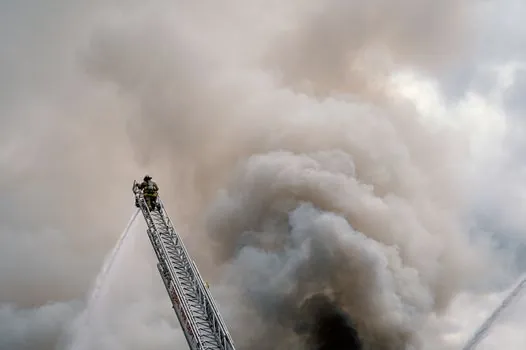
The 2-A:10-B:C plus 5 lb CO2 pairing is written for construction, maintenance, and inspection crews working from boom lifts, scissor lifts, mast climbers, and supported scaffolds where ordinary combustibles, flammable liquids, and live electrical are all present within arm's reach [S1][S6]. It is not the right spec for hot-work on tanks or piping with hydrocarbon residue, where a higher-rated Class B unit such as Purple K is the practical choice, and it is not the right spec for combustible-metal dust (Class D), which needs dedicated dry-powder agents that bear no resemblance to ABC [S1][S4]. It is also not a substitute for fixed suppression: a portable unit on a platform is a first-attack tool, and the rule of thumb is that the operator must be able to reach it without leaving the platform controls.
Trackable signals to watch next
Two signals worth monitoring through the rest of 2026: any update to the OSHA 29 CFR 1926.150 and 1910.157 penalty figures cited at $16,550 per instance in the March 2026 guidance, and any NFPA 10 issuance that revises the 75 ft / 50 ft travel distance numbers or the 5 ft / 3.5 ft mounting envelope [S2]. Both are published on a multi-year cycle, and a change in either shifts the platform-stage-deck split directly.
For component-level specifications, see fire extinguisher.
Related analysis: Total station selection for steel construction: 2026 spec map.