
A fire hydrant lateral is commonly 6 inches in diameter, but a 6-inch dead-end lateral is limited to 150 feet when it supplies only one hydrant [S4][S7].
There is no universal code-driven maximum length for a hydrant-to-water-main lateral; hydraulic performance and the authority having jurisdiction govern the final selection [S2].
Minimum lateral diameter: 6 inches is a common baseline
Six-inch pipe is the common baseline for a fire hydrant lateral, while the project drawings and specifications must state the required size [S7]. One municipal standard detail requires the hydrant to connect to a 6-inch minimum main, with the connection made through a cut-in tee and an MJ arrangement [S8].
A 6-inch lateral is not automatically suitable for every project. One 2024 engineering discussion estimated that a 6-inch pipe flowing 500 gpm would incur about 1 psi of friction loss per 100 ft, indicating that longer or more constrained routes require a hydraulic calculation rather than diameter selection by rule of thumb [S2].
The distinction between a hydrant lateral and a supply main is essential. The Las Vegas and Henderson Fire Code requires lines feeding multiple hydrants to have a minimum diameter of 8 inches, but permits a dead-end length of 150 ft of 6-inch underground pipe serving only one hydrant [S4]. A separate Murray code provision likewise requires an 8-inch minimum water main serving a hydrant lateral [S3].
Maximum lateral length: no single national value
No generally applicable maximum length applies to the connection between a hydrant and the water main; the practical constraint is whether the lateral can deliver the required flow at the hydrant [S2]. The cited engineering discussion identifies friction loss as the governing practical limit rather than a fixed pipe-length cutoff [S2].
Local codes can nevertheless impose project-specific conditions. The Las Vegas and Henderson provision sets a 150 ft maximum for 6-inch dead-end pipe supplying only one hydrant, which is a local rule rather than a universal lateral-length rule [S4]. Another municipal standard states that hydrants must not be installed on lines smaller than 6 inches or on lines not adequately sized to convey required fire flows [S6].
Selection criteria: diameter, flow, length, and route
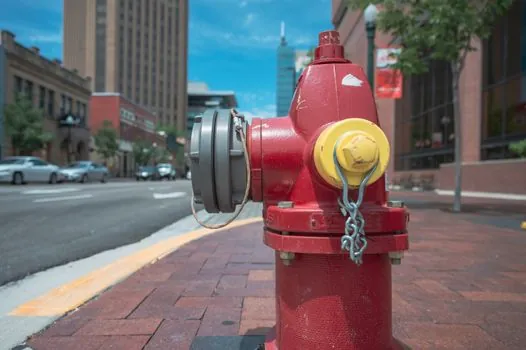
A 6-inch lateral can be economical for a short dead-end run serving one hydrant, while an 8-inch lateral offers greater hydraulic capacity for longer, curved, or interconnected runs [S2][S3][S4]. The comparison below turns on the actual fire-flow requirement, route friction, dead-end conditions, and governing local code.
Decision factors can be compared directly:
These are selection criteria, not a universal table of approved configurations. The engineer must calculate the available pressure, required residual pressure, flow, pipe length, fittings, elevation change, and pipe material for the actual installation.
Fire-flow demand: 500 gpm is a useful check
A calculation example of 500 gpm in a 6-inch lateral produces approximately 1 psi of friction loss per 100 ft, illustrating why length can eliminate the margin needed for firefighting even when the nominal diameter meets the local minimum [S2]. At 1 psi per 100 ft, 100 ft contributes about 1 psi, 200 ft about 2 psi, and 300 ft about 3 psi before fitting and elevation losses are added [S2].
The 500 gpm figure is an engineering example in the cited discussion, not a universal required flow for every hydrant [S2]. A larger required flow increases the friction loss in the same pipe [S2].
Engineers should also distinguish the required flow at the hydrant from the total fire flow available to the incident. Multiple hydrants may contribute flow through the distribution network, and the length of each lateral can make friction losses significant [S2]. This makes available-flow modeling, not pipe diameter alone, the decisive check.
Dead-end, looped, and connected configurations
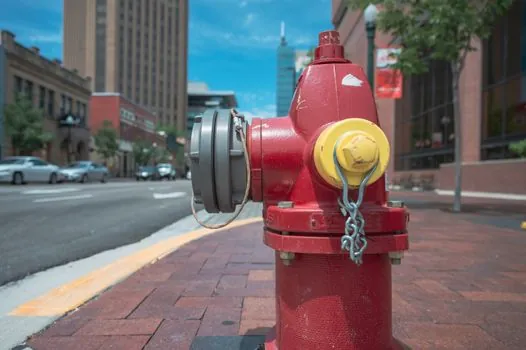
A dead-end 6-inch lateral serving one hydrant can be used within the locally stated 150 ft limit [S4]. A looped or interconnected system is hydraulically different because flow can arrive from more than one direction, but a looping arrangement does not eliminate the need to size every hydrant branch for the required discharge.
The commonly observed 6-inch lateral does not prove that every branch is 6 inches [S7]. Municipal requirements may call for 6-inch minimum mains, 8-inch mains for hydrant laterals, or lines sized for required fire flow [S3][S6][S8]. The project geometry therefore matters: a short private-connection branch, a municipal distribution main, and a branch supplying a fire pump or standpipe can have different design criteria.
This is an engineering recommendation rather than a universal code requirement, and it reinforces the need to evaluate the complete connected system.
Applicable codes and drawing requirements
The applicable requirement comes from the adopted fire code, water-utility standard, and project specifications, not from one nationwide lateral-length value [S2][S3][S4]. Specific provisions may require a minimum 6-inch main, an 8-inch main serving a hydrant lateral, or a line sized to convey required fire flows [S3][S6].
NFPA guidance identifies a hydrant location within 600 ft of a building and spacing not exceeding 800 ft between hydrants [S5]. Those access and distribution criteria should be kept separate from lateral sizing, because satisfying the 600 ft building coverage does not guarantee adequate pressure at the hydrant outlet.
For plan review, the civil designer should show the main diameter, lateral diameter, run length, fitting configuration, hydrant count, required flow, and calculated residual pressure. Equipment selection can then be coordinated with the fire hydrant, while any attached hose or suppression arrangement can be checked separately against the applicable fire extinguisher or fire alarm control panel design.
Common failures during design and installation
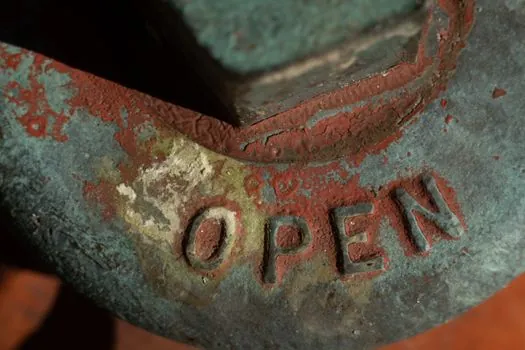
Three recurring errors are applying a 6-inch rule without calculating friction loss, confusing hydrant spacing with lateral length, and accepting a dead-end connection that lacks an explicit local length limit [S2][S4]. A 6-inch pipe installed beyond the permitted 150 ft dead-end run in the cited local code creates a direct code conflict even if the calculated flow appears marginal [S4].
Another failure is treating the branch as dead-end when the network arrangement permits flow from both directions. That assumption can overstate or understate residual pressure unless the network model and valve positions match the fire department’s operating plan [S2]. A third failure is omitting fittings, bends, elevations, and appurtenances from the friction calculation, which makes a 1 psi per 100 ft pipe-loss estimate incomplete [S2].
Verification should include construction-plan review, utility approval, and fire-department acceptance before installation. The final record should establish the accepted lateral diameter, measured route length, calculated fire flow and residual pressure, and governing code section.