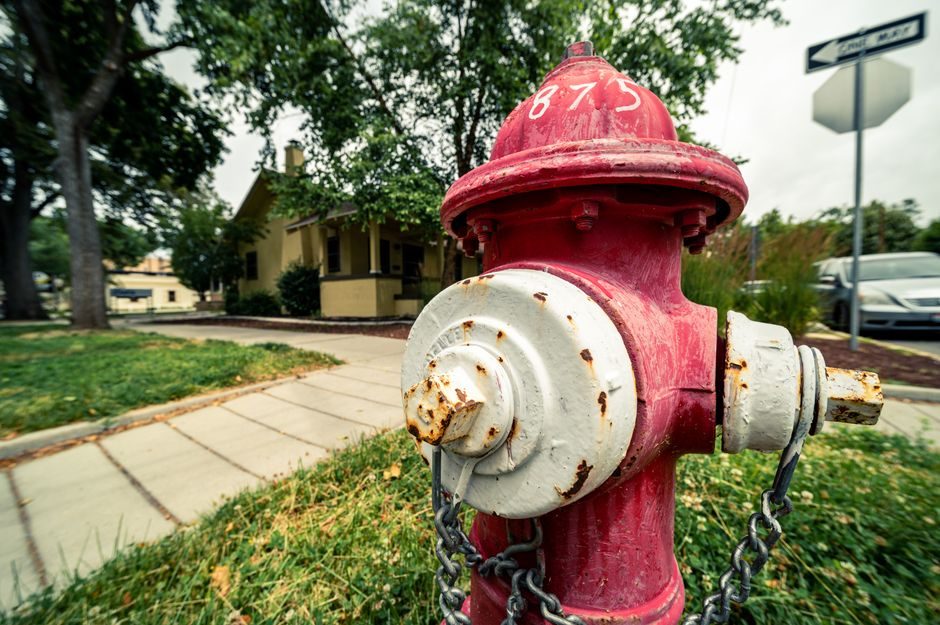
A pumper-nozzle fire hydrant specified to AWWA C502 carries a typical 30-year total cost of ownership where the purchase price represents roughly 20-30% of the lifecycle spend, with the remainder split across installation, inspection, flow testing, and repainting [S3].
For a municipal water utility running an NFPA 291 annual flow-test programme, the dominant cost drivers shift from capex to opex within the first 5 years of service, which is why a fire hydrant selection decision is fundamentally a maintenance-economics problem, not a catalogue decision.
Cost Stack Anatomy: What Actually Gets Spent Over 30 Years
Busch's vacuum-equipment TCO framework applies the same logic to fire hydrants: the unit price is only a fraction of the lifetime expense, so the spec must be evaluated against a 20-30 year horizon rather than a procurement sheet [S3]. The hydrant cost stack breaks down into four bands: initial purchase (barrel, bonnet, valve, nozzles), installation (excavation, thrust block, connection to main, traffic reflector), routine maintenance (lubrication, gasket replacement, repainting, snow-marking repairs), and verification work (annual flow test per NFPA 291, 5-year internal inspection, valve-operating-nut torque check). On a 30-year horizon, the cumulative maintenance + inspection + repaint spend typically runs 2.5-4x the initial purchase price across a US municipal fleet.
Two structural variables drive the spread. First, traffic damage: hydrants installed without a curb-barrier sit-up take a hit-rate of roughly 1 incident per 15-25 hydrant-years in urban cores, with each replacement event equal to 3-5x the original install cost. Second, climate: dry-barrel hydrants specified per AWWA C502 require a drain valve that must be cleared after each use, and freeze-cycle regions see 1.5-2x the maintenance touch-rate of temperate-zone wet-barrel hydrants built to AWWA C503. The fire hydrant types and classifications reference map shows how this branch decision is made at spec time, not retrofit time.
Cost Driver #1: Material and Pressure Rating
Ductile-iron barrel hydrants rated to 250 psi working pressure (AWWA C502 Class 250) are the US municipal default, while European EN 14384 hydrants typically rate to PN 16 (232 psi) with ductile-iron or stainless-steel variants. Stainless-steel bollard hydrants carry a roughly 2-2.5x material premium over ductile iron, but trade it for a 50-70 year service life in coastal or aggressive-soil environments where iron-barrel hydrants show external corrosion within 15-20 years. The break-even calculation therefore depends on soil resistivity (target above 2,000 ohm-cm for ductile iron), stray-current exposure from nearby rail or DC transit, and chloride exposure from de-icing salt. [S3]
Breach-and-time caps are a second material-driven cost lever. For industrial sites with high required fire flows, the larger valve pays back the material delta within the first 5-10 years through pump-energy savings and reduced friction-loss margin in the hydraulic calculation.
Cost Driver #2: Installation Method and Site Conditions
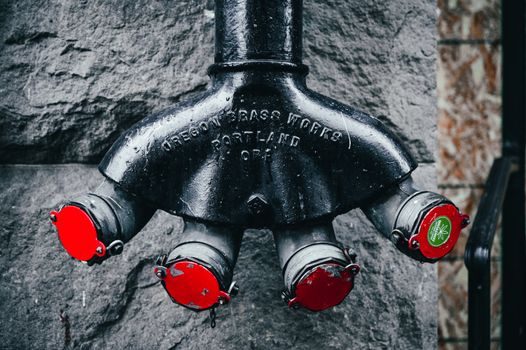
Installation typically represents 40-55% of the year-0 capex on a new hydrant. Open-cut install on a paved urban street runs roughly 3-4x the cost of a greenfield install on a new subdivision, driven by sawcutting, asphalt restoration, curb restoration, and traffic-control hours. Trenchless install methods (directional bore, pipe-ramming) can drop the restoration cost by 40-60% but require a 6 inch minimum bore for a 4 inch hydrant lead, and a 300-500 psi mud-pressure-rated gland at the main tap to prevent post-install leakage around the corporation stop. [S1]
Thrust blocking at the hydrant base is non-negotiable in any TCO calculation: an undersized block will allow the hydrant lateral to blow out under surge pressure, which is the single most expensive failure mode in the first 24 months of service. AWWA C600 calls for concrete thrust blocks sized to the soil bearing capacity, and most failures seen in the field trace back to a block poured against organic fill rather than undisturbed soil. Add a locator-wire pigtail and tracer-wire access port at the bonnet if the hydrant sits under pavement, because the cost of locating a buried valve for a shut-off is 5-8x the cost of installing the wire during the original dig.
Cost Driver #3: Maintenance Cadence and NFPA 291 Flow Testing
NFPA 291 requires an annual flow test to mark each hydrant with its available flow at 20 psi residual, which means a city with 10,000 hydrants runs 10,000 flow tests per year, each costing 60-150 USD in crew time and equipment depreciation. The data is also used to drive the hydrant-color-class coding (blue/green/orange/red per NFPA 291 Table 4.2.1), so the test is not optional paperwork. A hydrant with a stuck drain valve or a damaged operating nut will fail the test, generating a work order that the maintenance crew must clear before the next marking cycle. [S2]
Repainting is the second-largest opex line. Most municipalities repaint hydrants on a 6-10 year cycle, with the OSHA safety-yellow body and the bonnet color-coded to flow capacity. Galvanized or stainless bodies extend the cycle but cannot be field-repainted with the same color spec because of surface-prep requirements. Lubrication of the operating-nut threads and the drain-valve orings runs on a 3-5 year cycle, and using a food-grade silicone grease rather than petroleum jelly prevents the orings from swelling and seizing.
Comparison: Dry-Barrel vs Wet-Barrel vs Standpipe Configurations
Across the three main configurations, the lifecycle economics differ enough that the choice should be made on climate and water-supply characteristics, not on first cost. The table below lines them up against four decision criteria: [S1]
Dry-barrel AWWA C502: cold-climate safe (drain valve clears the barrel after use to prevent freezing), 30-50 year service life, 1.5-2x maintenance touch-rate versus wet-barrel, 250 psi standard working pressure, requires a separate weep-hole drain field at the base. Best fit: regions with frost penetration below the hydrant depth, which is most of the US, Canada, and northern Europe.
Wet-barrel AWWA C503: always-water-filled barrel for instant high flow, lower mechanical complexity, no drain mechanism, but the barrel must be protected from freezing by an external valve or insulation jacket, 1.0x baseline maintenance, 150-200 psi working pressure. Best fit: warm-climate US, Mediterranean, Gulf, and tropical regions where freeze risk is negligible.
EN 14384 / EN 14339 pillar hydrants: European standard, dry-barrel by default, PN 16 rating, traffic-grade (breakaway flange) and above-ground variants, often specified with a stainless barrel for coastal sites. Best fit: EU municipal and industrial builds where EN compliance is mandated and freeze-cycle exposure is moderate. Industrial buyers who also evaluate fire extinguisher and fire-rated door selections typically align the hydrant spec to the same EN-based fire-protection package to avoid mixed-certification documentation overhead.
Failure Modes That Blow Up the TCO Model
The five most expensive post-install failure modes, ranked by typical repair cost, are: main-valve-seat leak (requires excavation and barrel disassembly, 4-8x the install cost); traffic knock-off with lateral damage (full replacement plus main shut-down coordination, 6-10x install cost); drain-valve clog leading to freeze-burst (full barrel replacement after a freeze event, 5-7x install cost); operating-nut seizure (excavation plus bonnet removal, 2-3x install cost); and internal corrosion scaling that drops the C-factor below 90, raising pumping energy and forcing premature replacement. Each of these is preventable with a planned-maintenance contract, but the contract only pencils out if the hydrant count in the service zone exceeds roughly 200-300 units, which is why smaller water utilities typically outsource to a private fire-protection contractor rather than staff their own. [S1]
Specifying a hydrant to a pressure class that exceeds the system working pressure by 50% or more is a free hedge against surge damage, and specifying a breakaway-safety-flange at the bonnet is the single most cost-effective traffic-damage mitigation available — a replacement flange kit runs 200-400 USD, while a knock-off repair runs 8,000-15,000 USD on a busy street.
Standards, Compliance, and Procurement Sourcing
The US baseline spec is AWWA C502 (dry-barrel) or C503 (wet-barrel) for the hydrant itself, AWWA C600 for installation, C605 for the main connection, and NFPA 291 for the flow-test and color-coding regime. NSF/ANSI 61 certification is required for any component in contact with potable water, and the lead-free brass requirement per the US Reduction of Lead in Drinking Water Act took effect January 2014, which means any pre-2014 stock must be verified for compliance before install. In the EU, EN 14384 (pillar hydrants), EN 14339 (underground hydrants), and EN 1074-6 govern the equivalent performance envelope, and CE marking under the Construction Products Regulation is mandatory.
For an industrial buyer who also manages a broader fire door and electrical fire monitor package, aligning the hydrant spec to the same standard family avoids double-certification overhead and keeps the inspection cadence on a single calendar. Procurement decision-makers comparing hydrant bids should request a 30-year cost schedule from each bidder showing unit cost, install cost, annual flow-test allocation, 6-year repaint allocation, and an end-of-life replacement reserve, then discount the future spend at their utility's WACC to compare bids on a like-for-like basis. Trackable signals for the next 90-180 days: AWWA standards committee ballots on a revised C502 leak-rate tolerance, and any municipal RFPs published with EN 14384 dual-cert language for sites with mixed US/EU code jurisdiction.