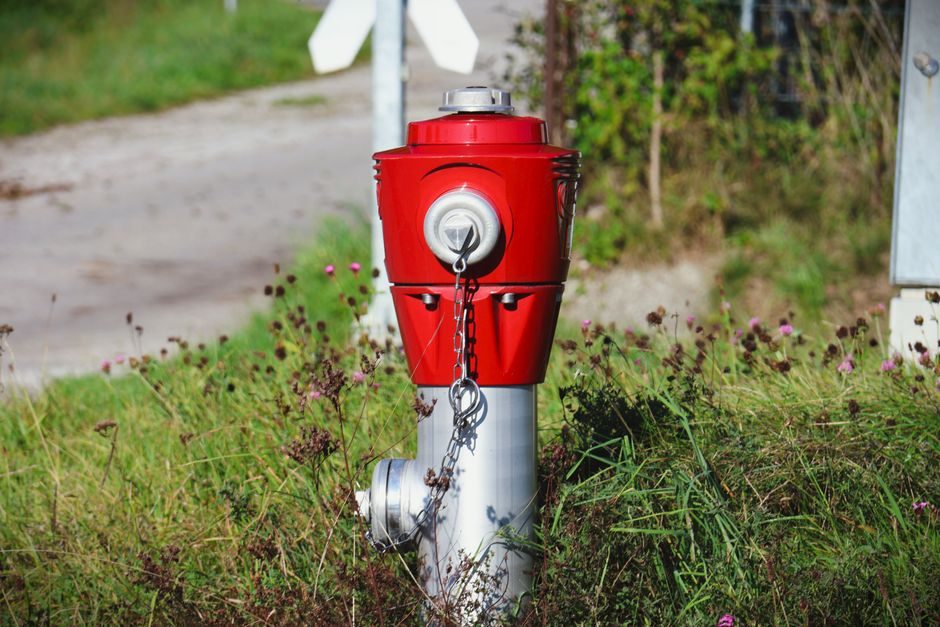
Fire hydrants split into two structural families — wet barrel, where the barrel stays constantly charged with water, and dry barrel, where the barrel remains empty until a main-valve release admits water from below grade [S3]. The division drives almost every downstream spec: climate suitability, depth-of-bury, traffic-model rating, friction-loss budget, and which standard the unit is built to.
North American municipal procurement is anchored on AWWA C502 for dry-barrel hydrants, with companion standards C110/C111 for ductile-iron fittings, C600 for installation, and C105 for polyethylene encasement in corrosive soils [S4][S7]. European projects default to BS EN 14384 for pillar hydrants and BS 750 for underground (below-grade) hydrants, with NFPA 14, 20, and 25 governing system integration and inspection cadence on the US side [S3]. Hydrant Doctor's 2026 service update confirms that preventive maintenance and valve-exercise programs remain a distinct trade vertical, not an OEM after-sales line [S2].
Wet-Barrel vs Dry-Barrel Hydrants: Mechanism, Climate, and Friction Loss
Wet-barrel hydrants hold a constant water supply in the above-grade barrel, so every outlet has its own individual valve; the unit is only practical where freezing is not a concern, and it is the dominant type in Southern California, Florida, Hawaii, and other warm-climate US jurisdictions [S3]. Jones Water Products' Triton J-3708/J-3710/J-4040 wet-barrel line shows the canonical features — silicon-bronze blow-out-proof stem, O-ring sealed outlets, removable bronze nozzles, and a wide rubber seat disc that survives minor debris damage [S8].
Dry-barrel hydrants keep the barrel drained until a main valve at the base opens, making them the default wherever frost penetrates the bury depth; AWWA C502 governs their design, hydrostatic test pressure, and traffic-model certification [S4][S7]. A common spec line worth quoting verbatim from the B/CS Unified Specification: "friction loss in PSI at the flow of 1,000 GPM from the pumper nozzle, such friction loss must not exceed 3 PSI," paired with ISO 9001 manufacturer certification and AWWA C502-94 (or latest version) compliance [S7].
NFPA 291 Color-Coded Capacity Classes: Light Blue, Green, Orange, Red
The bonnet and cap color band on a hydrant is a flow-class indicator carried by most US jurisdictions, mapping directly to NFPA 291 ratings [S3][S5]. Bennett Fire & Rescue's published jurisdictional spec lists the four classes: Light Blue = Class AA at ≥1500 gpm (≥5680 L/min), Green = Class A at 1000–1499 gpm (3785–5675 L/min), Orange = Class B at 500–999 gpm (1900–3780 L/min), and Red = Class C at <500 gpm (<1900 L/min) [S5].
The color band is informational, not the only flow signal — the actual rated capacity must be established by a flow test, not assumed from paint. For an engineer comparing options, the gpm ceiling is set by the main-valve size, the run of supply piping, and the static/residual pressure at the hydrant base; a 4-1/2" pumper nozzle on a 6" barrel typically feeds the AA class, while 2-1/2" hose-only outlets are the B/C class hardware [S5]. Pillar, wall, flush, recessed, and post-indicator hydrants are physical form variants that can fall into any capacity class; the Kord Fire Protection taxonomy explicitly lists wall hydrants, standpipes, flush hydrants, post-indicator hydrants, recessed hydrants, and pillar hydrants as the common form factor split [S6].
Criteria Comparison: Wet Barrel, Dry Barrel, Underground, Standpipe
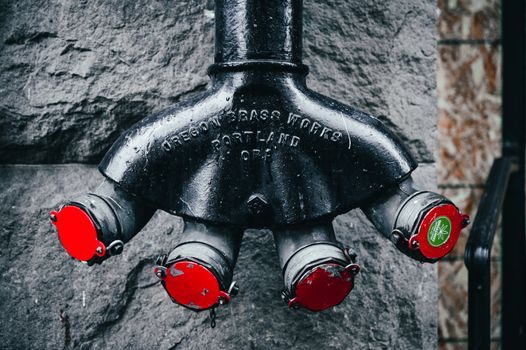
Four common form factors compared on the decision criteria most projects actually bid on:
Wet-barrel (AWWA C503 / Jones Triton series): constant water in barrel, individual outlet valves, best for non-freezing climates, lowest friction loss, not suitable where frost depth exceeds bury — typical for Southern US and most of California [S3][S8].
Dry-barrel pillar (AWWA C502 / BS EN 14384): drained barrel, single main valve at base, traffic-model certified, the default North American municipal and BS EN 14384 European pillar, 3 psi max friction loss at 1000 gpm from pumper nozzle per spec [S4][S7].
Underground / flush (BS 750 / AWWA C600-compatible): bonnet sits below grade with a flush cover, no above-grade profile, used in urban streetscapes and airports to protect sightlines, requires a standpipe for hose connection [S3][S6].
Wall hydrant / standpipe / post-indicator: building-mounted or riser-fed variants for internal fire-department connection points, governed as part of the standpipe system under NFPA 14, not as standalone hydrants [S3][S6].
Standards Mapping, Installation, and Maintenance Stack
Specification discipline is layered: AWWA C502 sets the dry-barrel product standard, AWWA C110/C111/C600/C105 govern fittings and installation, BS EN 14384 and BS 750 cover the European pillar and underground variants respectively, and NFPA 25 mandates the inspection, flow-test, and lubrication cadence once installed [S3][S4][S7]. Standard drawing-section numbers such as 33 12 19 (CSI MasterFormat) carry the full hydrant submittal package, including manufacturer name, bonnet paint color, and engineering control drawing [S4].
Maintenance is a recognized discipline — the Hydrant Doctor 2026 transition to virtual training and consulting, following founder Nicholas Selembo's retirement from onsite work, signals a market shift toward remote maintenance-plan audits, valve-exercise programs, and crew training rather than OEM-managed service [S2]. Inspection scope under NFPA 25 includes annual flow testing, lubrication of the main valve, clearing of obstructions, and verification of the bonnet color-code versus the latest hydraulic-model flow class [S2][S5]. A related fire extinguisher TCO breakdown follows similar compliance-math logic — both are inspection-cadence-driven safety assets, and the lifecycle math is what determines the 10-year replacement-versus-maintain decision. Engineering reference pages on the broader fire-protection taxonomy — including the fire hydrant encyclopedia entry and the fire-rated door and fire door references — are useful cross-checks when an integrated life-safety package is being specified.
Selection Rules, Failure Modes, and What to Avoid

Three rules that prevent the most common spec errors: (1) do not specify wet-barrel in climates where frost depth exceeds the bury line — the barrel will split; (2) do not trust bonnet color alone for capacity, always cross-check against the latest jurisdictional flow test; (3) do not skip AWWA C600-compliant installation and C105 poly-wrap in corrosive soils, because external corrosion is the dominant failure mode for dry-barrel units in service [S3][S4][S7].
Common failure modes in the field — leaking main valves, frozen drain barrels, stuck stem nuts, caps seized by corrosion, and traffic-impact damage to flanges — are exactly the repair scope Hydrant Doctor's training and consulting catalog addresses, and the 4–8 week parts lead time the firm cites is a benchmark for how thin the OEM spares pipeline remains outside major utilities [S2]. A useful adjacent read on the selection-by-class pattern is the rock-wool density and form spec map, which uses the same form-factor-plus-property-class structure; the smoke detector selection map follows the same UL/NFPA layered-standards logic that governs hydrant procurement. Closing checks: confirm AWWA C502 (dry) or C503 (wet) plus EN 14384/BS 750 on the European side, lock the bonnet color to the latest NFPA 291 / jurisdictional flow-class table, and require ISO 9001 plus a friction-loss budget at 1000 gpm before signing the submittal package.