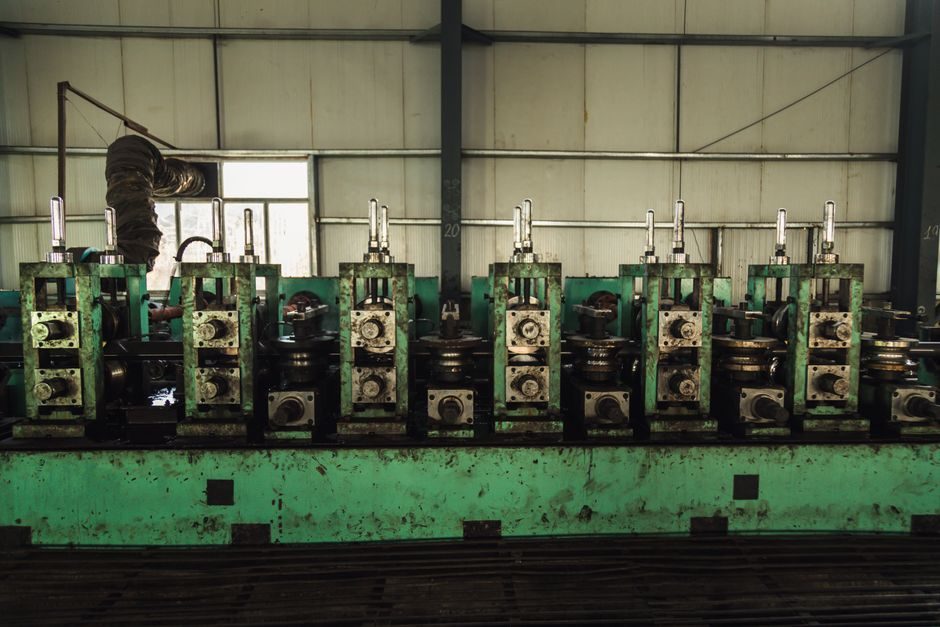
Steel pipe delivers a yield-strength-to-weight envelope that polymer and concrete lines cannot match — driven by typical carbon-steel yield in the 235–355 MPa band and tensile strength commonly above 415 MPa for standard line-pipe grades [S1].
For process, structural and piling duty the trade is consistent: you pay extra unit cost and ongoing corrosion-management effort in return for higher allowable pressures, better toughness at sub-zero service, and proven weldability. The decision turns on fluid, temperature, soil chemistry and lifecycle math, not on a single universal rule. Engineers comparing options can anchor on the steel pipe reference page before drilling into the manufacturing and material variants.
Where Steel Pipe Outperforms: Mechanical and Fabrication Strengths
Carbon-steel pipe routinely reaches 235–355 MPa yield depending on grade, with elongations above 20% on standard line-pipe products, giving it a damage-tolerance margin that brittle materials cannot match under impact or ground movement [S1]. That ductility is the reason driven steel piles, including H-piles and pipe piles, can punch through stiff layers and boulders where cast-in-place concrete would crack, and why they are specified for marine fenders, bridge piers and rail viaducts [S1].
Weldability is the second decisive advantage. Standard grades such as ASTM A53, A106 and API 5L PSL1/PSL2 accept SMAW, GMAW and FCAW without special procedures, allowing field tie-ins, hot taps and emergency cut-outs that seamless steel pipe fabricators rely on for high-pressure hydrocarbon and steam service. Dimensional consistency is tighter than cast iron or concrete, with mill tolerances on wall thickness typically held within ±12.5% per common line-pipe specifications, which simplifies support-spacing calculation and stress-checks. For high-temperature service above 400 °C, steel also retains strength that would soften aluminium alloys and creep-distort most thermoplastics well below 100 °C. A field-proven example is the steel pipe installation workflow, which depends on these mechanical margins to clear hydrostatic acceptance at 1.5× design pressure.
Where Steel Pipe Loses: Corrosion, Weight and Cost
Steel pipe's dominant failure mode is corrosion — driven by oxidation in wet service, galvanic action when coupled to dissimilar metals, and stray-current interference in urban or rail corridors [S1]. Unprotected carbon steel can lose 0.1–0.5 mm/year in neutral soils and accelerate past 1 mm/year in acidic or chloride-rich environments, which is why buried transmission mains almost always carry a fusion-bonded epoxy, coal-tar enamel or cathodic-protection system. The trade-off is visible in raw unit cost: a 100 mm Schedule 40 ERW carbon-steel line typically lands 2–4× the price per metre of an equivalent HDPE PE pipe for non-pressurized drainage, even before coating and CP are added.
Weight is the second penalty. A 6 m length of DN150 Schedule 40 steel weighs roughly 110–120 kg, against about 25 kg for the same nominal size in HDPE, which forces heavier handling gear, more frequent support spacing in overhead racks, and higher transport cost per metre. Field handling also exposes steel to dent and ovalisation damage during transit and stacking, although steel tolerates rough handling better than concrete once on site [S1]. For the broader material comparison that includes steel-plastic composite pipe and pipe fitting families, the corrosion-vs-cost frame is usually the deciding axis.
Form-Factor Comparison: ERW, Seamless, Spiral and Corrugated
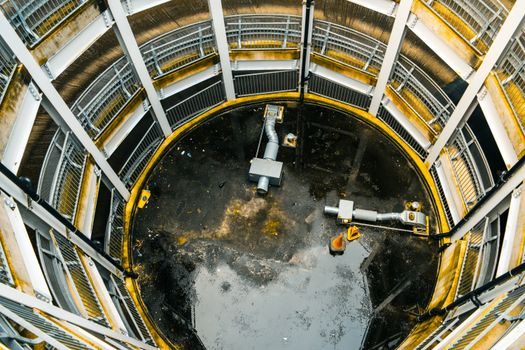
The four dominant steel-pipe geometries trade cost against pressure rating, diameter range and field-weld practicality. ERW (Electric Resistance Welded) covers the bulk of NPS 1/2 to NPS 24 service at the lowest price point, with hydrostatic test pressures aligned to API 5L or ASTM A53 schedules. Seamless pipe pushes the pressure ceiling higher and is preferred for high-temperature boiler tubes, OCTG casing and pipe fitting feedstock where weld-seam defects cannot be tolerated, at roughly 1.5–2× the cost of equivalent ERW. Spiral/HSAW welded pipe dominates large-diameter water and penstock lines above NPS 24, where the helical weld distributes pressure stress more evenly than a straight seam and allows manufacturers to coil-and-weld from narrower plate stock. [S1]
Corrugated Steel Pipe (CSP) sits at the opposite end of the spectrum — a lighter, galvanised or aluminised product with annular or helical corrugations, used mostly for culverts, storm sewers and drainage where pressure rating is irrelevant and soil-structure interaction carries the load [S2]. The decision matrix is straightforward: pick ERW for general low-to-medium pressure service, seamless for the top 10–15% of pressure/temperature applications, spiral/HSAW for large-diameter transmission, and CSP only when the duty is gravity drainage or soil-culvert. The selection logic overlaps directly with the steel plate total cost of ownership frame, since both inherit plate-coil feedstock economics.
Operating Envelope: Temperature, Pressure and Chemical Limits
Standard carbon-steel pipe is rated for continuous service from roughly −29 °C (the typical A53/A106 low-temperature floor for normalised grades) up to about 425 °C before creep becomes a design factor, with short excursions toward 480 °C tolerated on ASTM A106 Grade B in power-plant practice. Pressure ratings depend on schedule, but a DN200 Schedule 40 carbon-steel line will hold a 100-bar internal pressure with a 1.5–2× safety margin against yield — a margin that shrinks sharply above 400 °C as allowable stress drops. Sour-service duty (H₂S-bearing hydrocarbons) calls for compliance with NACE MR0175 / ISO 15156, restricting hardness to 22 HRC maximum and requiring controlled-sulfur steel-making; non-compliant pipe fails by sulphide stress cracking within months. [S2]
For potable water, cement-mortar or epoxy linings shift the internal corrosion problem to the pipe wall, while external coatings (FBE, 3LPE, tape wrap) plus cathodic protection address soil-side attack. Stainless and galvanised variants extend the envelope further: 304/316L stainless pushes continuous service toward 870 °C and resists chloride pitting that defeats carbon steel, while hot-dip galvanising on CSP buys 30–70 years in benign culvert soils against a 10–25 year life for uncoated carbon steel in the same environment [S2]. When the chemistry crosses into abrasive slurry or high-pH steam, a material swap to steel-plastic composite pipe often beats any internal lining on lifecycle cost.
Who Should Specify Steel Pipe — and Who Should Walk Away
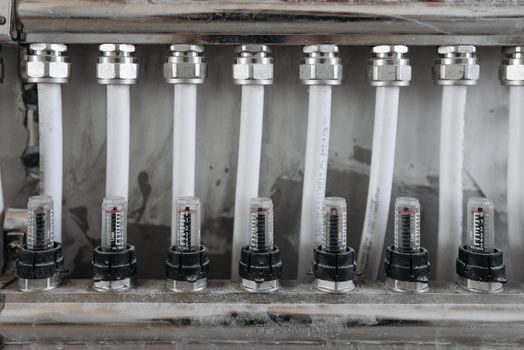
Steel pipe is the correct call for hydrocarbon transmission, high-pressure steam, fire-water mains, structural piling, and any service where temperature exceeds 60 °C or pressure exceeds roughly 10 bar at DN100 and above. It is also mandatory where the code body — ASME B31.3, ASME B31.4, API 1104, EN 13480 — explicitly lists steel as the acceptable material, or where weldability, impact toughness at −20 °C and verified traceability to a mill test report are non-negotiable. The supporting hardware, including pipe clamp selection, support span and pipe fitting pressure class, all inherit from that same line-pipe spec. [S3]
Steel is the wrong choice for low-pressure gravity drainage in acidic soils (CSP with aluminised coating lasts longer at lower cost), for inert chemical lines where contamination from rust or zinc pick-up cannot be tolerated (use stainless or polymer), and for buried services in stray-current corridors without an active CP system. Engineers should treat steel as the high-duty default and revert to alternative materials only when the corrosion, weight or installed-cost numbers fail their lifecycle spreadsheet.
Procurement and Sourcing Cues for 2026
Two verifiable signals for the next procurement cycle: API 5L PSL2 line-pipe lead times from major Asian mills have stabilised in the 10–14 week range through Q2 2026, and EN 10219 cold-formed structural hollow section availability from EU stockists has improved as the Q1 2026 plate-coil destock completes. Both trends feed into the same upstream feedstock curve covered in the steel plate types and classifications guide, which is the right reference for spec engineers tracing pipe-grade chemistry back to the originating plate or billet. [S1]