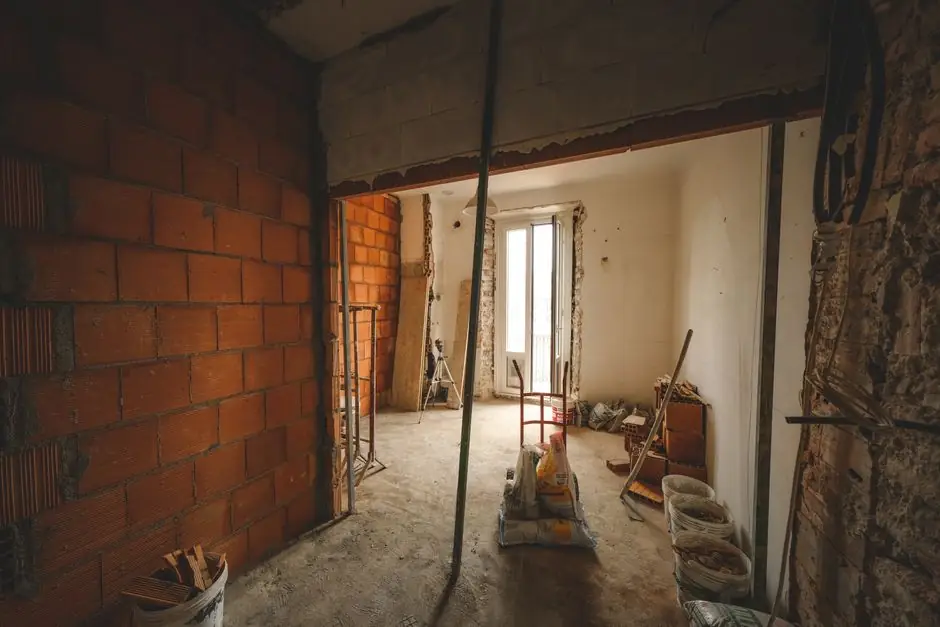
Fired clay brick for renovation hinges on matching four mechanical and physical envelopes to the existing wall, not on aesthetics alone: density 1.8-2.2 g/cm³, water absorption 10-20%, thermal conductivity 1.2-2.0 W/m·K, and a firing range of 800-1300°C that defines the unit's class [S1][S2].
Specifiers working on residential and light-commercial refurbishment in 2026 are balancing three pressures simultaneously: tightening European carbon disclosure under EN 15804+A2, the rise of thin and glazed formats for overlay work, and a long-standing four-class quality grading that still controls first-cost on site [S2][S3][S4].
Material Classes and What Each One Buys You
Burnt clay bricks are sold in four classes, and the first-class unit is the default for visible, load-bearing, or weather-exposed renovation faces because it carries no noticeable flaws, the highest compressive strength in the range, and tighter dimensional tolerance [S4]. Second-class units are acceptable for hidden internal walls, while third- and fourth-class bricks are reserved for temporary or non-structural work where surface regularity and strength are not critical [S4]. For renovation work that interfaces with older masonry, first-class bricks are also the safer match for existing mortar joints because their tighter tolerances reduce the need for excessive joint thickness to absorb dimensional variation.
Where the renovation brief is mainly cosmetic, a glazed thin brick manufactured from kiln-fired clay and finished with a non-porous glaze is now a credible alternative to full-depth replacement units, because the thin format reduces dead load on the existing structure and the glaze eliminates the need for a separate render coat [S3]. Standard full-depth burnt clay bricks, by contrast, require plastering or rendering with mortar when used in walls, which adds a step to the refurbishment sequence [S4].
Physical and Thermal Envelope to Verify on the Data Sheet
For renovation work the three physical numbers that drive both structural and energy calculations are density, water absorption, and thermal conductivity. Density 1.8-2.2 g/cm³ is typical for fired clay brick and scales with clay composition and peak firing temperature [S1]. Water absorption sits at 10-20% on standard units, and lower absorption correlates directly with better freeze-thaw resistance and longer service life in exposed facades [S1].
Thermal conductivity of 1.2-2.0 W/m·K is the band engineers should expect for fired clay brick, and within that band the higher-porosity units sit toward the lower conductivity end, the denser units toward the higher end [S1]. A practical read: a renovation targeting thermal upgrade should bias toward the higher-porosity end of the firing range, while a renovation targeting structural reinstatement should bias toward the denser, higher-load end. First-class units typically combine both, which is why they dominate the premium refurbishment segment [S4].
Renovation Decision Map: Format, Exposure, and Substrate
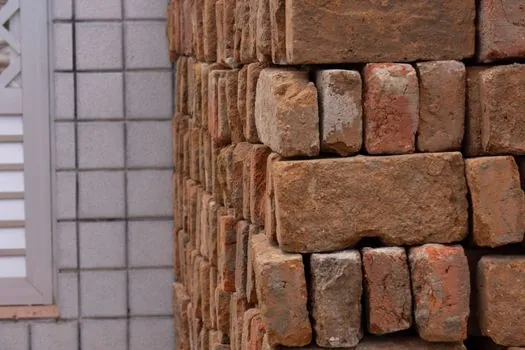
The four most common renovation scenarios in 2026 reduce to a short decision map. Scenario A, full structural reinstatement of a load-bearing leaf, points to first-class solid burnt clay brick at standard 8 in × 4 in footprint in the chosen thickness, because compressive strength and dimensional accuracy matter more than finish [S4]. Scenario B, facade overlay on an existing stable substrate, points to thin glazed brick, which adds a kiln-fired non-porous surface and cuts the added dead load to the existing structure [S3]. Scenario C, hidden internal leaf or party wall, accepts second-class brick to control cost without compromising the building envelope [S4]. Scenario D, temporary works or non-habitable outbuildings, falls to third- or fourth-class units where price dominates and service life is short [S4].
Where renovation interfaces with industrial or process areas, the relevant reference pages on fired brick and block brick properties are worth pulling into the spec, because the same density and absorption envelope governs lining selection in both building and furnace contexts. The thin-brick overlay option also tracks closely with the cleanroom and prefab cases covered in fired clay brick for cleanroom walls and Specify fired clay brick for prefab: 2026 selection rules, where the same non-porous glaze and lower unit weight drive the call.
Carbon and Compliance: EN 15804+A2 Has Entered the Spec
European renovation tenders in 2026 routinely require Environmental Product Declarations under EN 15804+A2, with the minimum declared scope covering modules A1-A3 (product stage), C1-C4 (end-of-life), and D (beyond-system benefits), and a typical cradle-to-gate focus on kiln energy and raw-material transport as the dominant emissions drivers [S2]. One concrete benchmark worth carrying into the spec: reuse of a single brick avoids about 0.5 kg CO2 compared with manufacturing a new unit, which for a typical 16,000-brick single-family home scales to roughly 8 tonnes of avoided CO2 [S2].
For procurement this means the spec should ask for an A1-A3 GWP value per declared unit (per brick, per kg, or per m² of wall) and confirm the functional unit, system boundary, and technical performance are aligned before the brick is compared head-to-head with a competing product [S2]. For renovation specifically, the reuse pathway is a credible compliance lever because reclaimed units from the same demolition phase carry a known performance history and a defensible avoided-emissions figure under module D [S2].
Limitations, Failure Modes, and When NOT to Use Fired Clay Brick

Fired clay brick is the wrong call where the substrate cannot carry its mass, where the project needs very thin finishes below the glazed thin-brick minimum, or where a sub-grade brick class would be downrated by exposure to freeze-thaw cycles or running water. Engineering bricks (a separate, higher-fired, lower-porosity clay unit) are the correct call for sewers, manholes, retaining walls, and underground tunnels where water and frost resistance dominates over cost [S4]. Concrete and sand-lime bricks are the correct call where the brief calls for smooth, easily pigmented, mortar-light units that do not need to be plastered after laying [S4].
Failure modes that show up first in renovation are almost always tied to water absorption above the 20% line, dimensional variation wider than first-class tolerance, and mortar joints that are too thick because the specifier accepted a lower brick class to save on unit cost. The fix is upstream: tighten the class spec, demand the absorption number, and require the dimensional tolerance in writing before delivery [S1][S4].
Sourcing, Standards, and Trackable Signals
Procurement should anchor the order to four documents: the manufacturer's EN 15804+A2 EPD with declared A1-A3 GWP per functional unit, the product data sheet listing density, water absorption, thermal conductivity, and maximum service temperature, the kiln-firing temperature band (typically 800-1100°C for standard fired clay, 1200-1300°C for high-grade refractory grades) [S1][S2], and the project-specific class designation (first through fourth) tied to the role of the leaf in the wall build-up [S4]. For renovation tenders in 2026 the next trackable signal is whether reclaimed-brick suppliers are submitting module D declarations, and whether roller hearth kiln technology shows up in the manufacturer's process disclosure, since both are associated with lower process emissions in the published data [S2][S3].
Spec-level background on the components involved: pressure transmitter.