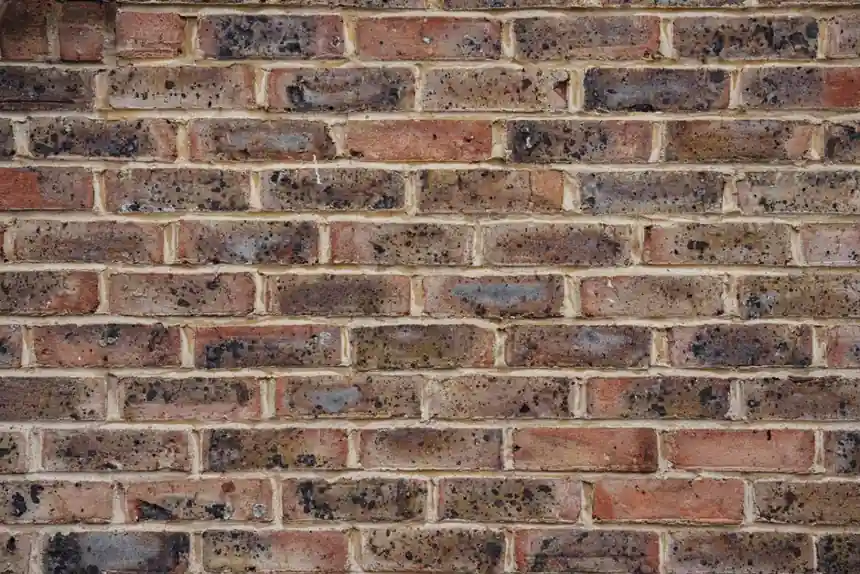
Fired clay brick is the dominant masonry substrate in chemically aggressive cleanroom zones such as loading bays, acid-mist rooms, sterilization corridors, and solvent store anterooms, where its >1000°C service ceiling, direct-paint compatibility, and forklift-impact tolerance outperform autoclaved aerated concrete (AAC) block and most hollow concrete masonry [S3]. Specifiers in 2026 still default to modular HPL-faced panels for ISO Class 5 to Class 7 production suites, but they keep fired brick in the spec map for the dirty periphery around the envelope [S3].
For a working primer on the unit itself (composition, density, ASTM C27 duty grades), see the fired brick reference page; for a primer on AAC as the competing stick-built block, see the block brick entry.
Where fired brick wins, and where it loses inside an ISO 14644 envelope
Fired brick tolerates >1000°C, takes direct masonry paint, and resists forklift impact better than AAC or hollow concrete masonry, which is why it is still specified in chemical-heavy and mechanically robust zones of a cleanroom build [S3]. The trade-off is weight: fired clay sits at approximately 1800 to 2000 kg/m³, against AAC at roughly 400 to 700 kg/m³, and install time per square metre is noticeably slower than modular HPL-faced panels with steel or aluminium honeycomb cores [S3].
ISO 14644-1 Class 2 ceilings, such as semiconductor and high-potency pharma suites, need non-shedding, non-particulating surfaces with documented ISO Class 2 emission data, and the OEM default is a Rockfon CleanSpace Block ceiling tile held at <0.5 m³/h/m²/Pa air leakage with HDC 2 hold-down clips, not site-painted masonry [S3]. For ISO Class 5 to Class 7 production suites, 50 to 100 mm non-load-bearing panels finished in HPL or PVC-faced steel are the typical OEM offering, and they have to meet ≤0.5 m³/h/m²/Pa air-leakage, 100% RH non-sag, and ISO 2812-1 chemical immersion testing classified to VDI 2083 Part 17 [S3].
Composition and duty grades engineers must check on the datasheet
Fireclay brick is a shaped refractory product blended from fireclay (plastic refractory clay) and chamotte (calcined fireclay grog), extruded or dry-pressed and fired at 1300 to 1500°C, with Al₂O₃ content typically between 30% and 45% [S5]. The ASTM C27 classification sorts fireclay into four duty grades by pyrometric cone equivalent (PCE): Low-Duty (PCE Cone 27 to 29, ≤1450°C), Medium-Duty (Cone 29 to 31, 1450 to 1520°C), High-Duty (Cone 31 to 33, 1520 to 1600°C), and Super-Duty (Cone 33 to 34, ≥1620°C) [S5]. The fireclay/high-alumina boundary sits at roughly 50% Al₂O₃, so anything above that 50% line is a different product class with a different refractoriness and slag-resistance profile [S5].
For a cleanroom hot-face or an acid-mist wall where the surface is exposed to H₂O₂ vapor, formalin 37%, ammonia 25%, peracetic acid 15%, sodium hypochlorite 15%, and isopropanol 100%, the spec writer should pair the fireclay duty grade with ISO 2812-1 immersion data on the actual face coating rather than rely on the bulk brick chemistry alone [S3]. Sourcing at ≥35% Al₂O₃ with Fe₂O₃ capped at ≤2.0% is the common Chinese factory offering in the RBT-0.6 to RBT-1.2 grade series, with thermal conductivity 0.25 to 0.50 W/(m·K) at 350±25°C and cold crushing strength 2 to 5 MPa across the four density steps [S4].
Physical-class gate: the four brick classes every spec sheet must sort
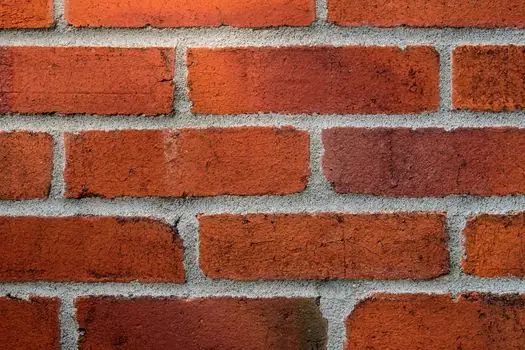
Indian SSC JE classification sorts clay bricks into four physical/mechanical classes: First Class (table-moulded, kiln-burnt, smooth, water absorption ≤20% of dry weight after 24 h cold immersion, crushing strength ≥10.5 N/mm²), Second Class (ground-moulded, ≤22% water absorption, ≥7 N/mm²), Third Class (clamp-burnt, soft, ~25% water absorption, used for temporary works in low-rainfall areas), and Fourth Class (overburnt, distorted, used as ballast in foundation floors) [S1].
For a cleanroom, the rule is simple: specify First Class only. Anything Second Class or lower fails both the impact-tolerance gate (forklifts and pallet jacks in loading bays) and the chemical-immersion gate (porosity above ~20% wicks the daily disinfectants listed in VDI 2083 Part 17 straight into the substrate) [S1][S3]. For non-load-bearing internal partitions where the brick is rendered and sealed behind an HPL or epoxy face, Second Class can be a cost-down move provided the render is tested to ISO 2812-1, but that is a derogation, not a default.
Refractory physical envelope: density, porosity, and thermal conductivity
Density and porosity move together and they drive both the chemical uptake and the thermal mass. Lightweight insulating fireclay (the RBT series) holds bulk density 0.6 to 1.2 g/cm³, apparent porosity 40 to 85%, and thermal conductivity below 1.0 W/(m·K) at 350±25°C, which is the right call for a cleanroom boiler backing liner but the wrong call for a wet chemical-mist wall [S4]. A low-porosity fireclay at ≤18% apparent porosity from Chinese suppliers is the dense, dense-face grade that gives the better substrate for epoxy topcoat adhesion in an acid-mist room [S10].
For a structural cleanroom wall, fired-clay dense brick runs 1.8 to 2.0 g/cm³ (1800 to 2000 kg/m³), cold crushing strength typically 10 to 30 MPa depending on firing temperature, and thermal conductivity around 0.6 to 1.0 W/(m·K) at room temperature rising with temperature [S3][S8]. The high-density lead-sun product line is sold specifically for load-bearing plus thermal-stability service, with the datasheet highlighting both load-bearing capacity and high-temperature insulation as dual selling points [S9].
Selection comparison: fired brick vs AAC block vs HPL-faced modular panel
On the four engineering gates that actually drive a 2026 cleanroom spec (air cleanliness class, room pressure cascade, chemical resistance, decontamination regime), the three dominant build paths score as follows [S3]. Fired clay brick: high chemical resistance and impact tolerance, but heavy (~1800 to 2000 kg/m³) and slow to install; only viable on the dirty periphery and structural shell, not the ceiling grid. AAC block: low density (400 to 700 kg/m³), fire class A1, but needs a skim coat and a topcoat to seal pores, and it does not tolerate forklift impact. HPL-faced modular panel (50 to 100 mm): meets ≤0.5 m³/h/m²/Pa air leakage, 100% RH non-sag, ISO 2812-1 + VDI 2083 Part 17 chemical classification, but is non-load-bearing and re-locatable rather than permanent.
The pragmatic 2026 split is: AAC block on peripheral and technical corridors (light, paintable, low load), fired clay brick on chemical-heavy and impact-exposed zones (loading bays, acid-mist rooms, sterilization corridors), and HPL-faced modular panels on the actual ISO Class 5 to Class 7 production suite envelope where air-leakage and particle-emission data are non-negotiable [S3]. A broader fired-brick spec window for industrial facilities, including furnace linings and boiler hot-face service, is laid out in the fired clay brick selection for industrial facilities: 2026 spec window article.
Installation and site gates that decide acceptance
Air-leakage on the wall envelope is not driven by the masonry shell but by the ceiling grid and clip system; fired brick as a wall substrate only has to hold 5 to 40 Pa room pressure differential without measurable deflection, which a First Class 230×110×75 mm unit in 1:1:6 mortar will do without issue [S1][S3]. Surface preparation is the gating step: the face has to be cured, dry, and either skim-coated and painted with a VOC-controlled masonry paint tested to ISO 2812-1, or rendered and tiled with a chemical-resistant face tested to VDI 2083 Part 17 [S3].
Decontamination regime is the silent killer. Vaporized H₂O₂, UVC, and ozone cycles degrade many polymer finishes, and the tile datasheet has to show no impact on H₂O₂ aeration time and no degradation under UVC/ozone, otherwise the spec fails Gate 4 even if Gates 1 to 3 look clean [S3]. On the structural side, pallet jacks and forklifts in loading bays will chip the paint and eventually the brick face if the spec drops to Second Class, so the practical rule is First Class brick, epoxy-phenolic or PVDF topcoat, and a 100 mm PVC kick-rail at floor level.
Failure modes and what to write into the inspection plan
Three failure modes dominate in-service. First, chemical wicking through porous brick: water absorption above ~20% (i.e. Second Class or worse) pulls daily disinfectants into the substrate and the brick stays chemically active, outgassing into the room for months [S1]. Second, spalling at the hot-face: once the operating temperature gap to the brick's softening range narrows to 30°C, creep becomes the dominant failure mode rather than spalling, and the right gate is to keep 50% Al₂O₃ hot-face brick with a PLC (permanent linear change) ≤2% at 900 to 1000°C × 12 h, which is the published limit on the RBT series [S4][S7]. Third, joint failure: 1:1:6 mortar with too high a water-cement ratio will shrink and crack, opening leak paths that defeat the 5 to 40 Pa room pressure cascade, so a 1:1:6 ratio with a plasticiser and a mist-cure schedule is the minimum [S1][S3].
The two trackable signals to watch in 2026 are: (a) tighter VDI 2083 Part 17 chemical-classification language appearing on more OEM panel and coating datasheets, which is gradually pushing fired brick further into the periphery and out of the production suite; (b) ASTM C27 super-duty fireclay (PCE ≥33, ≥1620°C) becoming more common on cleanroom boiler backup liners as sterilization cycles push autoclave and SIP line temperatures higher [S3][S5]. For a deep dive on the refractory side of the spec (PCE, RUL, MOR, PLC), the Highland Refractory technical guide is the open-access reference to keep bookmarked.
Spec-level background on the components involved: pressure transmitter.