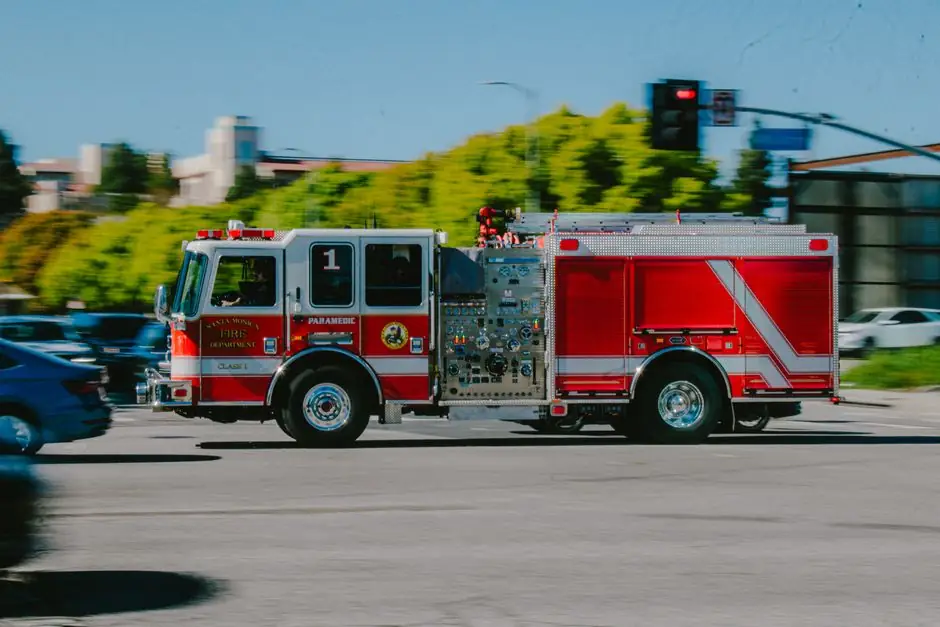
Firefighter lighting procurement falls into three distinct specification lanes, and the spec gate for each lane is different: handheld and helmet task lights typically run 140-350 lumens with a CR123A or rechargeable cell, fire apparatus warning lights must hit NFPA 1900 candela values per zone, and station or building egress lighting must hold 1 fc average and 10.8 lux (1 fc) along the path for at least 90 minutes on battery [S1][S3][S4][S6].
The article below maps each lane to its load-bearing spec, so a procurement engineer, a volunteer chief, or a fire-station facilities lead can match a product to a code threshold without guessing. Throughout, the foundational concepts of emergency light family products are treated as the umbrella category, while task lighting, warning lighting, and egress lighting are the three working sub-classes.
Helmet and Handheld Task Lights: Lumens, Beam, Runtime, IP
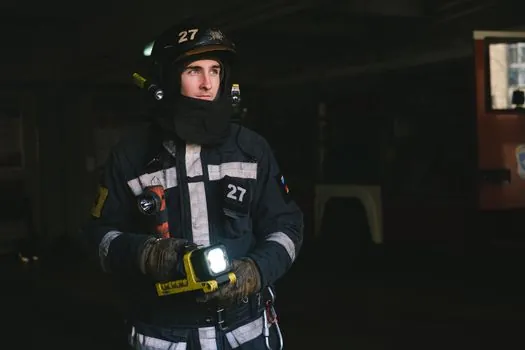
The dominant spec for a structural-firefighting helmet light is output in lumens combined with throw distance in meters, not raw wattage: the Streamlight Vantage II delivers 350 lumens with a beam reach of 118 meters on a single CR123A cell rated for up to 25 hours of runtime, while the older Vantage model lands at 140 lumens in the same form factor [S1]. Lower-output right-angle and clip lights for wildland and EMS work typically sit in the 100-200 lumen range, sized for close-range task illumination rather than long-throw search [S1][S9].
Ingress protection is the second hard gate: structural-fire helmet lights are routinely specced to IPX7 waterproof ratings because the unit will see hose spray, sprinkler discharge, and sweat over a multi-hour incident, and a fire-resistant polymer or aluminum housing is the default construction [S1][S9]. Beam pattern is the third decision lever: a focused spot beam is preferred for search and accountability, while a flood or dual-beam pattern is preferred for overhaul, tool use, and patient assessment, so most current products offer a mode-switch rather than a single fixed beam [S9].
Apparatus Warning Lights: NFPA 1900 Zone Candela Targets
For fire apparatus, the binding spec is the NFPA 1900 candela-seconds-per-minute values assigned to four zones (A, B, C, D), each split into upper and lower levels, and each split into Calling-for-Right-of-Way versus Blocking-Right-of-Way modes [S4]. The headline numbers are 1,000,000 cd-s/min total at Zone A upper in Calling mode, 400,000 cd-s/min for Zones B/C/D upper in Calling mode, 150,000 cd-s/min for every zone in the lower level, and 800,000 cd-s/min at Zone C upper in Blocking mode, with per-point minimums of 10,000 cd-s/min (upper) and 3,750 cd-s/min (lower) at any measurement point on the horizontal plane [S4].
Color zoning is the second gate: red and blue are permitted in any zone for either mode, yellow is permitted in any zone except A, and white is permitted in any zone except C for Calling mode, with white not permitted at all in Blocking mode [S4]. Low-intensity emergency response lighting is the third lever, allowing departments to dim outputs at night to reduce scene glare and roadside accidents, while staying inside the NFPA envelope [S4]. Procurement should validate any proposed light bar with the manufacturer's NFPA zone-layout calculator before signing a PO, because a vendor's catalog candlepower number is rarely directly equal to the candela-seconds-per-minute test result NFPA audits against [S4].
Volunteer POV Lighting: Color, Mounting, Legal Fit
For volunteer firefighters running personal vehicles, the gating factors are legal color and mounting rules, not raw output: many U.S. states restrict red and blue to authorized emergency vehicles, yellow and amber are widely permitted for POV volunteer use, and placement rules typically limit where lights can mount on a civilian car [S2][S5]. The four common mounting options are grille lights (high forward visibility, low side visibility, requires grille fitment), dash lights (suction or clip mount, no permanent modification, can shift on hard turns), visor light bars (interior mount, fast install, glare on windshield), and magnetic base or surface-mount hideaway lights (transferable between vehicles) [S2][S5].
Color choice and switch control are the spec-gate items most often missed: a multi-pack dual-color surface-mount that toggles between amber (legal POV) and red/blue (legal apparatus only) is the common workaround for volunteers who also drive a department apparatus, and a fused switch box rated for the LED load prevents voltage drop that dims the bar at idle [S2][S5]. Compared to apparatus warning lights, POV lights have no NFPA 1900 candela mandate, so the procurement decision is dominated by state code, mounting hardware, and warranty terms rather than photometric performance [S4][S5].
Station and Building Egress Lighting: Foot-candle, Runtime, Layout
For fire stations, training towers, and any occupied building, the binding numbers come from NFPA 101 (Life Safety Code) and the National Fire Code: means of egress must average 1.0 fc at the floor with a 0.1 fc minimum, the exit path must hold no less than 1 fc (10.8 lux) along the path, the battery-backed system must run at least 90 minutes on loss of power, and emergency units must recharge to full within 24 hours [S3][S6][S7]. These four numbers, 1 fc average, 0.1 fc minimum, 90-minute runtime, 24-hour recharge, are the test points every AHJ (authority having jurisdiction) will check during inspection [S6][S7].
Fixture selection in 2025-2026 station builds has shifted decisively to LED: LED emergency units cut energy draw roughly 70-80% versus legacy incandescent or halogen heads, run cooler on sealed NiCd or LiFePO4 packs, and accept self-test/self-diagnostics boards that automate the monthly 30-second and annual 90-minute discharge tests required by NFPA 101 [S8]. The most common layout errors in apparatus bay and dormitory retrofits are spacing fixtures too far apart, which leaves dark spots below the 0.1 fc minimum, and skipping the exterior discharge path, which fails inspection even when interior levels pass [S3][S6][S7].
Decision Matrix: Which Light Family Fits the Job
A direct comparison of the three families clarifies the spec trade-offs: helmet/handheld task lights are specced for output (140-350 lumens), reach (30-118 m), runtime (4-25 h on CR123A), and IP rating (IPX7 typical), and they have no NFPA or building code mandate, so vendor selection follows user comfort and beam pattern; apparatus warning lights are specced for NFPA 1900 candela-seconds-per-minute by zone and mode, with no runtime or IP gate in the standard itself, and color is locked to red/blue/yellow/white zoning rules; station egress lights are specced for 1 fc average plus 0.1 fc minimum plus 90-minute battery plus 24-hour recharge, and there is no candela-zone or beam-reach requirement at all [S1][S3][S4][S6][S7][S8].
Choosing the wrong family for a use case is the most common procurement error: ordering an egress fixture for apparatus warning duty fails because the egress unit cannot hit the 400,000-1,000,000 cd-s/min zone targets, and ordering an apparatus LED bar for station egress fails because the bar's narrow beam does not blanket the floor at 1 fc. If the use case is structural entry, search, or overhaul, start with a helmet/right-angle light specced at 200+ lumens and IPX7; if the use case is response and blocking on the roadway, start with an NFPA 1900-validated LED bar sized to zone candela targets; if the use case is a building that humans sleep or work in, start with a 1 fc/90-minute egress layout plan and choose fixtures after [S1][S3][S4][S8][S9].
Adjacent Industrial Spec Gates Worth a Look
For hazardous-area chemical or refinery sites, the flameproof variant of these same families is gated by ATEX/IECEx zone rating rather than NFPA candela or fc, and the spec flow for flameproof emergency lights for chemical plants is a useful parallel where the same lumens-versus-zones trade-off appears under a different code set. For welding cells and hot-work bays, emergency light selection for welding operations layers in a glare-versus-task-illumination gate that is less strict than chemical zoning but tighter than general building egress. The concept of emergency rescue lighting as a response-system component, rather than a standalone fixture, is also worth keeping in mind when staging apparatus bays, because the same battery-backed circuit that powers egress can feed scene-light drop cords and cord-reel reels around the pump panel. [S4]
Track the NFPA 1900 next-cycle ballot window and the 2026 AHJ adoption map for the new low-intensity emergency response lighting language, watch for vendor self-test/diagnostics boards shipping standard on egress units (cuts the monthly 30-second test labor), and confirm whether your state POV code has moved amber-only or opened a red-POV permit class before re-quoting volunteer vehicles.
The underlying component specifications are covered under emergency stop.