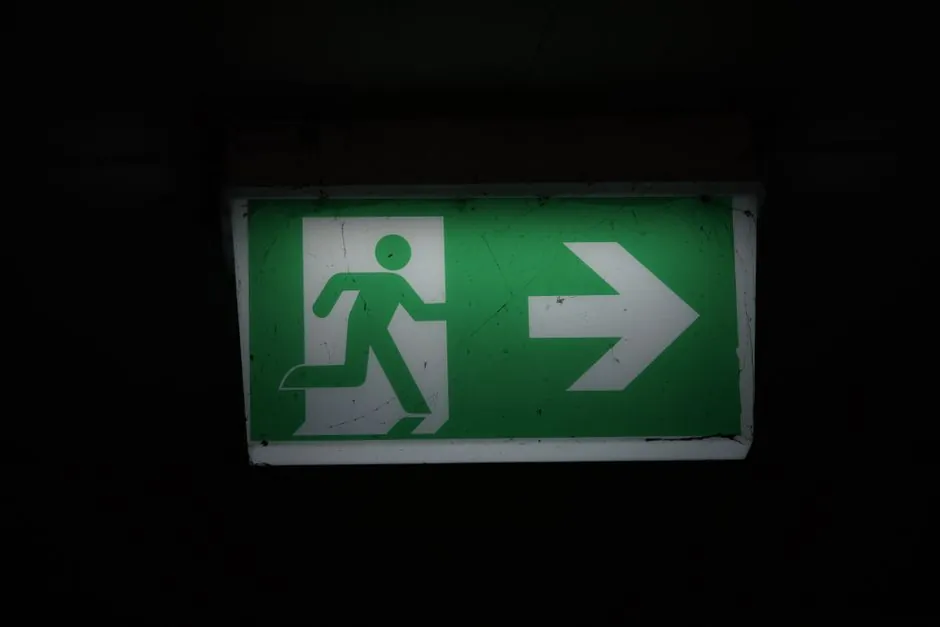
Lab emergency lighting is engineered around two intersecting risk envelopes, the life-safety envelope governing evacuation (visibility at floor level along escape routes, 1 lux minimum on the path) and the process-safety envelope governing hazardous atmospheres (containment of ignition sources inside luminaires). The 2026 selection workflow for pharmaceutical, chemical, analytical and biosafety laboratories starts by mapping which envelope controls the room, then by matching photometric, ingress and certification specs to that envelope [S1][S5].
Across the eight source references reviewed on 2026-09-02, the practical consensus for a general wet-chemistry, QC or cleanroom lab is: recessed LED panel with maintained operation, UGR≤19 glare rating for seated bench work, IP65 front face, Ni-Cd or LiFePO4 battery pack delivering 90 to 180 minutes, and self-test diagnostics compliant with IEC 60598-2-22. For solvent-handling or BSL-3 spaces, the same photometric baseline applies but the housing is upgraded to ATEX/IECEx Zone 1 or Zone 2 explosion-proof construction, with surface temperature class T4 to T6 depending on the gas group [S2][S3][S5][S7].
Two risk envelopes that drive every spec
The dominant variable in lab spec writing is whether the room is classified as a hazardous (explosive atmosphere) location under IEC 60079-10-1 / IEC 60079-10-2, or as a non-classified cleanroom / general lab. Non-classified lab emergency luminaires are governed by building codes (IBC, NFPA 101, EN 1838) and by the 90-minute minimum discharge rule for escape-route lighting [S4]. In classified rooms the same 90-minute rule still applies, but the luminaire must additionally pass an ignition-protection test sequence appropriate to its zone: Ex d (flameproof), Ex e (increased safety), or Ex tb (dust by enclosure) for Zone 1/21, and Ex nA or Ex ec for Zone 2/22 [S5].
The "explosion-proof" label is mechanical, not magical: the housing contains any internal ignition so that flame or hot gas cannot reach the surrounding atmosphere, which is why the die-cast aluminium body, tempered glass lens, and certified cable entries on explosion-proof emergency light units are non-negotiable design features rather than marketing options [S5]. For a non-classified cleanroom the equivalent build requirement is a smooth, crevice-free front face that tolerates ISO 14644-1 Class 5 to Class 7 wipe-down with isopropyl alcohol or hydrogen peroxide vapor, typically satisfied by IP65 front and an aluminium-frame LED panel [S3][S7].
Selection criteria ranked by impact on cost and compliance
Five criteria separate a code-compliant lab emergency luminaire from an expensive mistake. First, photometric output on the escape route: EN 1838 calls for ≥1 lux on the floor along the centreline of escape routes, ≥0.5 lux in open areas, and ≥15 lux at first-aid points, fire-alarm call points and equipment that must be shut down during evacuation. Second, maintained vs non-maintained operation: maintained units run at full output on mains and drop to emergency output on power loss, which is the standard requirement for laboratories because staff may already be working at benches when an outage begins [S4]. Third, battery duration: 90 minutes is the floor; analytical labs with long ramp-down procedures for HPLC, mass spectrometers and glove-box atmospheres commonly specify 180 minutes to give staff time to secure experiments. Fourth, ingress protection: IP65 from the room side is the practical minimum for any lab subject to wash-down; IP66 is preferred for rooms with overhead piping. Fifth, self-test: IEC 60598-2-22 §22.16 mandates either an automatic test system (ATS) performing a 30-second functional test monthly and a 3-hour discharge test annually, or a manual testing protocol with logged results.
A practical comparison of the three mainstream form factors used in laboratories: recessed LED panel (typical 36-48 W, 4000-5000 K, 3200-4400 lm, UGR≤19, IP65 front) is the default for ISO Class 5-7 cleanrooms and general wet-chemistry labs because it integrates with the cleanroom ceiling grid and supports wipe-down; surface-mounted emergency batten (18-36 W, IP65, IK08) is the fallback for retrofit ceilings and plant rooms where a recessed cut-out is impractical; explosion-proof linear or bulkhead luminaire (20-40 W, Ex d IIB+H2 T6, IP66, aluminium body, 90-180 min Ni-Cd) is mandatory in Zone 1/21 solvent rooms and Zone 2/22 dust-handling rooms [S2][S5][S7].
Cleanroom-specific constraints that change the part number
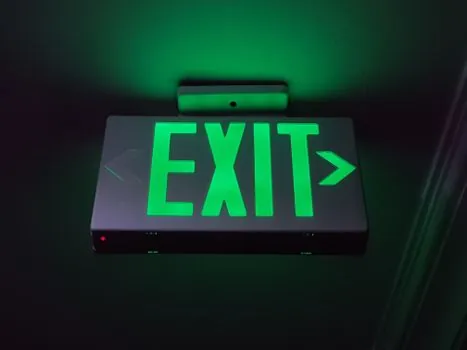
Cleanroom emergency luminaires have to satisfy three constraints that ordinary commercial-grade emergency fittings cannot. The housing must be crevice-free and gasketed so that particles and micro-organisms cannot accumulate on the luminaire, which is why cleanroom-grade panels use silicone gaskets and a one-piece aluminium frame rather than a hinged steel door with exposed screws [S3][S7]. The diffuser must produce UGR≤19, because lab staff sit for long periods at benches and glare above UGR 22 is associated with measurable visual fatigue and reading errors on volumetric burettes and HPLC displays. The light spectrum should match the working luminaire (typically 4000 K neutral white, Ra≥80) rather than the cool 6500 K common in cheap exit signs, because forensic and colorimetric work depends on consistent color rendering between normal and emergency modes [S3].
For ISO Class 5 and better, the cleanroom emergency panel is typically supplied as a recessed unit with an integrated Ni-Cd or LiFePO4 pack mounted above the ceiling tile, and the emergency indicator is a red/green bi-color LED cluster visible from the lab side, so a technician can verify mains-on status without opening the ceiling. A manual test button or auto-test relay is required, and the wiring between the driver and the battery pack is usually routed through a fire-rated cable gland to preserve the 90-minute discharge if the ceiling plenum is involved in a fire [S3][S4].
Hazardous-location upgrades: when the room changes the certification
Where the laboratory handles flammable solvents, compressed gases, or combustible dusts, the photometric spec (1 lux escape route, 90+ minute battery) does not change, but the certification ladder does. Zone 1/21 areas need equipment certified to ATEX 2014/34/EU Category 2 (or IECEx equivalent) with Ex d (flameproof) or Ex e (increased safety) protection; Zone 2/22 areas accept ATEX Category 3 with Ex nA or Ex tb construction. Surface temperature class must be matched to the gas or dust group: T4 (≤135 °C) is a safe default for most organic solvents, T6 (≤85 °C) is required for hydrogen, acetylene, and carbon disulfide. The fixture body is die-cast aluminium with a tempered glass lens, all cable entries use certified Ex d glands, and the battery pack is housed inside the same flameproof enclosure rather than in a remote cabinet [S5].
Three engineering details are non-negotiable for hazardous-location lab emergency lighting. First, the LED driver and battery charger must share the same hazardous-area certification as the luminaire, because a remote driver in a non-classified cabinet defeats the purpose. Second, the photometric distribution at emergency mode must still hit the 1 lux floor; explosion-proof housings with thick tempered glass typically cost 15-25% of the lumen output, so the LED is usually over-driven at 30-40 W to compensate, and the photometric file should be requested from the manufacturer before purchase. Third, the emergency function must be tested under power, which means a maintained-mode unit rather than a non-maintained one, so that any failure of the LED module is detected during routine operation and not only during the annual discharge test [S5].
Comparison: standard lab vs cleanroom vs explosion-proof emergency luminaire
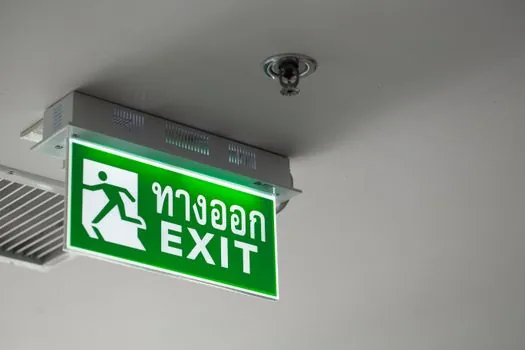
On four decision criteria the three product families line up as follows. Battery duration: standard lab 90-180 min, cleanroom 90-180 min (LiFePO4 preferred for cycle life at high ambient), explosion-proof 90-180 min (Ni-Cd still dominant because of its wider operating-temperature tolerance, typically -20 °C to +55 °C). Ingress and cleaning: standard lab IP44 minimum, cleanroom IP65 front with crevice-free silicone gasket, explosion-proof IP66 with dust-tight Ex tb rating. Certification load: standard lab CE/ENEC only, cleanroom adds ISO 14644-1 cleanroom suitability documentation and wipe-down chemical compatibility, explosion-proof adds ATEX/IECEx certificate, IEC 60079-0/1/7/31 test reports, and T-class marking matched to the gas group [S2][S3][S5][S7].
Cost follows certification: a standard maintained emergency LED panel runs in a low bracket, a cleanroom-grade recessed panel with UGR≤19, LiFePO4 pack and self-test runs roughly 1.5-2x that, and an ATEX/IECEx Zone 1 explosion-proof linear with Ex d enclosure and Ni-Cd battery runs 4-6x the standard unit, which is why zoning the room correctly under IEC 60079-10-1 is the single most valuable spec step before any luminaire is selected [S5].
Limits, failure modes, and what the spec cannot save you from
Three failure modes are routine in lab emergency lighting and should be designed out at the spec stage, not discovered during an audit. First, photometric shortfall at the corners of a long bench: a single 36 W panel centred over a 6 m bench will not deliver 1 lux at the bench ends, so escape-route photometry should be run as a calculation (DIALux or Relux) before the layout is frozen, not measured after installation. Second, battery degradation in hot ceilings: above 30 °C ambient, Ni-Cd loses about 20% of its initial 90-minute runtime within 2-3 years; LiFePO4 tolerates higher ambient but is more sensitive to overcharge, so the charger spec must include temperature-compensated float voltage. Third, ingress failure at cable entries: IP65 is only as good as the gland, and in labs with routine wash-down the most common field failure is water tracking along the mains cable into the driver housing, which is why armoured or conduit-protected cabling is the safer default over flexible cord with cable glands alone [S3][S4][S5].
Two spec gaps the source data does not resolve. The interaction between ATEX zoning and the local fire-code requirement for maintained operation is jurisdiction-specific, so the specifier must reconcile the AHJ (Authority Having Jurisdiction) reading of NFPA 101 or the local building code with the ATEX Notified Body certificate; the lab owner carries that reconciliation. Likewise, the question of whether lithium-iron-phosphate battery packs are permitted in a Zone 1 room is decided by the specific Ex certificate on the luminaire, since some Ex d enclosures are not designed for the higher energy density of LiFePO4; the manufacturer datasheet is the only authoritative source [S5].
Sourcing checklist and standards map

The 2026 lab emergency light spec should reference the following documents at minimum: EN 1838 (lighting applications, emergency lighting), IEC 60598-2-22 (luminaires for emergency lighting), ISO 30061 (emergency lighting in buildings), NFPA 101 Life Safety Code (where the AHJ is in the US), and, for classified rooms, the IEC 60079 series with the applicable ATEX 2014/34/EU Category or IECEx certificate. On the cleanroom side, ISO 14644-1 governs the room class, while the wipe-down chemical compatibility is a manufacturer declaration against the actual cleaning agents in use (typically IPA 70%, quaternary ammonium, or H2O2 vapor). On the hazardous-location side, IEC 60079-0 (general requirements), IEC 60079-1 (flameproof enclosures), IEC 60079-7 (increased safety), and IEC 60079-31 (dust by enclosure) are the test-report standards that show up on the nameplate [S4][S5].
Trackable signals worth monitoring for the rest of 2026: the IEC 60598-2-22 self-test provisions being re-aligned with IEC 62034 (central testing systems), which will shift some specification language on auto-test relays; the continuing migration from Ni-Cd to LiFePO4 in cleanroom-grade panels, driven by EU Battery Regulation 2023/1542 restrictions on cadmium; and the steady tightening of UGR limits in pharmaceutical and analytical lighting guidance, which has moved the practical floor from UGR≤22 to UGR≤19 in cleanroom builds commissioned from 2025 onward [S2][S3][S7]. For related decision frameworks on hazardous-area builds and the broader safety-lighting stack, see the oil and gas emergency light spec map and the construction-site emergency light spec gates; the emergency stop button spec map is the natural counterpart on the controls side.
Detailed specification references: emergency light, and emergency rescue.