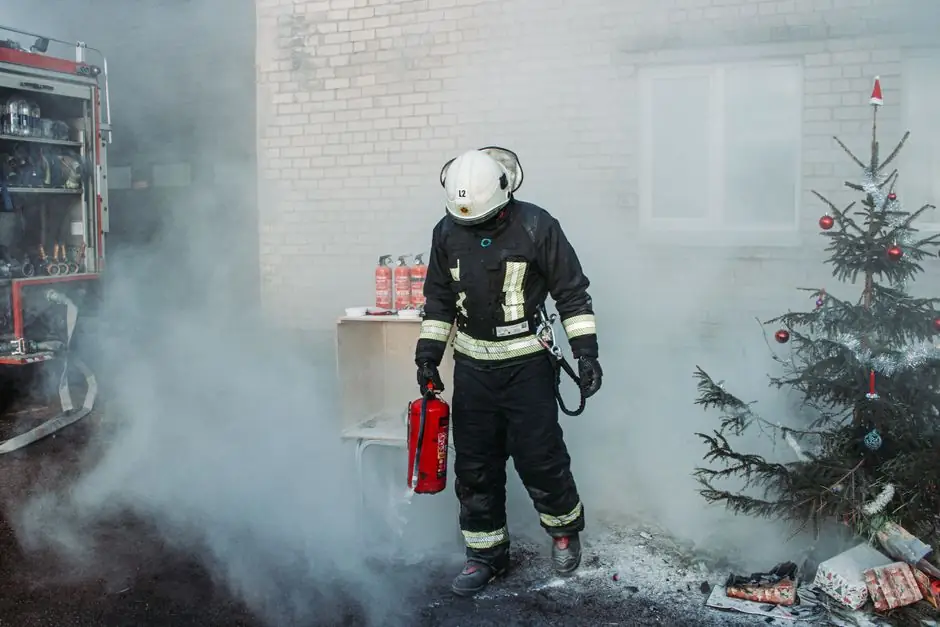
Firefighting first aid kits diverge from generic workplace kits: U.S. configurations must carry oxygen cylinders, orange reflective vests, and ultraviolet detection lights under National Fire Protection Association rules, with extra PPE layered on top of standard first aid [S1].
Three inventories matter on a fire ground: the station stock, the jump bag (trauma/med bag), and the extinguisher bundle. Confusing them is the single most common reason a station ends up under-stocked on both fronts [S8].
Core Component Map for U.S. Fire Kits
NFPA-aligned U.S. fire first aid kits add oxygen, an orange reflective vest, and a UV detection light to the baseline dressing set, a deviation that generic ANSI Z308.1-2021 Type II kits do not satisfy on their own [S1]. Baseline consumables that the U.S. and U.K. kits still require include adhesive strips (72 x 19 mm plastic), non-adherent dressings (10 x 7.5 cm sterile), conforming bandages (5 cm x 4 m), and a disposable resuscitation face shield with non-return valve [S2].
Specialised burn-care inventory is the differentiator. Top-tier burn kits place eight specialised burn dressings in a tri-fold layout, separating them from standard trauma items so the responder is not fumbling under smoke, with measured access to burn gel around 12 seconds in simulated smoke-filled conditions [S4]. The 250-piece reference kit also meets NFPA residential fire response guidance and stores in a 9 x 6 x 4 inch footprint that fits standard fire safety cabinets [S4].
Bag Format: Trauma Pack vs. Station Stock vs. Bundle
The jump bag is response gear built around the protocols and scope of practice the crew runs calls under; the station stock is a stationary reserve that supports re-supply. Treating the two as one inventory leads to gaps on both sides [S8]. A typical firefighting jump bag (model RH-GBE109) carries a 2 L oxygen bottle, single stethoscope, adult oxygen mask, oxygen tube and bridge wrench, tubular sphygmomanometer, 18 cm tongue depressor (2 pcs), 12 cm pen flashlight, 14 cm surgical scissors, 11.5 cm dressing forceps, and 5 cm x 4 m medical bandages [S7].
Burn-and-trauma pouches use heat-resistant 1000D nylon and Molle attachment to mount on walls or vehicles, with EMT-grade trauma shears specified to cut through melted synthetic clothing, a recurring failure mode in residential fires [S4]. Portable station kits (model RH-GBS189) use 1200D water-resistant Oxford cloth in a 63 x 30 x 36 cm (24 inch) case, certified to ISO 13485, ISO 9001, CE, and FDA, with red/black high-visibility coloring for rapid identification [S5].
Comparison: Pouch vs. Station Pack vs. Extinguisher Bundle
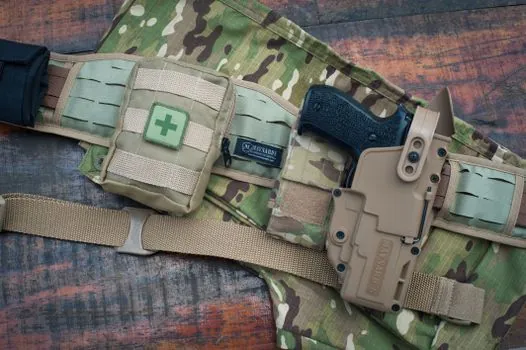
Pouch kits (burn-trauma focus) prioritise burn dressings and EMT shears in a compact 9 x 6 x 4 inch heat-resistant Molle pouch, ideal for engine company jump bags. Station packs (RH-GBS189 family) are larger 24 inch hard-case units built for stationary placement and bulk consumables, holding many more dressings and instruments at the cost of portability [S5]. Extinguisher bundles pair an ABE dry-chemical extinguisher with a first aid pouch of 20 adhesive strips, 1 non-adherent dressing, 2 alcohol wipes, hypoallergenic paper tape (1.25 cm x 9 m), conforming bandage, 2 povidone-iodine swabs, 100 cotton tips, 1 resuscitation shield, 2 disposable gloves (large, 1 pair), 12 safety pins, and emergency first aid information, sealed with tamper-resistant zip ties for small office or vehicle placement [S2].
Standards, Certification, and Maintenance
Fire-protection kits for U.S. commercial sites are commonly verified against ANSI Z308.1-2021 and OSHA 1910.151, with explicit burn treatment capacity, piece counts, and labeling required for compliance audits [S4]. Portable international kits cite ISO 13485 for medical-device quality systems, ISO 9001 for general quality management, and CE/FDA market access, plus alignment to ISO 7010 first-aid symbols for signage [S5].
Maintenance is non-negotiable: first aid items and fire extinguishers are typically serviced on a six-month cycle, with shorter intervals for heavily used kits, and the case stored in a cool, dry place away from direct sunlight to preserve sterility [S1][S5]. Refill discipline matters: heat exposure degrades elastic straps and adhesives, so high-heat storage conditions shorten usable life and require more frequent replenishment of burn gel and dressings [S4].
Selection Criteria by Use Case
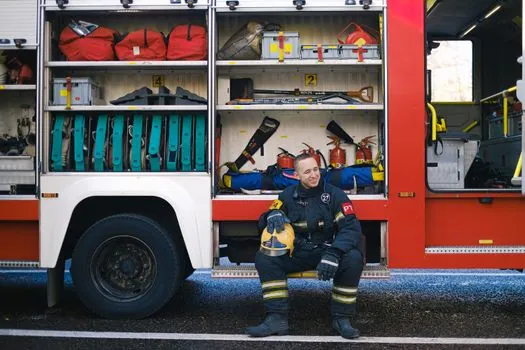
Engine companies and rapid-intervention crews should anchor on a Molle-mounted burn-trauma pouch with 8 or more burn dressings, EMT shears, and a heat-resistant 1000D outer, sized to clip onto SCBA harnesses without slowing access [S4]. Fixed fire stations should run a stationary RH-GBS189-class 24 inch hard case for bulk re-supply plus a separate jump bag for response gear, treating them as two distinct inventories with separate checklists [S5][S8]. Small offices, vehicles, and remote sites are better served by tamper-zip-tied extinguisher+first aid bundles, with the ABE extinguisher specified to the local Class A/B fire profile and the first aid pouch contents sealed until deployment [S2].
Failure Modes and Common Rejection Points
Top rejection points during 2026 burn-kit reviews: no included smoke inhalation mask, limited expansion space for custom additions, and elastic straps that lose tension in high-heat storage, all of which turn a compliant-looking pouch into a liability at the moment of use [S4]. Conflating the jump bag and station stock inventories is the most common way a fire station ends up under-stocked in both, a structural failure that no amount of extra consumables will fix [S8].
Reference specifications to keep on file during procurement: 72 x 19 mm plastic adhesive strips, 10 x 7.5 cm sterile non-adherent dressings, 1.25 cm x 9 m hypoallergenic paper tape, 5 cm x 4 m conforming bandages, and a disposable resuscitation face shield with non-return valve as the minimum consumable line, with NFPA additions (oxygen, orange reflective vest, UV detection light) required for U.S. firefighting kits [S1][S2]. When evaluating general first aid kit platforms, the first aid kit reference page defines the consumable vocabulary used across OSHA, ANSI, and ISO 13485 specifications, while the industrial valve and pressure transmitter pages anchor adjacent process-safety standards that often co-specify first aid inventory on hazardous-area sites.
For sites that pair a fire kit with high-voltage response, the electrical first aid kit selection guide covers R2 WHS kit variants versus compact pouch kits, a useful cross-check when a single station must cover both arc-flash and fire exposure. For warehouse and oil-and-gas facilities, the related warehouse first aid kit and oil and gas facility kit guides lay out class/coverage rules and spacing logic that overlay cleanly on a fire-kit specification.