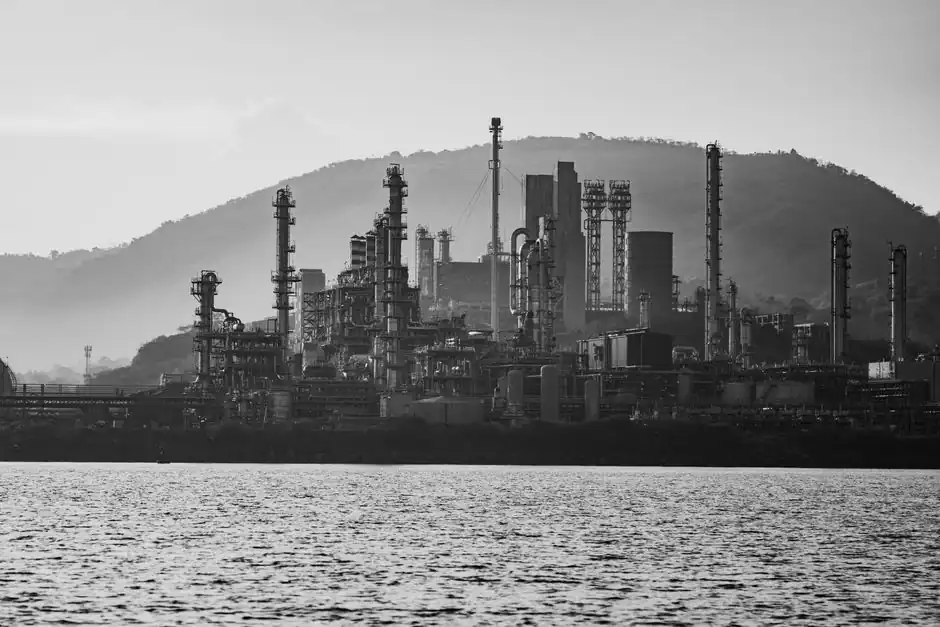
FK-5-1-12 remained available from multiple manufacturers after 3M discontinued Novec 1230 production, preserving the supply path for compatible clean-agent fire-protection systems [S1][S2].
The agent is dodecafluoro-2-methylpentan-3-one, CAS 756-13-8, marketed by 3M as Novec 1230 and specified generically as FK-5-1-12 [S1].
Brand Discontinuation Does Not End Chemical Supply
3M announced its decision to discontinue manufacturing all PFAS materials by 2025, including Novec 1230, also known as FK-5-1-12. The action included Novec 1230, the 3M-branded version of FK-5-1-12 [S1][S2].
That decision removed a major branded supply route, but not the underlying chemistry, and FK-5-1-12 continued to be offered by multiple suppliers. SEVO Systems also established alternative FK-5-1-12 sources and stated that its fire-protection offerings using that source were UL listed, ULC certified and FM approved [S2].
The practical distinction is procurement terminology. “Novec 1230” identifies 3M’s former trademark, while FK-5-1-12 identifies the manufacturer-independent chemical [S1][S4]. A specification requiring Novec 1230 by trademark could create a commercial substitution problem even where the required chemical remains available.
What Buyers Must Confirm Before Substitution
FK-5-1-12 is stored as a liquefied, nitrogen super-pressurized fluid and is electrically non-conductive, leaving no residue after discharge [S4]. The generic chemical identity does not, by itself, verify that an alternative supplier’s agent is equivalent in concentration, material compatibility, listing status or system performance.
Four checks matter at procurement. First, confirm the chemical identity and CAS number, 756-13-8 [S1]. Second, verify the agent listing for the complete system and intended application, including the UL, ULC and FM status documented for SEVO’s alternative-source offering [S2]. System design must account for room volume, enclosure integrity, hazard and personnel presence.
Fourth, review materials and storage conditions rather than assuming interchangeability from the generic name. A C6 fluoroketone system includes nitrogen pressure, storage cylinders, manifold and pipework, discharge nozzles and ventilation shutdown, so agent identity alone does not validate the installed equipment [S4].
Performance and Environmental Comparison
FK-5-1-12 is an electrically non-conductive clean extinguishing agent that leaves no residue after discharge. These values make it suitable for data centres, electrical and control rooms, telecommunications rooms, archives and other areas containing sensitive equipment [S4].
Compared with inert-gas arrangements, FK-5-1-12 systems typically require fewer cylinders and less space and can permit shorter room recovery after discharge [S4]. The trade-off is that the system still depends on enclosure integrity, calculated room volume, hazard classification and the number of people present [S4].
Environmental claims require chemical-level qualification. C6 fluoroketone, the main component of FK 5-1-12, was described as non-persistent, non-bio-accumulative and non-toxic, or Non-PBT [S2]. That is a specific property of C6 fluoroketone and should not be transferred without qualification to every substance classified broadly as PFAS [S2].
System Design and Application Constraints
FK-5-1-12 systems are designed to ISO 14520-5:2024. These standards address system and application engineering, not the commercial status of a particular trademark.
A complete installation normally includes fire detection, a control panel, pre-discharge alarm and time delay, manual release stations, agent cylinders, manifold and pipework, nozzles, ventilation shutdown and damper closure, overpressure relief, integrity testing, inspection and maintenance [S4]. Replacements should be evaluated against the approved system design rather than by cylinder label alone.
FK-5-1-12 is not a stand-alone solution for lithium-battery storage rooms. A gaseous clean agent can extinguish visible flames without necessarily stopping internal battery thermal runaway, so those installations require a specifically verified, purpose-designed protection approach [S4].
Supply Continuity Requires Documented Qualification

The defensible procurement position is that 3M’s Novec 1230 withdrawal does not constitute withdrawal of FK-5-1-12 chemistry. Multiple supply routes existed by 2026, and the chemical remained available for fire-protection applications [S1][S2]. Buyers should treat the generic designation as the basis for qualification, not as proof that every replacement product is drop-in compatible.
Track three signals on each replacement order: the supplier’s chemical identity and CAS number, the product-specific listing and certification, and the agent concentration approved for the protected hazard and system design [S1][S2][S4]. Any change in those parameters can affect design validation, even when the supplier continues to describe the fluid as FK-5-1-12.