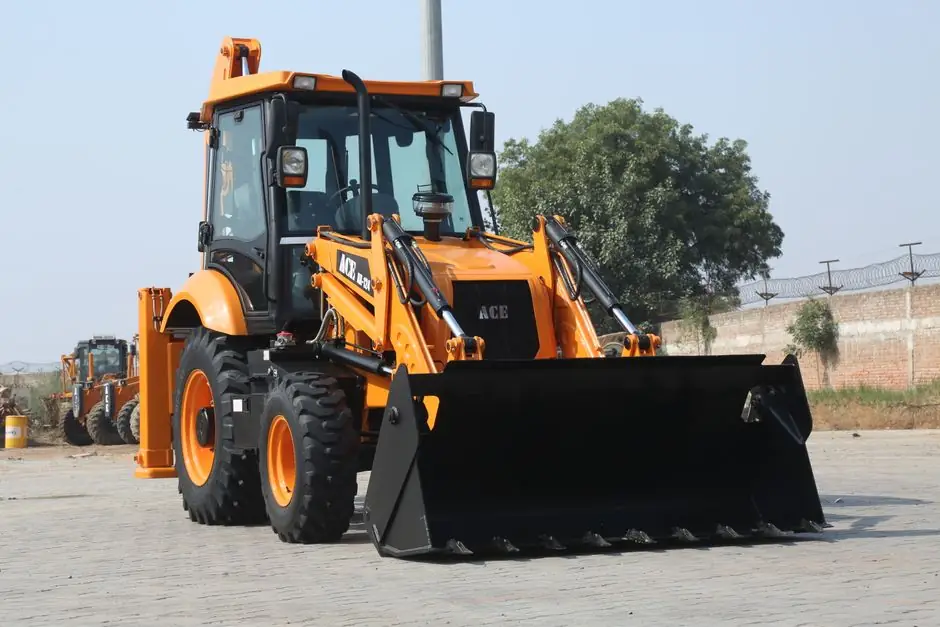
ISO 16028 flat-face couplers retain nearly zero fluid when disconnected, while ISO 5675 poppet couplers release a small quantity of oil and expose a dirt-trapping recess [S1][S2].
Backhoe operators swapping augers, breakers, or grapples should match the coupler standard already fitted to the machine, then verify pressure, flow, port size, and hose rating before replacing it.
Flat-face or poppet: the decision in one comparison
Flat-face couplers have a flush mating surface, an O-ring at the face, and almost no exposed fluid cavity when disconnected; poppet couplers use a spring-loaded ball or poppet inside a recessed body, so both fluid loss and contamination risk are greater [S1][S2].
The selection rule is straightforward: retain poppet couplers when replacing like-for-like on an older backhoe; convert the complete auxiliary pair to flat-face when changing tools frequently, operating in mud or dust, or prioritizing spill control. Flat-face and poppet halves should not be forced together [S1].
How the sealing mechanisms fail
A flat-face coupler depends on the face O-ring for primary sealing, while sleeve seals support the remaining shutoff function; a pebble, nick, or displaced O-ring can therefore create a face leak that appears during connection [S2]. Poppet couplers depend on the ball or poppet seat, and their failure mode is commonly seat wear plus an additional sleeve-seal leak [S2].
Poppet couplers can still provide sound internal sealing while connected, but disconnection deliberately exposes fluid and admits more air than a flat face [S3][S4]. Flat-face construction reduces that exposure by sealing before the mating surfaces separate, which limits oil loss, airborne contamination, and the need to clean a recessed pocket [S1][S5].
These mechanisms explain why an apparently small coupler can determine attachment uptime. A backhoe cycle involving a breaker may require repeated pressure and flow transitions, while an auger can leave residual pressure trapped in the attachment circuit. If the circuit is not depressurized before uncoupling, even a flat-face coupler cannot be treated as a pressure-rated bypass or a substitute for the machine's prescribed isolation procedure.
Pressure, flow, and attachment requirements
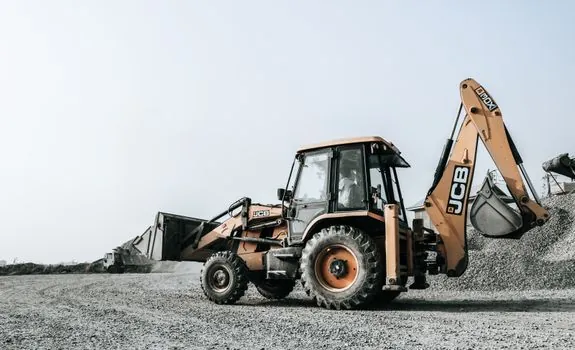
Coupler body size is not a performance rating. [S2]
Flat-face ISO 16028 couplings have flush mating surfaces that help prevent contamination, while poppet-style couplings use an internal poppet that allows fluid exposure when disconnected. These figures are selection ceilings, not permission to operate at the upper end without checking the product data and system requirements.
For a backhoe attachment, record the operating pressure, peak pressure, flow, hose inside diameter, and coupler port size before purchasing. The selected coupling must cover the highest pressure and flow reaching the port, and the hoses must remain suitable for the pressure, fluid, bend radius, and abrasion exposure. ISO 16028 identifies the flat-face coupling interface, while ISO 5675 identifies the agricultural poppet interface.
Correct connection and disconnection practice
Before coupling, park the backhoe on stable ground, isolate the auxiliary circuit, relieve trapped pressure, stop the engine according to the machine procedure, and wipe both flat faces clean. Cap the ports whenever the attachment will remain disconnected for a meaningful period [S1][S2].
Push the mating halves together until the locking mechanism is fully engaged, then perform a controlled leak check before returning the attachment to service. For poppet couplers, disconnecting under pressure can release a stream or spray of oil; flat-face couplers reduce disconnected leakage but do not remove the need to depressurize the circuit [S1][S4].
Do not use a wrench to force a coupler, rotate halves that have not fully seated, or alter a sealing face to make incompatible interfaces mate. Temporary adapters may be used only where their pressure, flow, and size ratings are verified, because they add leak points and can restrict flow [S1].
Cost, service life, and retrofit constraints
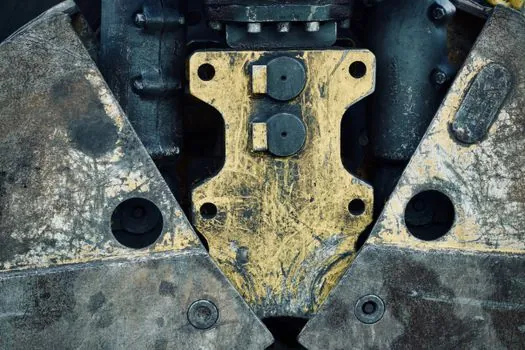
Flat-face couplers generally cost more initially, while poppet couplers remain less expensive and are easier to retain on legacy equipment [S1][S4]. The lower purchase price does not include oil loss, cleanup, contamination exposure, or connector wear, so operating cost can reverse the apparent saving on a frequently connected machine.
Manufacturers use durable materials for flat-face hydraulic quick-connect couplers, including stainless steel. Material grade still requires verification against salt exposure, hydraulic-oil temperature, pressure, and any manufacturer-specific corrosion limits.
Flat-face and poppet-style couplers are not interchangeable, so the machine and attachment must be matched to the coupler design for which they were built. Standardize each backhoe's paired ports and each attachment's matching ports rather than carrying permanent adapters.
Where each coupling type belongs
Flat-face couplers suit backhoes that change attachments every shift, work in dusty or muddy conditions, or need near-zero disconnected leakage. They are also the stronger choice for high-cycle auxiliaries because the cleanable face reduces ingress into pumps, valves, and motors [S1][S4].
Poppet couplers suit older backhoes, tractor-derived circuits, and low-frequency applications where the machine already has ISO 5675 ports and minor disconnect leakage is acceptable. They are the correct practical choice for like-for-like repair, not a deliberate specification for a new high-changeover installation [S2][S5].
Avoid flat-face couplers where an attachment requires an interface outside ISO 16028, or where the available pressure and flow ratings cannot be demonstrated. Avoid poppet couplers where spill control, contamination exclusion, or repeated connection cleanliness dominates the operating requirement [S4][S5].
Standards and procurement checks
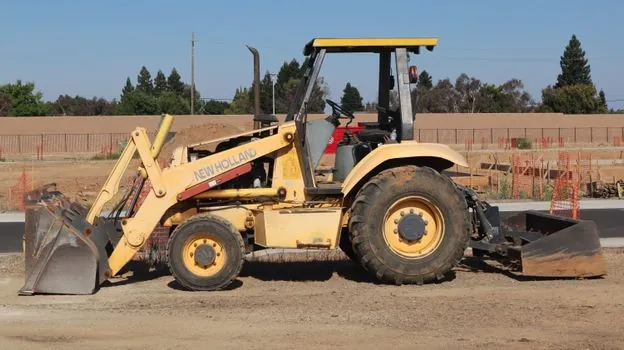
ISO 16028 and ISO 5675 identify different interfaces and should not be treated as interchangeable designations. Confirm the standard, nominal size, gender of each coupler half, thread or hose-tail configuration, pressure rating, flow capacity, temperature limit, and seal material on the purchased product [S2].
At installation, record the coupler series, port size, working pressure, peak pressure, flow, and seal condition for each backhoe and attachment. Replace any flat-face O-ring or poppet seat assembly at the first sign of damage, and verify that both machine ports remain the same selected standard.
The field decision is set by interface compatibility first and operating requirements second. Match the existing ISO 5675 system for economical legacy repair, or use matched ISO 16028 flat-face couplers when frequent changes and contamination control justify the upgrade.