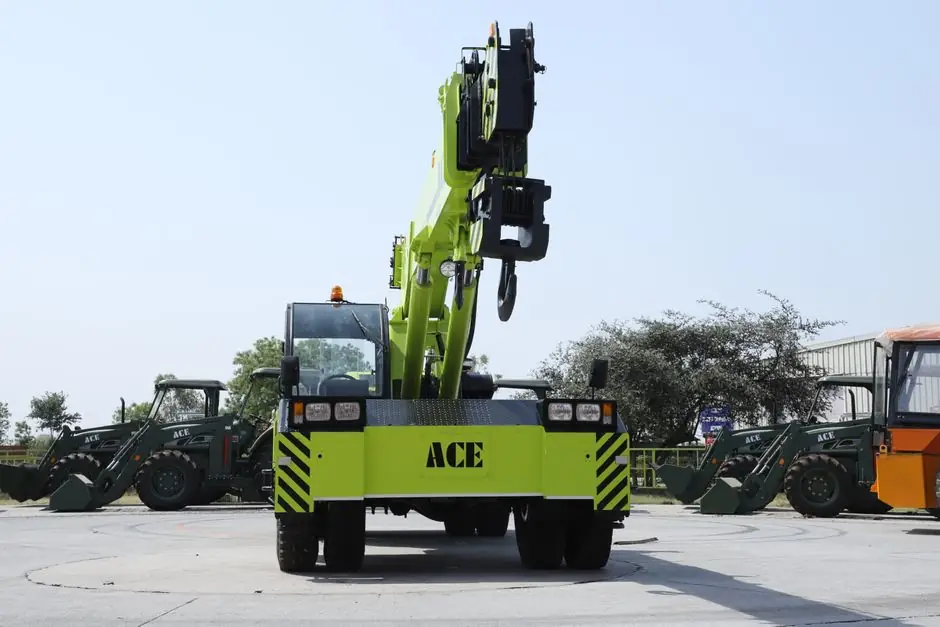
Electric service cranes are a lower-cost choice for intermittent work with lifting needs up to 6,000 lb, while hydraulic cranes suit frequent use, loads above 6,000 lb, and applications requiring articulated reach [S2][S5][S6].
The comparison is not simply electric versus hydraulic: electric cranes are generally telescopic, whereas hydraulic service cranes may use telescopic or knuckle-boom configurations, with the boom architecture determining access and lifting behavior [S1][S3].
Choose by duty cycle, capacity, and access
An electric crane is appropriate when lifting is light, infrequent, and generally limited to 6,000 lb. Representative electric telescopic models run from the IMT 3203i at 4,000 lb to the IMT 6006i at 6,000 lb, and Stellar lists electric models from EC2000 through EC6000 [S2][S3]. These cranes omit the hydraulic pump, reservoir, and PTO arrangement required by a conventional hydraulic service crane, which reduces acquisition cost and maintenance exposure [S2].
Use a hydraulic crane for daily service work or lifting needs above 6,000 lb.
Neither type should be selected from nominal capacity alone. Capacity varies with boom length and angle, so the load chart must cover the actual working radius, extension, and outrigger condition [S1]. An electric crane also needs a duty-cycle check: use of about once a week may fit an intermittent-duty electric model, while daily use can shorten its service life [S2].
Compare the main operating tradeoffs
Electric service cranes generally have a lower acquisition cost and fewer hydraulic components to maintain [S2][S3]. They are strongest for light loads up to 6,000 lb and short-cycle work [S6]. Their limit is duty and capacity: loads above 6,000 lb or regular daily operation call for a hydraulic alternative [S2].
Hydraulic knuckle-boom cranes provide articulated positioning, useful lift capacity, and access around obstructions, but they place more mechanical stress on the boom and extension system because suspended loads move through the boom structure before reaching the lift circuit [S5].
Telescopic cranes are gentler for precise placement because a permanently mounted hydraulic winch raises the load before boom geometry changes. Holding valves can suspend heavy loads at height without drift, while articulated hooks are generally intended for loading and unloading rather than prolonged suspended holding [S5].
Determine reach and working-envelope value
Knuckle-boom architecture is the functional advantage when the crane must reach over, around, or between obstructions because it can reposition a suspended load through articulated joints rather than relying only on a straight telescopic extension [S4][S5]. This is valuable for machinery repair, bucket or boom work, and sites where the load must be placed into a confined space. A negative boom angle, radio remote control, planetary winch, flip sheave, and dedicated hook stow can improve a telescopic crane's field productivity [S2].
These are application-envelope examples, not universal ratings, so model load charts remain controlling.
A knuckle boom is not automatically the better crane for sensitive mechanical placement. Operators have reported difficulty positioning loads precisely with articulated service cranes, while the telescopic crane's winch and linear load movement support controlled placement [S4][S5]. Select for the actual placement task rather than treating more articulation as universally better.
Separate electric-hydraulic from conventional hydraulic
Electric-hydraulic service cranes retain smooth hydraulic crane control while drawing power from an electrical source, and their capacities can overlap the electric-only class [S8]. Stellar lists the electric-crane models EC2000, EC3200, and EC4000 in its electric-crane range [S3]. The existence of an electric-hydraulic category means the power supply alone does not define the crane's duty class or mechanical architecture.
For electric-hydraulic and conventional hydraulic systems, compare pump duty, filtration, fluid temperature, hose and seal exposure, and service access. The cited material establishes the architectural difference, but it does not provide cycle-time, duty-cycle, or fluid-life figures for a model-to-model comparison, so those values must come from the selected manufacturer's technical data and load charts rather than generic assumptions.
Fit mounting, controls, and service access
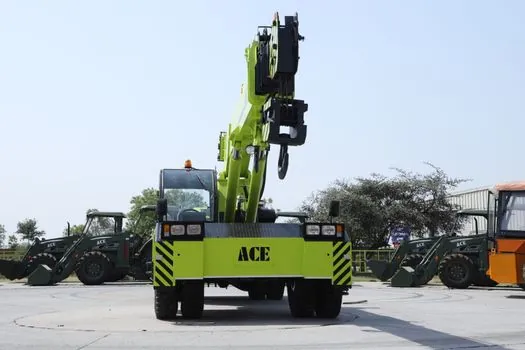
The crane must fit the truck's available mounting space, structural capacity, and manufacturer-imposed weight limits. The selection should also account for boom length, stow envelope, outriggers, control location, and access to serviceable components [S1]. Curb-side and street-side mounting are operational choices: curb-side placement can improve access where the crane must work from the roadside, while street-side placement can align with tool compartments and reduce walking between the work area and the crane [S4].
Useful safety equipment includes a load-moment or overload indicator, outriggers or stabilizers, anti-two-block protection, audible alarms, and an emergency stop [S1]. Load monitoring can provide LED overload indication or remote-control readouts as the crane approaches or enters overload [S2]. The crane must comply with applicable local rules and the applicable editions of ANSI/ASME and OSHA requirements identified by the supplier [S1].
Operator training and local service support are procurement criteria, not afterthoughts. Electric systems require electrical service capability, while hydraulic systems require mechanical familiarity with pumps, hoses, valves, cylinders, and contaminated-fluid control [S1][S2]. Verify that a distributor can support the chosen architecture and provide replacement parts [S2].
Apply a use-case selection matrix
For a light repair load below 4,000 lb used roughly weekly, choose an electric telescopic crane: the 4,000 lb IMT 3203i is an explicit example [S2]. For loads from 4,000 to 6,000 lb, an electric model such as the IMT 6006i may fit, provided the duty remains intermittent [S2][S3].
For daily work between 6,000 and 14,000 lb, choose a hydraulic crane, with the IMT 1015 and 14000 telescopic models illustrating the broader hydraulic range [S2]. For loads above 14,000 lb, articulated hydraulic capability is the more defensible starting point [S2]. Choose a knuckle boom when obstruction clearance and articulated positioning dominate; choose a telescopic hydraulic crane when precision placement, prolonged suspended holding, straight-line reach, or low-boom wear is more important [S5].
For silent or engine-off lifting, select an electric crane and verify available battery or electrical power, recharge strategy, and whether engine-off operation is supported for the installed configuration [S3]. For frequent high-cycle work, hydraulic equipment is the more appropriate ownership decision, even where the initial purchase price is higher [S2][S6].
Before ordering, obtain the selected crane's load chart, duty-cycle statement, mounting drawing, structural rating, controls specification, and certification package. Treat model examples as screening references, not as permission to lift beyond a reduced-capacity chart.