
A 4-head planetary floor grinder does not cost more because it has four heads; model power, working width, weight, drive system, and tooling explain the price gap between comparable machines.
Public listings place planetary grinders from $11,398 to $65,556, while 7-inch single-disc machines appear from $787.99, showing that disc diameter and machine architecture must be separated before comparing budgets.
Disc diameter sets the working envelope
A Disc(366) Floor Grinder with a 7-inch disc is listed at $787.99.
Planetary working width is not the same as disc diameter.
The PG 8 DR is listed from $63,955, while the Autogrinder 8 D has a 31.5-inch grinding width, a 22.1 hp engine rating as rated by the engine manufacturer, and a weight of 1,462 pounds.
For buyers comparing machine classes, the floor grinder specification should be read across disc diameter, total working width, machine weight, power supply, and drive arrangement rather than reduced to one headline dimension.
Three or four planetary heads: what changes
A planetary floor grinder combines a rotating carrier with independently rotating satellite heads, while a conventional planetary design is often described as one large carrier holding three smaller discs [S4][S5]. Each satellite can accept multiple diamond shoes or pads, so three heads does not mean three diamonds and four heads does not mean four tool positions [S4].
Neither head count guarantees faster cutting or a better finish. Working width, grinding power, head loading, machine weights, tool contact, rotation controls, and concrete condition remain controlling variables [S4]. A four-head machine can therefore cost less than a three-head model if its power, width, and drive package are smaller.
Cost drivers ranked by procurement impact

The Autogrinder 8 D has a 31.5-inch grinding width and weighs 1,462 pounds. The price difference therefore reflects a larger power, structural, and handling package, not simply another disc.
The Autogrinder 8 D has a 22.1 hp engine rating as rated by the engine manufacturer. Voltage and phase are considerations when evaluating a concrete floor grinder.
Tooling and volume are the third driver. A four-head layout can multiply the number of diamond shoes requiring replacement and inspection, but the number of shoes per head and the abrasive segment count must be counted rather than inferred from head count [S4]. Contract and fleet pricing also depends on machine quantity, while rental shifts capital expenditure into daily cost and introduces transport, training, and downtime variables.
Comparison by area, control, and operating cost
This makes a compact single-disc machine defensible for small residential or patch work, but it is a poor production choice when floor area and labor time dominate.
Each planetary configuration can perform a complete floor polish or grinding with its own specifications. Head count alone does not determine which grinder will cut faster, cost less, or leave a better finish, so working width, grinding power, tool contact, available electricity, transport limits, tooling costs, and service support should be compared.
Planetary and rotative are two head configurations of grinders, and each configuration is capable of a complete floor polish or grinding with its own specifications.
Purchase price is only the first operating-cost line
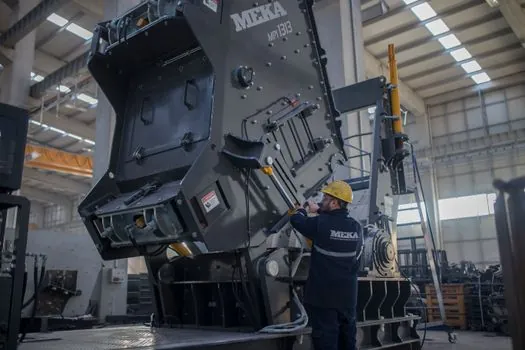
When comparing grinders, working width, grinding power, tool contact, available electricity, transport limits, tooling costs, and service support should be considered.
Rental changes the calculation for short projects. The listed $787.99 price for a new 7-inch floor grinder represents an ownership entry point, while rental adds daily charges, delivery, pickup, and machine-availability constraints [S6]. A compact unit can be rented for a small isolated repair, but repeated rentals may erase the labor advantage of a production planetary grinder.
Power and logistics also carry hidden cost. A 739-pound PG 6 S with a 23.6-inch width differs from a 240.3-pound PG 450 with a 17.7-inch width, creating different loading, floor-loading, transport, and operator-handling requirements [S2]. Three-phase service must be planned before purchase, whereas residential single-phase access is simpler but limits machine selection (2022-04) [S5].
Specification checklist before price comparison
Compare the full configuration at least: disc diameter, number of grinding discs, working width, motor power, voltage and phase, machine weight, counter-rotation or dual-drive design, tool-holder format, dust extraction, and approved abrasive tooling [S2][S4]. Model codes such as PG 450, PG 510, PG 5, PG 6 S, and PG 8 D are more useful procurement identifiers than “three-head” or “four-head” alone.
Confirm the machine’s motion system. Four fixed counter-rotating heads are mechanically different from four satellite heads moving within a rotating carrier, and a planetary machine can have three conventional discs, three discs with Dual Drive Technology, or four discs [S2][S4].
For contractors evaluating rental and ownership economics, the concrete vibrator rental versus ownership guide applies the same project-based logic: rental makes sense for bounded durations, while ownership becomes more competitive as utilization rises.
Two trackable signals should drive a purchase decision: the cost per square foot of diamond tooling on the actual concrete, and the labor hours required to reach the specified finish. If a four-head machine does not improve either measure against a three-head alternative, its additional tooling and service exposure is not justified.