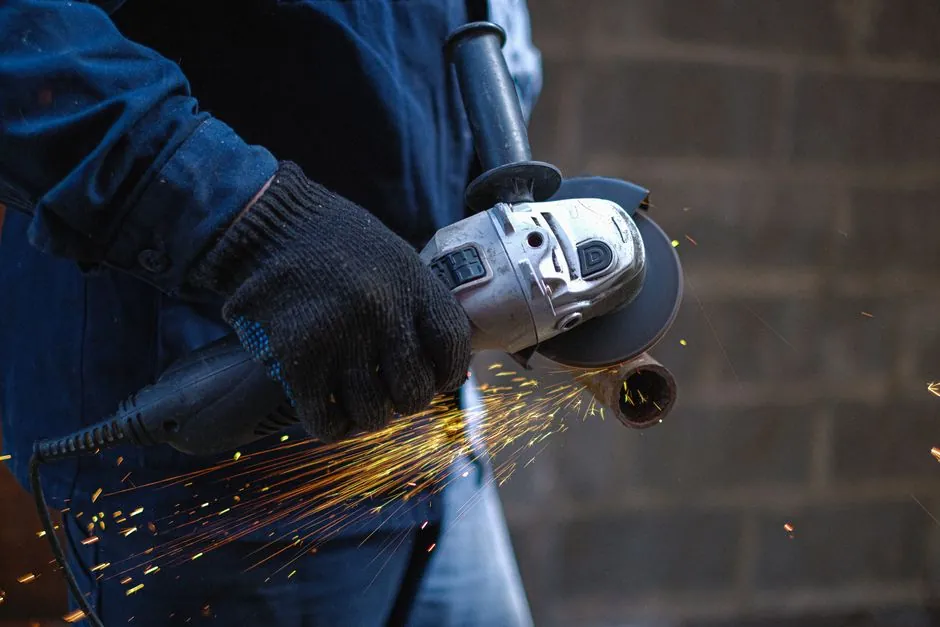
A single-disc grinder concentrates load through one rotating head, making it the stronger choice for aggressive removal of coatings, high spots, and uneven concrete, while a three-head planetary machine is better suited to broad-area leveling and polishing [S1][S3].
The decision rests on grinding mechanics, working width, tooling, power, finish tolerance, dust extraction, and operator skill, with no head design being automatically superior for every floor [S1][S3].
Grinding mechanics and working width
A single-disc machine has one rotating head with shoes, cup wheels, or PCD segments attached directly to it; common single-head plates are about 250 mm in diameter, while larger walk-behind machines may use three discs up to about 250 mm each and achieve a grinding width of 550 mm or more [S1][S2].
A planetary machine mounts multiple satellite heads on a larger carrier. Each satellite rotates about its own axis while orbiting the central carrier axis, which distinguishes true planetary motion from a multi-disc rotary machine with fixed shafts [S2][S3]. Most common planetary machines use 3 heads, although 4-head and other configurations also exist [S2][S4].
The comparison in practical terms is direct: a single disc applies more pressure through fewer cutting elements and cuts aggressively, a rotary head applies torque suited to coating removal, and a planetary head distributes the cut through independently rotating satellites to produce a more uniform scratch pattern [S1][S3].
Removal work versus uniform finishing
Choose a single-disc or rotary grinder when the job requires rapid stock removal from epoxy, paint, glue, mastic, or thin-set, or when high spots and trip hazards must be cut down before resurfacing [S1][S3]. Single-head machines with aggressive metal shoes or PCD segments are particularly suited to uneven concrete and stubborn coatings because the full-contact head transfers pressure directly into the cut [S1].
Choose planetary grinding when the specified result depends on a flat, consistent surface or an even scratch pattern across a large floor. Planetary machines generally produce a more evenly distributed scratch pattern, and their grinding-head system influences finish consistency [S3].
The same head can serve preparation and polishing, but the operating mode changes.
Access, footprint, and productivity
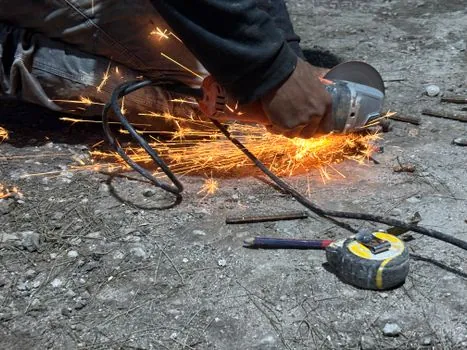
A single-head grinder is the practical choice for small rooms, bathrooms, offices, edges, and other locations where a large planetary machine cannot access the work area. Typical single-head machines weigh about 100–300 lb, use heads around 9–18 in., and may run on 110 V or 220 V supply [S4].
Large floors usually justify a wider machine because a compact single head creates low production rate and can struggle to produce a consistently flat cut.
Double-head machines are an intermediate configuration rather than planetary action. Two counter-rotating shafts can balance torque and improve maneuverability, while two shafts turning in the same direction tend to pull the machine sideways, a characteristic that can assist edge work.
Tooling, power, and operating limits
Single-disc machines commonly accept slide-on or Redi Lock shoes, bolt-on cup wheels, or PCD segments, subject to the fitted adaptor plate. The cited tooling range includes an aggressive #16 or #25 grit metal shoe for coating removal and finer grits for rougher polishing stages, so tooling compatibility must be checked before purchase [S1].
Power requirements differ by machine architecture. Walk-behind floor grinders may use 240 V mains, three-phase electricity, petrol, diesel, LP gas, or compressed air.
Machine mass matters because a heavier head assembly increases contact force but reduces portability. Historic planetary examples illustrate the range: a 5.5 hp, 220 V single-phase model used three 6.3 in discs at 800–1,100 rpm, while a 10 hp, 480 V three-phase model used three 8.7 in discs at 300–1,400 rpm; these figures describe those machines, not a universal planetary specification [S5].
Dust control and site constraints
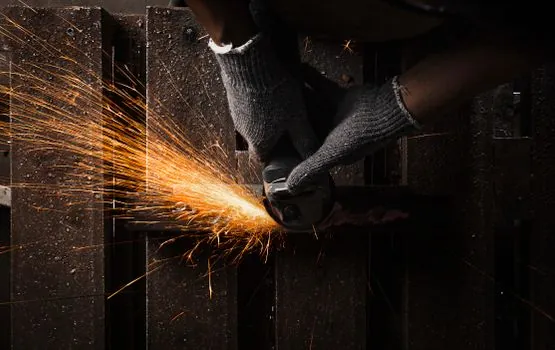
The extraction arrangement still matters: walk-behind machines should be connected to an appropriately rated industrial vacuum, and purpose-made concrete grinders should use dust shrouds and extraction hoses rather than an ordinary angle grinder [S2].
For edge work, a dedicated edge grinder can be more efficient than forcing a large floor machine into a perimeter detail. A removable head cover and adjustable axle can allow a machine to reach close to a wall, while concrete groove cutting serves a different purpose when the task is cutting a defined groove rather than abrading the floor surface [S5].
Decision criteria and recommended application
For coating removal, choose a single-disc or rotary machine when aggressive torque, compact access, and simpler service outweigh finish consistency. For surface preparation before coatings, use the required concrete surface profile and the specified removal rate as the deciding criteria; dual-head machines can produce CSP 2–3, and potentially CSP 4 on some concrete, when fitted with appropriate diamonds [S4].
For large-area polishing, choose a planetary machine when an even scratch pattern, self-levelling behavior, and a consistent finish justify its greater mechanical complexity and operating mass. A three-head planetary design can handle rough grinding through high-gloss polishing, while dual-head machines are less suitable where gouging or inconsistent scratch marks would compromise the polished result [S4][S5].
Neither system is intrinsically better for aggregate exposure, coating removal, or leveling. Decide from four measurable inputs: coating thickness, concrete hardness, required finish, and floor area; then confirm the drive diagram, tooling interface, motor supply, extraction connection, and expected working width before ordering [S3].
Record the floor area, required cut or finish, coating type, and access constraints, then compare them against manufacturer working width, power, head motion, and tooling availability before rental or purchase.