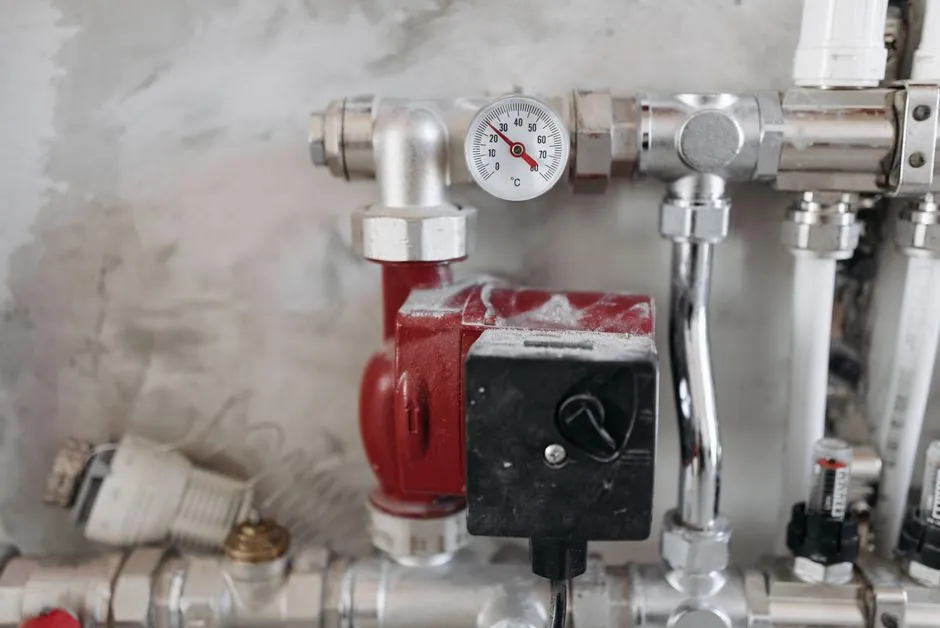
For plumbing rough-in on an existing concrete slab, the practical tool is a 12-20 inch walk-behind floor grinder with single-disc or dual-disc diamond heads, 1.5-3.0 kW mains power, and a matched dust-extraction port, not an angle grinder and not a fettling grinder.
The 2026 commercial practice in Houston-area slab work treats surface grinding and through-slab hole work as two separate trades: a diamond grinder for leveling high spots, raising floor drains, and opening patches, and a standalone coring rig for pipe penetrations [S2]. The grinder is never used to "drill" a pipe hole; circular pipe penetrations are cut with a core drill on a separate visit or the same mobilization [S2].
Slab Flatness Targets Drive Head Diameter, Not the Other Way Around
Plumbing rough-in needs the slab within about 1/8 inch over 10 feet before the plumber sets a fixture flange or shower drain, which is the tolerance cited for tile and vinyl plank underlayment prep on grinding service pages [S2]. A 12-inch single-disc grinder is the minimum practical width to hit that tolerance on a 3-5 mm high spot; a 20-inch dual-disc cuts the same deviation in roughly half the passes but adds 30-40 kg of push weight on a residential slab [S2].
For localized drain-area leveling (around a 4-6 inch floor drain recess), a 7-inch hand-held angle grinder with a diamond cup wheel is faster than rolling in a 12-inch machine, but only for areas under about 1 m²; beyond that the operator fatigue and dust load make the walk-behind cheaper in labor even at higher rental cost. Hardness dictates bond choice: softer concrete (under about 4,000 psi) needs a harder bond segment, harder concrete (5,000-8,000 psi) needs a softer bond, otherwise the segments glaze and stop cutting [S2].
Power Source, Voltage, and Dust Class Are Non-Negotiable
Single-phase 110-120 V machines cover the 1.5-2.2 kW range used for residential plumbing prep, while 3-phase 380-480 V 2.5-3.0 kW units are standard on commercial slabs above about 200 m² [S2]. Mains power is preferred over cordless for any run longer than 15 minutes because diamond grinding on concrete draws 15-25 A continuously; a 5 Ah pack will exhaust in 8-12 minutes of actual cutting.
Dust capture is built into the grinder head via a 50-75 mm vacuum port that ties to a HEPA H-class extractor, with the grinder head itself fitted with a brush skirt that contains the slurry in wet mode or the fines in dry mode [S2]. On a finished basement or occupied renovation, dry grinding without an H-class extractor is the fastest way to fail an indoor air-quality test; on outdoor slab work, wet grinding with a water feed through the head is faster but creates a cement slurry that must be contained.
Matching Grinder Class to the Plumbing Task
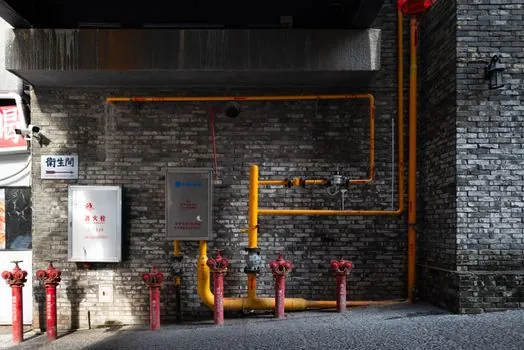
Three grinder classes cover almost every plumbing-installation use case. A compact 12-inch single-disc at 1.5 kW handles spot leveling around 2-4 floor drains per day. A 20-inch dual-disc at 2.5-3.0 kW handles full-bathroom slab prep where the entire 4-6 m² footprint must be brought to tolerance in one mobilization. A 7-inch hand-held angle grinder with a 4-inch diamond cup wheel handles the corners and the 100-200 mm transition zones a 12-inch head cannot reach without over-cutting the surrounding slab [S2].
For new construction where the slab was just poured and only high spots need to come off, a 12-inch grinder on a soft-bond segment typically removes 1-3 mm per pass, with three to four passes needed to flatten a 5 mm peak; for renovation where old tile adhesive, thinset, or a failed waterproofing membrane has to come up, expect 3-6 mm of removal and a coarser 16-20 grit segment before finishing at 30-40 grit [S2]. Plumbers running a separate fettling grinder station for cast-iron or steel pipe cleanup should keep it on a dedicated circuit, because a 2.2 kW floor grinder and a 0.75 kW fettling bench grinder on the same 20 A breaker will nuisance-trip during simultaneous use.
When the Grinder Is the Wrong Tool
Any pipe penetration that goes all the way through the slab, including 2-4 inch drain lines, 3-inch toilet flanges, and 1/2-1 inch water service sleeves, is cored, not ground; a grinder removes surface material only, and forcing a diamond cup wheel through 4-6 inches of slab destroys the tool and leaves an oblong hole that fails inspection [S2]. For slab thickness above about 150 mm or for holes larger than 6 inches in diameter, spec a standalone flat-saw or a track-mounted core rig instead of improvising with a grinder.
Grinding is also the wrong answer when the slab is out of level by more than about 10 mm over the room; aggressive grinding to flatten that deviation can thin the slab over rebar or conduit, and a self-leveling underlayment is the spec'd fix. The grinder's role is finish tolerance (0-5 mm), not structural correction [S2].
Comparison: Grinder Class vs Plumbing Prep Task
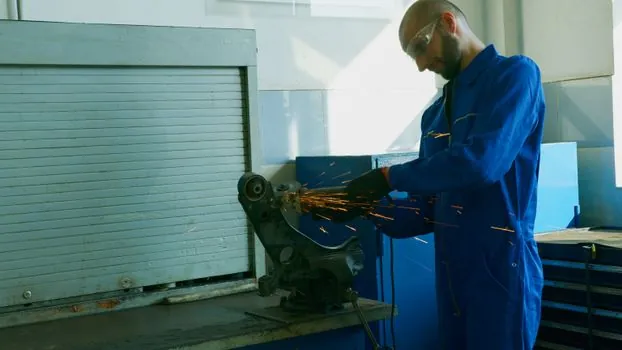
Three specs separate the choices. Head width: 7 inches for corners, 12 inches for spot leveling, 20 inches for full-room prep. Power: 1.0-1.5 kW hand-held, 1.5-2.2 kW single-disc 110 V, 2.5-3.0 kW dual-disc 3-phase. Dust control: a brush skirt plus H-class vacuum is required for any occupied interior; a water feed is acceptable outdoors but produces slurry. Cost-per-m² of removal drops sharply from hand-held to 20-inch dual-disc on areas above about 10 m², while the 7-inch tool wins on any patch under 1 m² because setup time dominates [S2].
For spec-driven projects, the relevant cross-reference is the 2026 spec map for steel-construction floor grinders, which documents width, power, and head-type combinations in production use; plumbing prep tracks that map closely except for dust class, where plumbing on occupied residential slabs demands H-class capture rather than the lighter M-class common on structural steel deck [S2].
Acceptance Criteria and Common Failure Modes
Acceptance after grinding is checked with a 10-foot straightedge: no gap above 1/8 inch (about 3 mm) for tile or vinyl underlayment, and no gap above 1/4 inch (about 6 mm) for carpet or bare slab utility rooms, per the flatness targets published for surface-prep service work [S2]. A 4-foot level is too short for code-grade checks and tends to pass slabs a 10-foot straightedge will reject.
Three failure modes recur. First, glazing of the diamond segments when bond hardness is mis-matched to slab hardness, fix by switching bond (harder bond for soft concrete, softer bond for hard concrete) [S2]. Second, dished or scalloped finish from too heavy a cut in one pass, fix by dropping pass depth to 1-2 mm and adding more passes. Third, dust-clogged vacuum causing the operator to defeat the brush skirt, fix by stopping and clearing the extractor; running the skirt open on a residential interior is a containment failure that will surface as a customer complaint within hours. Track dust-extractor filter ΔP weekly on a job longer than three days; a rising ΔP at constant airflow is the first sign the HEPA is loading toward change-out.
For plumbing-installation work, the next node to spec is the coring rig for through-slab pipe penetrations (diameter, rig weight, slurry management) and the dust-extractor HEPA change-out schedule based on cumulative grinding hours on the project.
This topic is covered further in NBR Selection for Rail: ACN, EN 45545, and Service Bands.