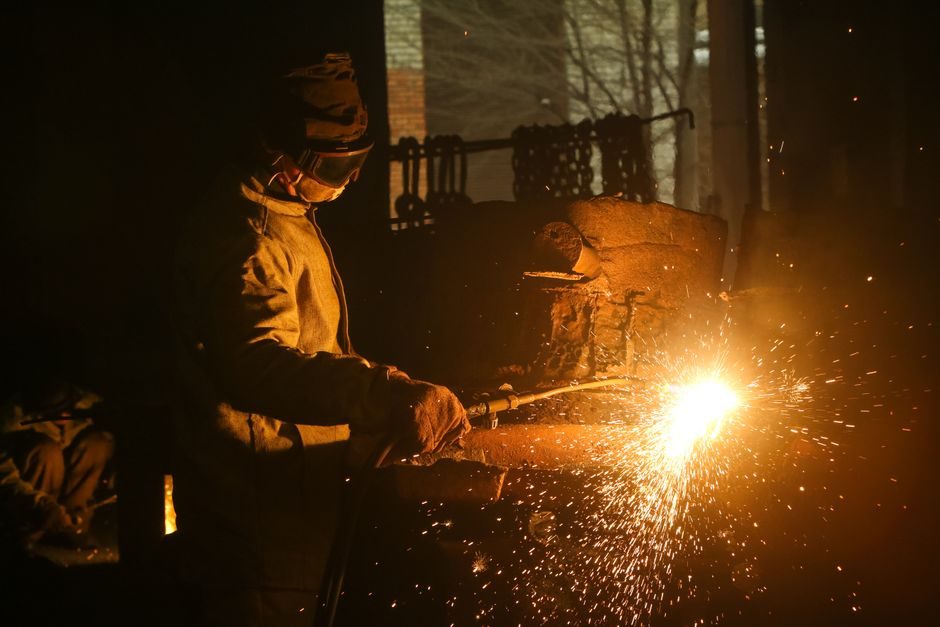
On structural cores with heavy column cages, an electroslag pressure welder processes a 25-40 mm rebar splice in roughly 1-3 seconds of current-on time per joint, against 30-60 seconds for a single-pass arc welder lap splice [S1]. The cost lines that decide a 5-10 year TCO are flux, copper mould wear, electrode/feed-stock, labour, and the rework write-off from joints that fail ultrasonic or bend tests.
This piece is written for structural-engineering QS teams and rebar-subcontractor owners comparing ESW against lap splicing, gas-pressure stud welding alternatives, and mechanical rebar coupler sleeves on high-rise cores, bridge piers, and metro station box walls [S1]. Pricing references from peer TCO articles on this site have been used as benchmarks, normalised to a per-metre-rebar-placed basis so the five cost lines sit on a comparable denominator.
Five Cost Lines That Drive 5-10 Year TCO
ESW uses a fused fluoride-based flux (F-Grade families, e.g. ESW-F7A2-EM12K pattern designations) at roughly 0.6-1.2 kg per 32 mm splice, with batch price sensitive to rare-earth fluoride content. Line 2, water-cooled copper mould (shoe) wear, drives 10-20% of TCO: each copper shoe lands 200-400 splices before bore ovality pushes melt-pool eccentricity outside AWS D1.4-style tolerance, and the shoes are mandatorily water-cooled at 8-15 L/min to survive a melt-pool temperature band centred near 2000 deg C [S1].
Line 3, electrode wire + ferrite/return-path cable, accounts for 5-10% of spend. ESW typically feeds 1.6-2.4 mm solid wire at 350-450 A DC into a molten slag bath held between the two rebar ends. Line 4, direct labour, is where ESW earns its headline advantage: a single operator running a stationary ESW rig on column cages can complete 180-300 splices per 8-hour shift, against 60-100 lap splices hand-arc welded in the same window [S1].
Capital Purchase Price Versus Total Spend
Stationary rack-mounted ESW welders with 600-1000 kVA three-phase transformer heads and integrated closed-loop water cooling commonly list above mid-five figures USD new; portable column-climbing heads built around a TIG welder-class HF-stabilised control board sit in the low five-figures band. [S2]
The TCO crossover where ESW beats hand arc-lap on a per-splice basis is roughly 150-200 splices per shift, because hand-arc labour (4-7 minutes per lap splice including tie-wire handling, grinding, slag chipping) stacks faster than the consumable flux and copper mould lines. Below 100 splices per shift, mechanical couplers re-take the lead on TCO because their per-coupler cost amortises across a tighter production cadence. A comparable 20-year TCO pattern on heavy capital equipment is documented in this site's gantry crane TCO breakdown and the rebar-specific coupler TCO article.
ESW Is For, and Is Not For
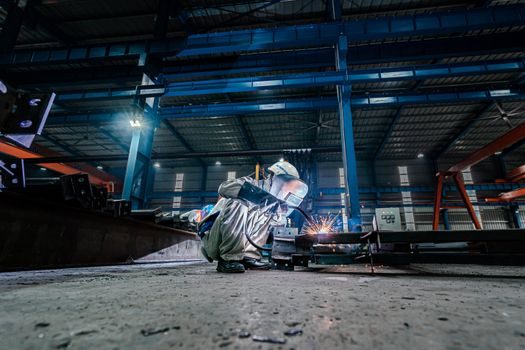
ESW is for: 25-40 mm vertical column splices in high-rise cores, pier and pile-cap cages, shear-wall boundary elements, and any application where the splice density exceeds roughly 800 joints per floor. It is also for projects where site welding inspectors will not accept lap-splice drift and where ultrasonic NDT throughput is high enough to catch occasional lack-of-fusion joints within a 24-hour QA loop.
ESW is not for: horizontal mat splices, lightweight 12-16 mm rebar cages (where the slag bath does not stabilise), seismic-detail zones requiring Class B splices per ACI 318, and any site where single-phase 400-480 V mains is the only available power, since the transformer's inrush is three-phase heavy. It is also not for low-splice-count jobs below the 150 splices per shift line, where mechanical couplers or hand-arc lap splices win on absolute TCO.
How ESW Compares on Decision Criteria
Three process options lined up against the four decision criteria that drive the procurement call: cycle time per splice, capital cost, splice-density break-even, and seismic/Class B eligibility. ESW: 1-3 s on-time, mid-five-figures capital, break-even at 150-200 splices/shift, ineligible for ACI 318 Class B seismic. Hand-arc lap splice: 4-7 min per splice, low four-figures capital, break-even at <50 splices/shift, eligible when weldability of the bar grade is documented. Mechanical coupler sleeve: 30-45 s per splice, mid-four-figures capital (coupler + torque wrench), break-even at 50-150 splices/shift, eligible for Class B when a Type 2 coupler is matched to ACI 318 splice-length tables. [S2]
The headline takeaway: ESW wins on raw throughput on column cages, but it is structurally the most expensive option per joint when consumption is normalised at 1.0-1.2 kg flux plus one copper shoe per ~300 joints, which is why the rebar coupler TCO article on this site is a direct reference for the alternative column. The TCO ranking shifts if copper, ferromolybdenum, or grain-oriented electrical steel pricing moves more than ~20% in a 12-month window, since each of those lands in lines 1-3 of the ESW stack.
Cost-Driver Sensitivity and TCO Levers
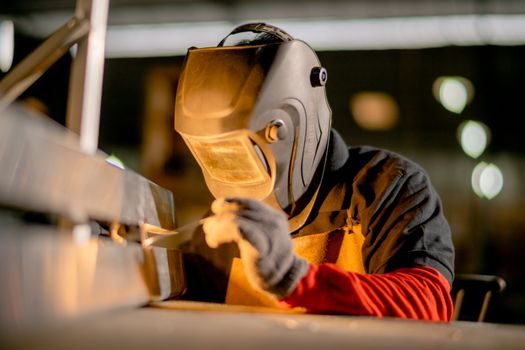
Flux chemistry is the highest-leverage lever. [S2]
Power-factor penalties are an under-counted lever. Specifying a switched-capacitor bank or active harmonic filter at order time is standard practice on continuous-process welders. The same pattern of a small per-unit cost lever compounding into a 5-10 year TCO shift is documented in the site's insulation board TCO and casting ladle TCO write-ups.
Sourcing, Standards, and Inspection Reference
AWS D1.4 / D1.4M is the structural welding code for reinforcing steel, and the joint-qualification envelope is the same whether the splice is ESW, hand-arc lap, or coupler-welded. Where the splice is required to satisfy seismic detailing, ACI 318 Chapter 25 and the splice-class tables (A and B) are the controlling reference, and ESW must be qualified to a Class A envelope at minimum.
Sourcing note: Chinese OEM ESW heads (Wuxi, Hangzhou, Foshan clusters) typically list 20-35% below EU/Japan equivalents on a like-for-like kVA rating, with the gap closing on after-sales and flux batch-consistency. Trackable signals for 2026: flux pricing tied to fluorspar spot index, copper shoe life data from OEM warranty reports, and any update to AWS D1.4 or ACI 318 splice tables.
This topic is covered further in Industrial Router 2026 Price Bands, Cost Drivers, and Spec Engineer's Buying Logic.