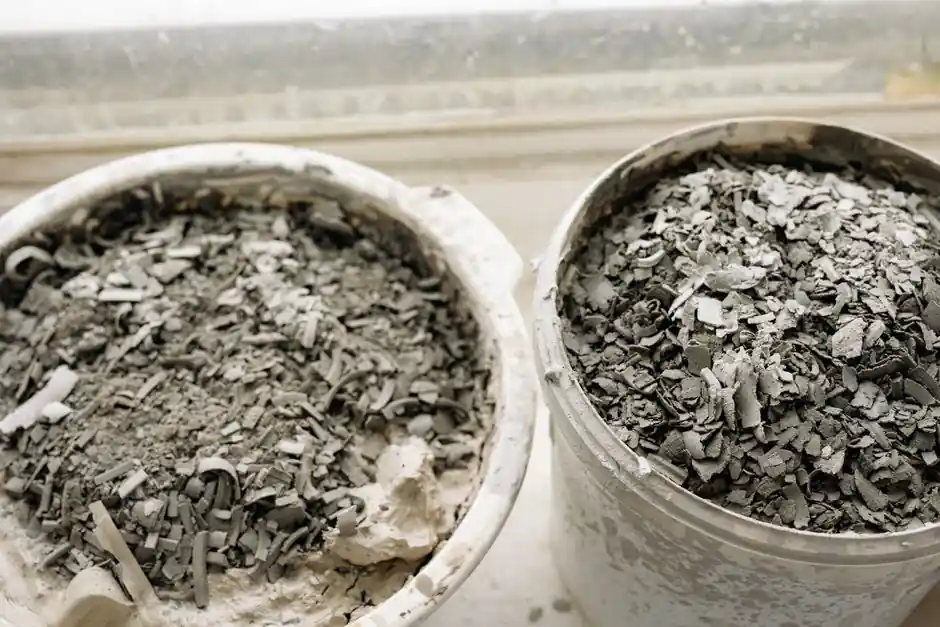
Magnesium melting and pouring can use either a flux process or a fluxless process, with advantages and disadvantages described for each [S2].
The decision for an HPDC line rests on alloy, furnace configuration, refractory compatibility, contamination tolerance, dross handling, and the required level of operator intervention.
Process Scope and Material Context
Fluxless melting protects molten magnesium without a salt-based flux, while flux melting relies on flux contact with the melt to remove oxides and assist melt protection [S1][S2].
These alloy families must be considered together with the selected melting route because alloy chemistry, oxide behavior, and service requirements affect the acceptable contamination limits and control plan.
Magnesium die casting uses magnesium alloys to produce complex mechanical parts with high dimensional accuracy, and weight reduction of vehicles is a key step in reducing fuel consumption [S4]. A flux decision should be based on the finished component and qualification data, not on magnesium chemistry alone.
Decision Criteria: Protection, Refining, and Operations
Fluxless melting is the stronger candidate for a modern HPDC operation because it avoids the routine handling and slag-management burden associated with adding flux to molten metal. The core comparison is straightforward: flux offers an established chemical treatment path, whereas fluxless offers a cleaner process architecture that depends more heavily on atmosphere control, equipment discipline, and melt cleanliness verification. [S1]
Fluxless melting can also support the remelting of large quantities of die-cast scrap while recovering some of the material value contained in that scrap [S3]. This matters because production scrap and runner returns can represent a substantial part of the charge, and a route that can treat those returns without increasing flux consumption can simplify material accounting.
The selection matrix is therefore: choose fluxless for automated or high-volume HPDC when the furnace, transfer system, and operating team can prevent oxidation and control dross; choose flux when the product and alloy require a validated flux treatment and the plant can manage residue safely. Neither route should be selected solely by furnace size.
Flux Melting: Strengths, Limits, and Best Fit

Flux melting is an established magnesium melt-protection method, and its principal advantage is direct contact between flux and the molten alloy, allowing the treatment to assist with oxide removal and melt protection [S1][S2]. It remains relevant where a specific alloy or casting process has a qualified flux recipe and where chemical conditioning provides a measurable process benefit.
Its main limitation is process burden. Flux addition requires controlled dosing, appropriate handling of reactive material, and a defined disposal route for spent flux and oxide-rich residue. Flux-derived slag can complicate crucible or furnace maintenance, sampling, and melt-transfer operations. These penalties become more consequential when the objective is a repeatable HPDC cell with minimal manual intervention.
Magnesium casting technology has been developed for gravity sand casting, permanent-mold casting, and high-pressure die casting, as well as more recently for vacuum die casting, low-pressure die casting, squeeze casting, lost-foam casting, ablation casting, and semi-solid casting [S5]. Use it where a qualified gravity-casting process relies on the flux route, where alloy response has been demonstrated, or where a comparative qualification program shows a clear quality advantage.
Fluxless Melting: Cleaner Integration with HPDC
The equipment decision must still account for the magnesium die casting machine, especially furnace dosing, transfer, dosing-ladle control, and the ability to minimize air exposure and oxide entrainment. [S5]
Melting is the most energy-intensive stage in magnesium die casting, so energy performance belongs in the furnace comparison alongside melt quality [S6]. Fluxless does not remove the need to evaluate furnace capacity, insulation, lid sealing, protective atmosphere, refractory selection, or burner control. It simply shifts the qualification emphasis toward containment and contamination control rather than chemical addition.
Such integration should be demonstrated at the furnace and transfer level, because a nominal fluxless furnace label does not establish that the complete path from charge to dosing ladle remains protected.
Comparison by Process Criterion

On melt protection, fluxless wins for HPDC because it avoids routine flux addition, residue handling, and the slag burden associated with the flux route. On chemical refining, flux can offer a direct treatment mechanism and may suit a gravity-casting process with an established qualified recipe [S1][S2]. On automation and integration, fluxless is easier to incorporate into a controlled HPDC material-handling sequence. On spent-material handling, fluxless avoids creating a flux-contaminated waste stream, while flux requires a dedicated disposal strategy.
On process flexibility, the decision must be tied to the product. Thin-walled automotive, defense, aerospace, electronics, and power-tool applications have used magnesium HPDC because the alloys combine high fluidity with rapid solidification, while vacuum, low-pressure, squeeze, lost-foam, ablation, and semi-solid routes address other casting requirements [S5]. Fluxless is normally the baseline HPDC choice; flux is the exception where a specific qualified process requires it.
Magnesium casting temperatures are typically 50–80°C above the liquidus, and gate velocities commonly range from 30–50 m/s [S4]. These values make short, protected melt transfer and stable temperature control critical: a melting route that interrupts either control adds risk to filling, oxidation, and casting consistency.
Furnace, Alloy, and Die-System Compatibility
Fluxless melting should be assessed with the alloy family, furnace refractory, crucible or holding vessel, protective-gas system, and dosing equipment. AZ91D, AM50, AM60, and Mg-Al-Si alloys have different composition and property profiles, so a furnace trial with the production alloy is more credible than a generic magnesium trial [S4].
The furnace package also determines operating costs. Melting is the most energy-intensive casting stage, so burner efficiency, heat loss, charge makeup, and return-scrap handling should be compared under the same production schedule [S6]. Fluxless operation should not be accepted on melt-protection arguments alone if it produces lower energy efficiency, longer cycle time, or less repeatable metal chemistry.
At the die end, this decision interacts with tooling and machine controls. Fluxless melt cleanliness influences porosity, inclusion content, and die surface condition, while rapid solidification raises sensitivity to melt delivery and temperature consistency [S4]. For a high-output cell, the die casting die, dosing-ladle configuration, and furnace controls should be qualified as one system rather than optimized independently.
Verification, Failure Modes, and Qualification
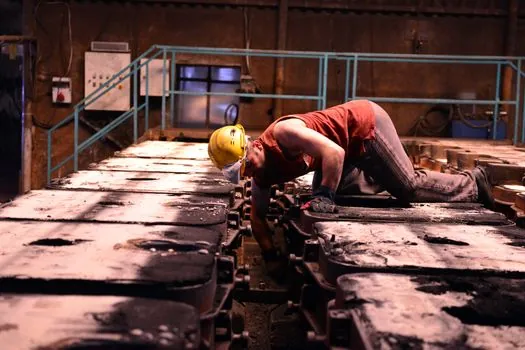
A fluxless qualification should measure more than melt temperature. The acceptance plan should cover alloy chemistry, oxide inclusions, dross volume, furnace atmosphere, combustion behavior at charging and transfer, refractory condition, dosing-ladle performance, part cleanliness, porosity, and repeatability across a defined production window. [S1]
Common failure modes are oxide entrainment during open transfers, contaminated charge material, damaged seals or lids, unsuitable refractory, poor burner control, inadequate preheat, and inconsistent dosing-ladle temperature. Flux operation adds different risks, including flux-dose variation, incomplete melting or mixing, excessive additions, refractory interaction, and unstable residue generation.
Do not transfer a flux qualification directly into a fluxless trial. The qualification protocol should compare like charge, alloy, part geometry, furnace size, and output, with analytical or laboratory inspection used to verify melt and casting cleanliness. Fluxless systems demand higher control discipline, but the resulting HPDC route generally provides the cleaner and more automatable operating architecture [S1][S5].
Recommended Selection by Production Scenario
Specify fluxless melting for a new HPDC cell producing AZ91D, AM50, or AM60 components where automated material transfer, clean-room housekeeping, and low routine operator intervention are priorities. Route it through the melting furnace and dosing-ladle evaluation before freezing the process, because the fluxless label alone does not prove atmospheric control or clean transfer. [S4]
For an HPDC line, use flux only as a qualified exception after comparison against fluxless melting under production conditions.
Confirm that choice with production-alloy trials, material-balance data, energy measurements, and measured casting cleanliness rather than furnace purchase order alone.