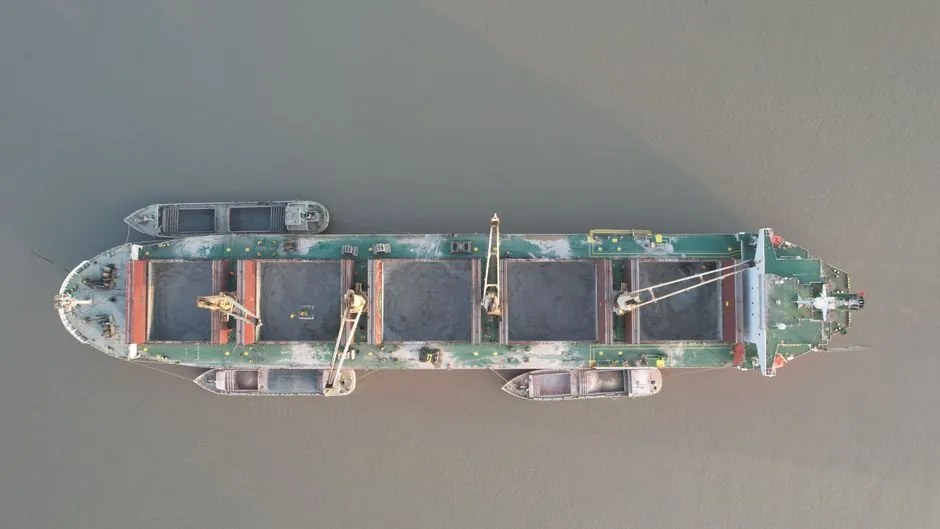
Industrial buyers in 2026 sourcing ferrosilicon (FeSi) for steelmaking face a $1,200–1,500/MT FOB China price band for standard FeSi75, with documented premiums of $150–200/MT for low-carbon (C≤0.05%) or low-aluminum (Al≤0.5%) variants demanded by tool steel, automotive, and corrosion-resistant grades [S1][S2][S4].
This guide applies the same spec-first discipline used for casting mold sizing and selection, translating that logic to FeSi: define the steel grade first, pin chemical limits second, then evaluate suppliers on measurable evidence rather than marketing copy [S5].
Spec Boundaries: FeSi72 vs FeSi75 and the Impurity Ceiling
FeSi72 contains roughly 72% silicon while FeSi75 holds approximately 75% silicon, and the higher grade is not automatically the better buy; selection should be driven by steel grade, required silicon addition, recovery rate, and cost per effective silicon unit [S5]. Standard-grade FeSi commonly runs 65-75% Si with C≤0.1%, Al≤1.5%, P≤0.04%, while premium grade tightens to 72-75% Si, C≤0.05%, Al≤0.5%, P≤0.02% [S1][S2][S3].
For tool steel and high-strength automotive sheet, premium-grade chemistry directly suppresses inclusions and stabilizes hardenability; for example, Al above 0.5% is reported to reduce hardenability in heat-treated grades, and Al above 0.5% in chloride-rich service accelerates pitting corrosion [S1][S4]. Batch-to-batch Si variation should sit inside ±0.3% for uniform heat treatment, with documented examples of ±0.2% under AI-controlled production versus ±0.5% on industry average [S1][S3].
Decision Matrix: Matching Grade to End-Use
Three end-uses dominate 2026 FeSi procurement, and each tilts the spec differently. Hardness-driven tool steel (AISI D2 family) wants 72-75% Si, C≤0.05%, Al≤0.5%, with case data showing 62 HRC consistency from a FeSi75-C0.03 charge [S1][S3]. Strength-driven automotive sheet tolerates 65-75% Si when aluminum is capped at 0.5%, with a reported 15% yield-strength improvement at a German automaker when switching to low-Al FeSi75 [S2]. Corrosion-driven marine and chemical service demands low-Al FeSi (Al≤0.5%) plus tight P (≤0.02%) for ASTM A588 weathering steel and sour-service (NACE MR0175) applications, with one Japanese shipbuilder reporting a 30% reduction in hull maintenance costs [S4].
On cost, standard FeSi75 at $1,200–1,500/MT FOB China rises to roughly $1,350–1,700/MT for low-C or low-Al premium grades once the $150–200/MT premium is applied [S1][S2][S4]. Particle sizing is a separate decision: 10-50 mm lumps dissolve more slowly for ladle additions, while 1-10 mm granules accelerate dissolution but generate more fines during transit [S1][S3][S4].
Market Context and Price Pressure for 2026
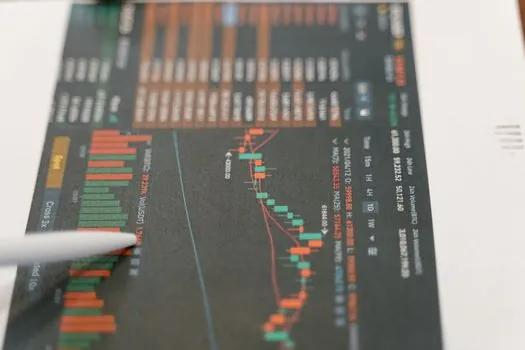
China supplies roughly 70% of global FeSi output, while the EU is actively seeking alternative suppliers under CBAM-related sourcing pressure, and Q4 price forecasts point to a 5-8% rise tied to quartz and energy cost fluctuations [S2]. High-strength steel demand was up 12-15% YoY in the 2024-2025 window, and global tool steel is tracked toward a $6.5B market by 2027, both pulling FeSi75 consumption higher [S1][S2][S3]. Marine and offshore order books were up 22% YoY, and acid-resistant steel demand in Asia is rising at an 18% CAGR, reinforcing the low-Al premium [S4].
The same energy-and-quartet squeeze is visible in adjacent ferrous procurement, as detailed in the 2026 Abrasives Procurement Strategy: Spec-First Field Map: carbon reporting, not just tonnage, is the gatekeeper for European buyers. That is why several FeSi suppliers now disclose 2.1-2.5 t CO₂/MT footprints versus an industry average closer to 2.8-3.0 t CO₂/MT, with hydro-powered smelters at the low end [S1][S2][S3][S4].
Supplier Vetting: Technical and Commercial Evidence
A reliable FeSi supplier should demonstrate consistent chemical composition, stable particle size, reliable production capacity (minimum 10,000 MT/year for stable supply), competitive and transparent pricing, appropriate packaging, accurate documentation, predictable delivery, professional communication, and effective after-sales support [S2][S5]. A single good COA proves one good batch; several consistent COAs across recent shipments prove production stability, and that is the test that separates a mill from a broker [S5].
For hardness, strength, and corrosion applications the technical checklist overlaps heavily: ISO 9001 certification, ISO 17025 lab accreditation, XRF for Si%, LECO for carbon, and for marine/sour service NACE MR0175 alignment plus ICP-MS for trace impurities [S1][S2][S3][S4]. REACH and CBAM documentation is now a near-mandatory filter for EU-bound shipments, and 50 MT is the commonly cited MOQ for mill-direct orders [S1][S2][S3]. Lead time benchmarks sit at 30 days FOB China for top-tier mills versus a 45-60 day industry average, with 25-day delivery quoted to major EU/NA ports [S1][S2][S3][S4].
Logistics, Compliance, and On-Site Quality
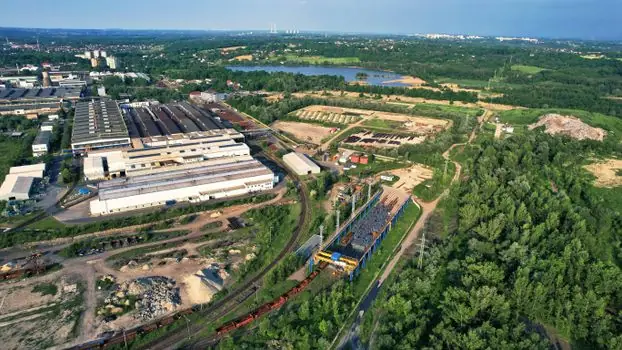
Logistics discipline is the cheapest insurance on an FeSi PO. Moisture-proof jumbo bags with desiccants are the default for humid climates, and pre-shipment hardness test samples plus real-time GPS/temperature tracking are increasingly specified by European and Japanese buyers [S1][S3][S4]. FOB terms remain the cost-control norm, with CFR and CIF used where buyers want freight bundled, and Incoterm choice should be locked into the spec sheet before RFQ to keep quotations comparable [S5].
For buyers building a broader alloy and process-control stack, the Zinc Ingot Process Control: Sensors, Slag Robotics, and Casting-Line Automation field map shows the same pattern: real-time composition data at the casting line is replacing end-of-batch lab checks. On the plant-instrumentation side, flow meter verification at the FeSi dosing station and pressure transmitter health checks on inert-gas-purged FeSi silos are now standard pre-shipment audit items for steel mills running tight hardenability windows.
Risk, Failure Modes, and What a Bad Lot Looks Like
The most expensive FeSi mistake is not paying $50/MT extra; it is accepting a lot that drifts on Al or P and quietly degrading heat treatment. With Al above 0.5%, hardenability drops in tool steel and pitting accelerates in marine steel, and P above 0.02% embrittles corrosion-resistant grades; either failure mode surfaces weeks after the heat ships, well past the COA window [S1][S4]. Inconsistent Si (±0.5% batch-to-batch) produces non-uniform hardness after quench, and excessive fines from poor sizing create ladle addition losses and silicon recovery shortfalls [S1][S3][S5].
The cheapest quotation may not always be the most economical option, because inconsistent chemistry, excessive fines, unsuitable sizing, and repeated delivery delays can compound into production and logistics costs that exceed the initial price difference [S5]. For shops running industrial valve and pressure sensor arrays on FeSi pneumatic-convey lines, oversized fines also choke rotary valves and bias the dosing loop, which is one more reason to lock particle size into the spec rather than the quote.
Two-Week Action Plan for a 2026 RFQ
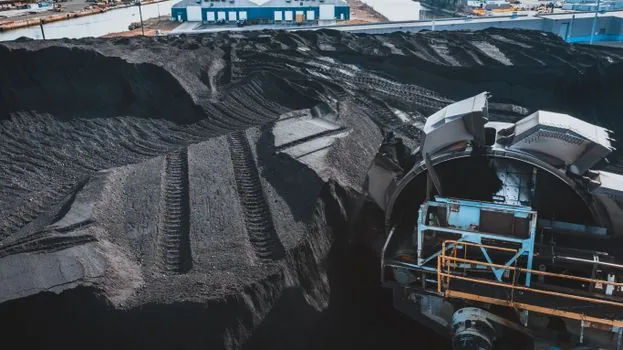
Run a 14-day RFQ on FeSi75 with the following locked spec: Si 72-75%, C≤0.05%, Al≤0.5%, P≤0.02%, sizing 10-50 mm lumps or 1-10 mm granules, packaging in 1 MT jumbo bags with desiccants, FOB China, MOQ 50 MT, ISO 9001 + REACH + CBAM documentation, and three recent COAs submitted with the bid [S1][S2][S4][S5]. Require LECO carbon reports, XRF Si reports, and (for corrosion service) salt-spray or sour-service evidence aligned to NACE MR0175 [S4].
Score bids on six axes: Si consistency (±0.2% target), Al and C control (both ≤0.5% / ≤0.05%), carbon footprint (target ≤2.5 t CO₂/MT, hydro-powered preferred), lead time (30-day FOB target), documentation depth, and verifiable post-sales technical support from metallurgists rather than generic sales staff [S1][S2][S3][S4]. Trackable signals to monitor next: Q4 2026 spot FeSi75 price prints against the $1,200–1,500/MT FOB China band, the 5-8% Q4 surcharge tied to quartz and energy cost, and any EU CBAM threshold revisions that reset the carbon-footprint ceiling for imported FeSi.