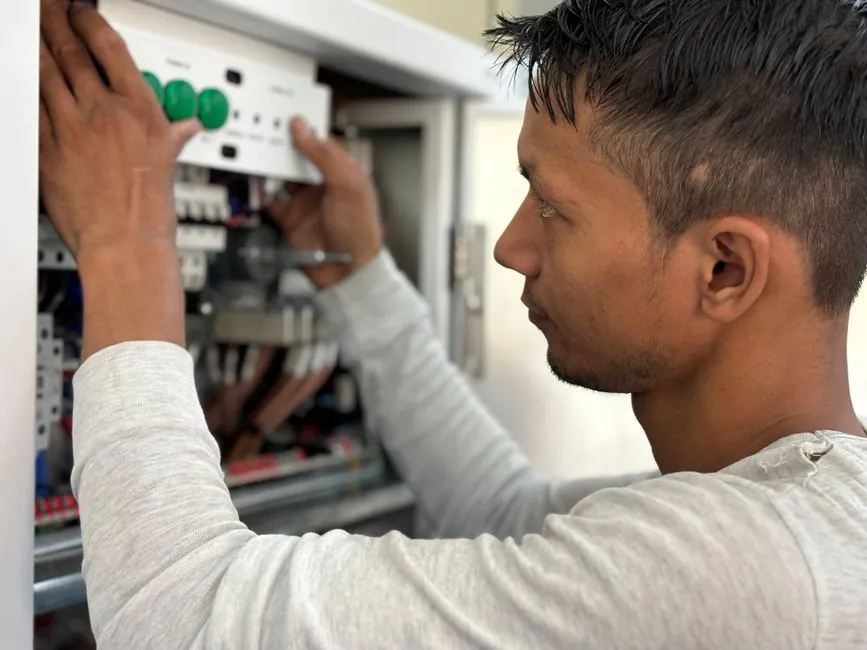
A food-grade interlock switch is selected by combining three independent criteria: a hygienic enclosure rated to IP69K washdown, positive-opening contacts designed to BS EN ISO 14119, and a power-to-release or spring-to-lock actuator wherever the guarded machine has any hazardous stop time [S3][S6].
Food and beverage lines open guard doors dozens of times per shift for cleaning, format change, and jam clearing, which puts interlock switches on the critical path for both worker safety and hygienic compliance, with the sector treated as a primary application for industrial interlock devices [S2][S6].
Where Interlocking Sits in the Safety Stack
BS EN ISO 14119 governs the design, selection and installation of interlocking devices associated with guards, including measures to reduce the risk of defeat such as coded actuators and minimised actuator access [S3]. The standard sits below BS EN ISO 12100 in the hierarchy: fixed guarding is the first choice, interlocked guards apply only where regular access is required, and administrative controls such as training are a last layer, not a substitute [S3].
Under PUWER Regulation 11 and the UK Supply of Machinery (Safety) Regulations 2008, an interlocked guard is a legal duty where a fixed guard cannot reasonably remove the need for access, and guard locking becomes mandatory wherever the machinery has a hazardous run-down time or retains energy after stop [S3]. In a process line, that wording covers slicers, mixers, augers, and any packaging machine whose knives or sealing heads coast to a halt.
Main Switch Families and What They Are Good For
Industrial interlock switches split into four practical families: non-locking (hinge or tongue) switches that simply report guard position, mechanical guard-locking switches that hold the door closed until a safe state, solenoid-controlled power-to-release or power-to-lock switches for timed unlocking, and non-contact coded-magnet or RFID switches for hygienic or tamper-resistant duties [S7][S9]. Banner Engineering describes the underlying principle as positive-opening contacts that open the safety circuit reliably regardless of environment, a feature the standard ties to defeat resistance [S8].
Actuator-key designs pair a switch body with a separate key that is rigidly mounted to the guard, and the body is fixed to the frame; misalignments beyond the manufacturer tolerance window will not register a closed state, which is intentional [S10]. For conveyor guarding in food lines, this format is the default reference because the key can be replaced if mechanically damaged, while the switch electronics stay sealed.
Selection Criteria: Environment, Hazard, Access Frequency

The right interlock is set by three factors working together: the sector environment, the nature of the hazard, and how often the guard is opened [S3]. For food processing, the environment is the dominant axis: daily caustic and acidic washdown, hot water up to 80 °C on some Clean-In-Place lines, and organic residue that collects around any crevice.
Stainless steel (typically 304 or 316) or food-grade polymer housings are used because they resist corrosion and are easy to clean, an explicit requirement in food-area equipment selection [S6]. The minimum ingress target is IP66/IP67 for general washdown zones and IP69K for high-pressure, high-temperature cleaning typical of meat, dairy, and ready-meal plants. Positive-opening, normally-closed contacts are the baseline reliability feature that keeps the safety circuit open if the contact welds, and ISO 14119 sets the defeat-resistance design rules for the actuator channel [S3][S8].
Food vs. Mining vs. Chemical: One Comparison Table
The same interlock technology behaves very differently across the three heavy-industry sectors covered in this site, and the comparison below shows where a food-line spec diverges from a mining or chemical spec. [S1]
Food processing demands IP69K stainless, coded actuator, power-to-release locking, and full hygienic mounting to avoid residue traps; mining tolerates IP65 die-cast with heavy-duty tongue switches and prioritises vibration and dust sealing per the mining interlock spec map; chemical plants sit between, needing ATEX/IECEx-rated non-contact switches where solvent vapours are present, as detailed in the chemical-plant interlock spec map. The non-contact coded-magnet or RFID type is the only one that removes the actuator key as a mechanical wear part, which is why it is increasingly specified for machine-safety duties in washdown areas [S7].
Hygienic Mounting and the Washdown Reality
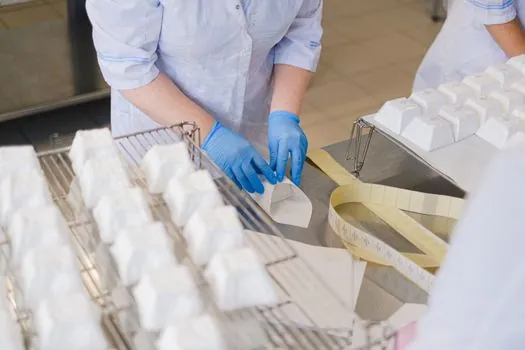
Two engineering details decide whether a switch survives a food-plant audit. First, the housing must slope or shed water, with no horizontal ledges for product or cleaning fluid to pool, and conduit entries must be sealed or replaced by cable glands rated to the same IP code; an unsealed 1/2" NPT entry is the single most common residue trap in retrofits. Second, the actuator must be coded per ISO 14119, meaning a plain screwdriver, paperclip, or spare magnet cannot hold the safety circuit closed once the guard is open [S3][S8].
Mechanical interlock switches with positive-opening contacts and coded actuators are designed specifically to defeat bypass, which is the failure mode that drives most food-line incidents during cleaning and jam-clearing. For more detail on the wider safety barrier philosophy and how interlocks sit inside a guarded cell, the encyclopedia entries on machine-safety and safety-fence are the relevant next reads.
Who Should Specify What
Specifiers of low-inertia packaging guards that stop within a fraction of a second, such as form-fill-seal conveyors and carton erectors, can use a non-locking tongue switch with positive-opening contacts, typically IP67 stainless, and accept the lower cost. Specifiers of mixers, blenders, screw conveyors, and any machine whose rotor coasts for more than a few hundred milliseconds after power removal must step up to a guard-locking switch, with power-to-release preferred for process reasons because the unlock signal is only energised after the machine has stopped [S4].
Specifiers of hygienic-only zones with no hazard retention can use non-contact coded-magnet or RFID switches, which also remove the actuator key as a mechanical wear part and a hygiene trap; this matches the trend in safety-certification audits to demand defeat-resistant devices wherever guards are opened frequently [S3][S7]. The mis-spec to avoid is fitting a general-purpose plastic-bodied switch to a washdown zone, which is a common low-bid failure that fails the first IP69K test, or fitting a non-locking switch to a machine with a 3-5 second run-down, which is a safety-interlock-switch bypass waiting to happen.
Limitations and Failure Modes to Audit
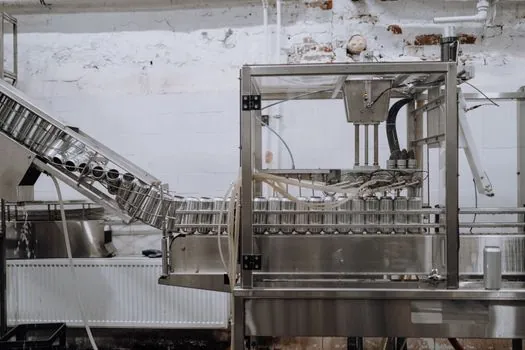
Interlock switches do fail quietly, through contact wear, actuator-key deformation, water ingress at conduit entries, and deliberate bypass during cleaning, rather than as a single dramatic trip event [S3]. Three audit checks are worth doing on every food-line retrofit: confirm the switch rating matches the actual washdown chemistry (caustic at pH 12+ attacks some stainless grades), confirm the actuator still enters within the manufacturer's alignment window after guard flex from repeated opening, and confirm the wiring is routed through sealed glands rather than exposed conduit [S6][S10].
Documentation, periodic testing, and review of the risk assessment are themselves part of compliance with PUWER and ISO 14119, not optional add-ons, and the wider fire-safety and safety-interlock-switch references on this site cover the documentation and testing expectations in more depth.
For a food plant running PUWER 1998 plus a 2026 hygienic-design audit, the next verifiable nodes to track are: ISO 14119 compliance evidence on each switch datasheet, IP69K test certificate matched to the actual cleaning regime, and a documented run-down-time test for every guarded machine, with guard-locking specified wherever coast time exceeds one second.