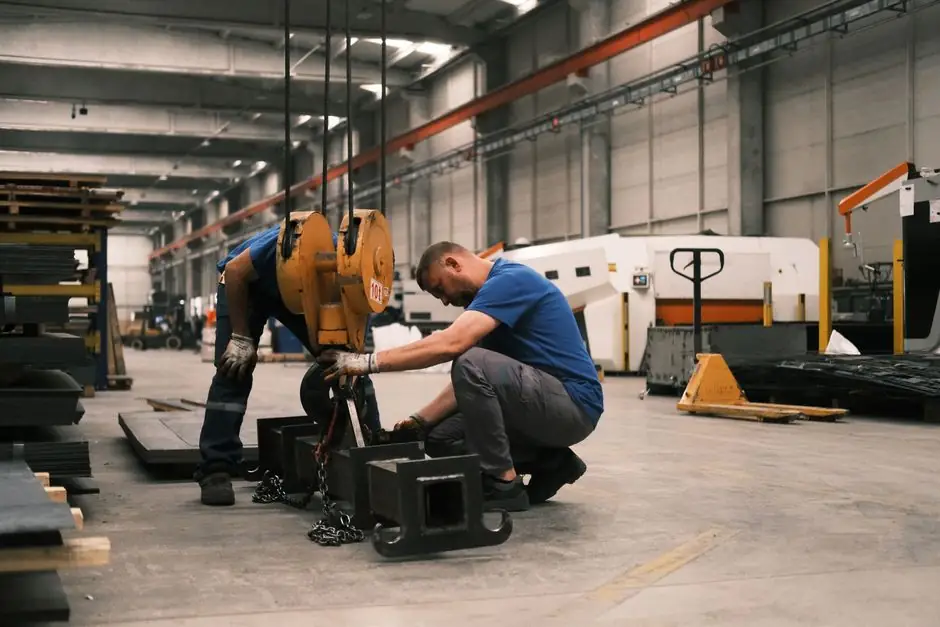
For indoor palletized loads under 5 tonnes at 15–18 ft lift heights, a standard forklift is the lower-cost, higher-throughput choice; for road-mobile lifts up to 140 tonnes on a truck crane or 900 tonnes on an all-terrain unit, a truck-mounted crane wins on mobility, reach, and duty cycle [S1][S2].
The decision is not about which machine lifts more in absolute terms, but about duty cycle, site access, transport pattern, and operator licensing. A truck-mounted crane can make six different stops in one day along a utility corridor without a trailer; a forklift can unload, stage, and stack pallets in a warehouse aisle barely wider than the truck itself [S3].
Capacity, Lift Height, and Reach
All-terrain cranes in commercial fleets cover 45–900 US tons, truck cranes cover 40–140 US tons, and boom trucks cover 23–50 US tons, so the truck-mounted family spans roughly two orders of magnitude in rated capacity [S2]. A standard straight-mast forklift extends forks upward 15–18 ft, with lift capacity diminishing as the mast rises; extension forklifts can also reach outward but at a further de-rate [S4].
For a roof-mounted HVAC changeout, a 23–50-ton boom truck is usually the right match, since roadability matters more than maximum chart capacity. For a bridge girder set, a 140-ton truck crane or 900-ton all-terrain unit is the only realistic option, and no forklift variant comes close [S1][S2].
Mobility, Setup Time, and Site Access
Truck-mounted cranes use a purpose-built truck chassis with standard commercial tires and 3–4 axles; they drive like a commercial truck and need only outrigger deployment before lifting, which is materially faster than a crawler or all-terrain setup [S2][S6]. All-terrain cranes add 4WD steering modes, including crab steer, plus up to nine axles for off-road distribution, at the cost of a larger jobsite footprint [S2].
Forklifts are smaller and far more maneuverable than any crane, which is why they dominate narrow warehouse aisles, inter-building transport, and truck loading-dock work. Their mobile nature, however, makes them more susceptible to impact damage than a stationary overhead rail system or a truck crane with outriggers set [S4].
Licensing, Safety, and Operator Requirements
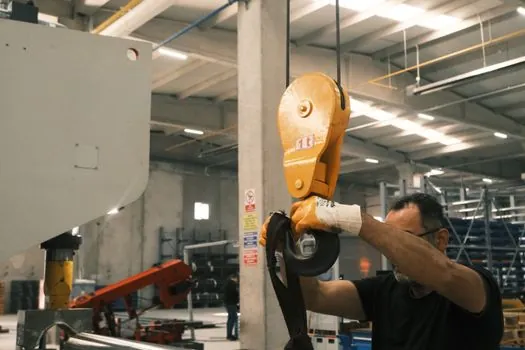
Below 10 tonnes of rated lift, a truck-mounted crane can be operated with the appropriate truck licence in many jurisdictions; above 10 tonnes, the operator needs a Vehicle Loading Crane high-risk work licence unless supervised by a licensed operator [S5]. Outrigger deployment and a crane rating chart are mandatory: a published chart for a knuckle-boom truck loader showed 1,040 kg at full horizontal boom extension versus a theoretical 5,850 kg maximum with outriggers fully deployed, illustrating how working radius collapses capacity [S5].
Forklift operation falls under separate OSHA-style operator training rules, and the combination of mobile mass, elevated load, and shared pedestrian space is the dominant accident profile. Damaged masts, dropped loads, and tip-overs are the most common failure modes, which is why many sites segregate forklift zones or migrate heavy repetitive lifts to overhead cranes once volume justifies the install [S4].
Cost, Maintenance, and Service Life
Forklifts have a lower purchase price than most crane installations, but a service life of only 10–15 years, which is why fleets commonly lease rather than buy outright [S4]. Truck-mounted cranes carry higher acquisition cost but compensate with longer useful life, lower in-service damage rate, and the ability to double as a cargo truck when the boom is stowed [S5].
For continuous moderate-weight indoor lifting, a forklift is the lower-overhead choice once fuel, simplified maintenance, and reduced training time are totalled. For multi-stop service work such as utility, HVAC, sign, and bridge-maintenance contracts, the truck-mounted crane pays back the higher ticket through eliminated transport trailers and faster site-to-site moves [S1][S3].
Decision Matrix: When to Choose Which
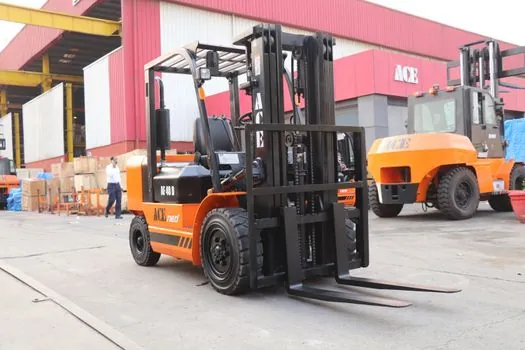
Use a forklift when the work is repetitive pallet handling on flat indoor floors, lift height stays within 15–18 ft, loads stay under 5 tonnes, and aisle width is the binding constraint [S1][S4]. Use a truck-mounted crane when the unit must drive on public roads between sites, lift 10+ tonnes occasionally, reach beyond forklift mast height, or place loads at radius where a forklift has no rated chart at all [S2][S3][S5].
Use an all-terrain or rough-terrain crane only when the site is unpaved, ground is soft, and lift exceeds the truck-crane envelope, since these machines trade footprint and transport cost for true off-road capability [S2]. For a fleet question, contractors in cities such as Houston, Dallas, Atlanta, Chicago, Los Angeles, and Miami commonly retain both telehandler-style handlers and truck-mounted cranes because each solves a different productivity problem on the same project [S3].
Limitations and Failure Modes
The single most common forklift limit is height-vs-capacity: every meter of additional lift reduces the safe load, and operators regularly push past the rated chart when a pallet is "almost" within reach [S4]. The single most common truck-mounted crane limit is radius-vs-capacity, where fully extended horizontal boom can slash rated lift by 75–80% relative to the stowed or near-stowed configuration, exactly the 1,040 kg vs 5,850 kg example above [S5].
Mobile cranes in the truck-crane class are not designed for off-road work; their commercial tires and limited ground clearance push operators back toward all-terrain or rough-terrain units on muddy or graded sites [S2]. Forklifts on the other hand are not designed to drive on public roads between job sites without a specialized rough-terrain or telehandler chassis, which is the niche occupied by rough terrain forklift variants and telehandlers [S3].
Applicable Standards and Sourcing Notes
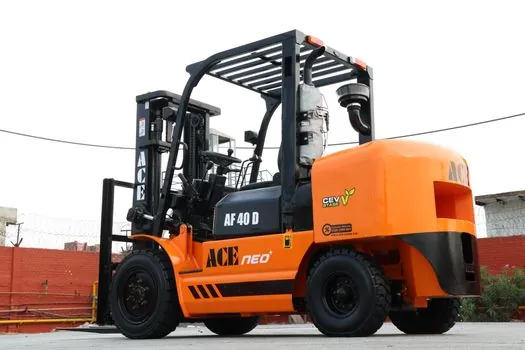
Operator licensing for vehicle loading cranes follows national high-risk-work frameworks (for example, the Australian Vehicle Loading Crane HRW licence cited in operator guidance), and local road rules govern whether a truck-mounted crane can travel on public roads without escort [S5]. Forklift operator training and daily inspection requirements follow separate national frameworks, generally OSHA 1910.178 in the United States and equivalent local regulations elsewhere.
For procurement, the practical sourcing filter is: confirm the rated chart at the working radius you actually need, confirm outrigger pad sizing for the soil you actually have, and confirm the operator licence class required for the rated tonnage in your jurisdiction. For a related carrier-versus-dedicated-machine comparison on paving equipment, see Skid Steer Loader vs Asphalt Paver: Carrier vs Dedicated Paver Spec Cut, which uses the same multi-criteria decision pattern for a different equipment class.
Track these signals before specifying: the rated capacity chart at your maximum working radius (not the headline tonnage), the outrigger spread and pad pressure for your worst soil condition, and the operator licence class the local authority requires at the rated tonnage you intend to lift. These three numbers collapse most forklift-versus-truck-mounted-crane selection debates into a single defensible specification [S2][S5].