FRP composites for electronics split into two functional families: pultruded glass-fiber-reinforced polyester or vinyl-ester profiles for structural insulation (cross arms, switchgear supports, cable trays), and FR4 epoxy-fiberglass laminates for printed circuit board substrates, each governed by a different standards track [S2][S5].
The selection gate is driven by dielectric strength, flame rating, operating temperature, and dimensional stability, with E-glass at roughly 2,400 MPa fiber tensile strength and density 2.55–2.62 g/cm³ serving as the industrial-default reinforcement across both families [S1][S3].
Why Electronics Use FRP Instead of Metal or Unfilled Plastic
FRP delivers electrical insulation combined with mechanical load capacity, which is the property pair metals and unfilled plastics cannot match in a single part. A pultruded glass-fiber cross arm rated for overhead line use typically carries 10 kV class insulation, low conductivity, and corrosion resistance that outperforms galvanized steel in coastal substations [S2][S3]. For PCBs, FR4 epoxy laminate is the dominant substrate because it pairs dielectric strength typically in the 20–40 kV/mm range with a UL94 V-0 flame rating, mechanical machinability, and a glass-transition temperature around 130–140 °C that survives reflow soldering [S5]. The same glass-fiber reinforcement concept is detailed in the FRP composite encyclopedia entry, which frames FRP as a fiber-plus-resin system rather than a single material grade.
FR4 vs FRP Sheet: Two Materials That Share a Name
FRP sheet (construction-grade fiberglass) and FR4 sheet (electronic-grade epoxy fiberglass) are commonly confused but serve different functions. FRP construction sheet is built around unsaturated polyester resin with glass-fiber mat or roving, used for anti-corrosion liners, roofing, and tank cladding where chemical resistance and weatherability dominate. FR4 is built around brominated epoxy resin with woven E-glass cloth, used for PCB laminates where dielectric loss, flame retardancy, and thermal endurance are the gating specs [S5]. Engineers specifying the wrong family on a procurement order is one of the most common errors in cross-industry FRP sourcing, because both products arrive as flat panels of similar appearance. A useful cross-reference for resin-matrix behavior in non-electronic process service is the steel-plastic composite pipe encyclopedia entry, which covers a different hybrid construction but shares the resin-vs-metal trade-off logic.
Resin System Choice for Electrical-Grade FRP
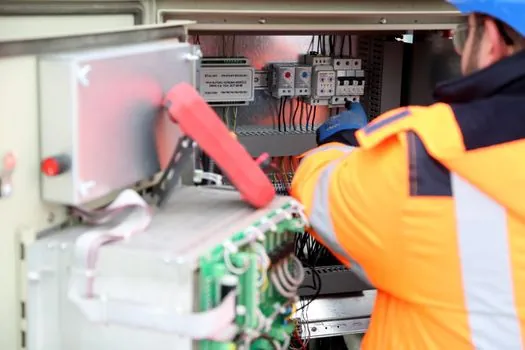
Polyester is the workhorse resin for pultruded electrical profiles and cross arms, valued for low cost, fast cure in heated dies, and adequate insulation for 10–35 kV distribution hardware. Vinyl-ester upgrades wet-temperature endurance to roughly 90–110 °C and improves acid and alkali resistance, which is why it appears in switchgear cabinets and wastewater plant electrical enclosures [S1][S2]. Epoxy anchors the FR4 PCB side with a glass-transition temperature band of 100–180 °C depending on hardener, low cure shrinkage, and adhesion to carbon or glass fiber above 50 MPa; it is the only matrix that holds printed-circuit copper adhesion under thermal cycling [S1]. Brominated epoxy variants carry UL94 V-0 at thicknesses down to about 0.4 mm, which is the standard line of demarcation between FR4 and non-flame-retardant epoxy-glass sheets [S5].
Reinforcement Architecture: Mat, Roving, Woven Cloth, Veil
For pultruded electrical profiles, unidirectional glass roving drives the axial strength while continuous strand mat or fabric adds transverse stiffness; this is why pultruded cross arms carry 200–500 MPa tensile strength at the laminate level, well below the 2,400 MPa raw-fiber value [S1][S2]. A polyester surface veil on the outermost layer improves weathering and UV resistance, which matters for outdoor overhead-line hardware exposed to sunlight and acid rain. For FR4 PCB laminates, woven E-glass cloth at 7628, 2116, or 1080 styles determines thickness and resin content, and the cloth style is a buyer-spec line item rather than a manufacturer default [S5]. The same fiber-form vocabulary appears in FRP composite selection for automotive manufacturing, where mat, roving, and fabric choices drive different service envelopes.
Dielectric, Thermal and Flame Specifications to Verify

The key datasheet numbers for electrical FRP are dielectric strength (typically 10–40 kV/mm depending on resin and thickness), volume resistivity above 10^12 ohm-cm for dry laminate, UL94 V-0 or HB flame rating, and comparative tracking index (CTI) per IEC 60112, which separates insulating grades for switchgear from general-purpose grades. Operating temperature derating should keep long-term service 20–30 °C below the resin's published Tg, putting polyester profiles near 60–80 °C wet, vinyl-ester near 90–110 °C wet, and epoxy-laminate FR4 near 100–130 °C continuous [S1]. Buyers should also confirm copper-clad FR4 thickness tolerance (commonly ±10% on 1.6 mm standard board), glass-style designation, and resin content, since these three parameters determine drill quality and plated-through-hole reliability. Buyers sourcing stainless process instrumentation for the same plant should cross-check the pressure transmitter encyclopedia entry to keep the electrical and instrument spec sheets aligned on grounding and EMC expectations.
Where Electrical FRP Is the Wrong Choice
FRP is not specified where high thermal conductivity, metal-to-metal threaded fastening, or RF transparency matters. Aluminum and copper remain the only sensible choices for heat-sink structural parts, threaded bus-bar supports, and electromagnetic shielding enclosures, and stainless steel still dominates outdoor substation structural members where fire performance and puncture resistance beat insulation. FRP and FR4 are distinct composite materials despite similar names: FRP is an engineering structural material, while FR4 is an electronic insulating material [S5]. Sourcing teams that default to FR4 for RF work, or to FRP sheet for PCB substrates, will see prototype scrap rates above 20% on first builds; the safer rule is to lock the resin system, the reinforcement form, and the dielectric target before the procurement inquiry is released.
Selection Criteria: Pultruded Profile vs FR4 PCB Laminate
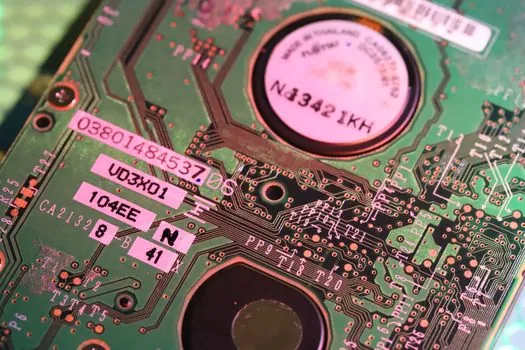
Use pultruded GFRP profiles (polyester or vinyl-ester matrix) when the part is a structural insulator: cross arm, cable tray, switchgear barrier, transformer coil winding former, or bus-bar support, with the lever being resin choice for wet-temperature and chemical resistance [S1][S2]. Use FR4 copper-clad laminate when the part is a PCB substrate or any thin-wall insulating barrier that needs UL94 V-0, machinability, and copper plating adhesion, with the lever being glass style, resin content, and Tg grade [S5]. The two families do not overlap functionally: FR4 is not used as a cross arm, and pultruded profiles are not used as circuit substrates, despite the shared glass-fiber reinforcement. Buyers who want a single reference point for one of the related instrument families used in the same plant should bookmark the flow meter encyclopedia entry for downstream specification work.
Trackable signals for the next sourcing cycle: vendor disclosure of IEC 60112 CTI ratings on polyester pultrusion datasheets, UL file lookups for FR4 flame class, and any shift from brominated epoxy to phosphorus-based FR4 systems driven by RoHS exemption timelines.