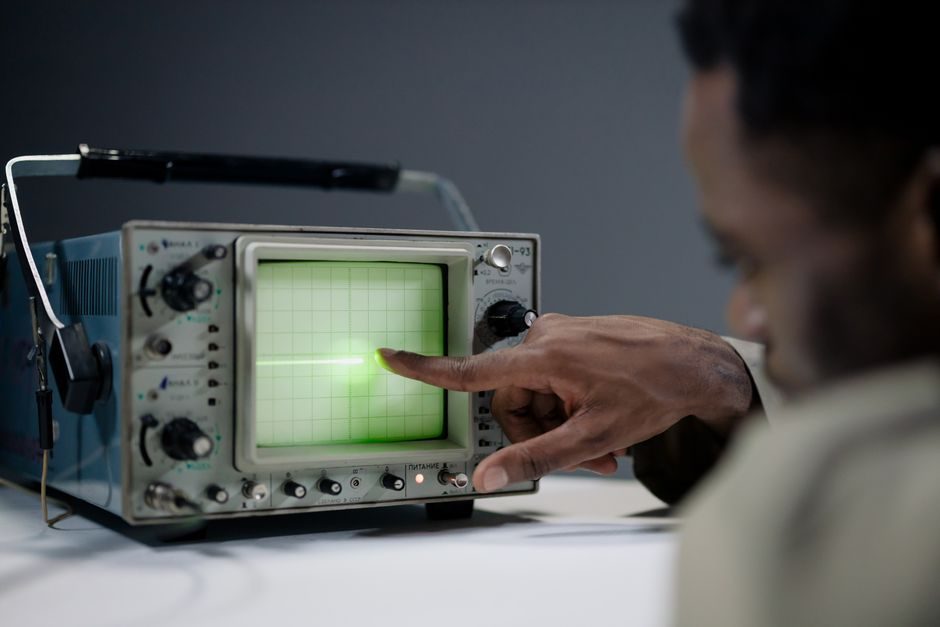
Function generators in 2026 are sold across at least four sharply different price/performance bands, and a buyer who picks by waveform count or brand familiarity usually overpays 3–10× for capability they do not use — or under-specs and discovers the limitation on the bench [S1][S5].
Selection is driven by three numbers: the highest sine frequency you need at full amplitude, the sample rate if you want arbitrary waveforms, and the noise/jitter floor for serial-bus or PLL work. Everything else — sweep, modulation, channel count, sync, LAN/USB — is secondary and can be added later through external software such as the MATLAB GUI function-generator reference published on File Exchange [S3].
Four Functional Bands, Not One Market
The cheapest useful function generator is still the 1 mHz–100 kHz FG 100 (115 V, 50/60 Hz) from 3B Scientific, which outputs sine, triangular, and square waveforms with adjustable amplitude and frequency and includes a built-in power amplifier for student-lab use [S5]. That covers audio-band amplifier, filter, and induction experiments, and it is the right answer for university teaching benches and for a buyer who needs ≤100 kHz sine and does not need modulation or sweep beyond what the front panel offers [S5].
Step up: a 25–60 MHz DDS/arbitrary bench unit (e.g. Rigol DG800, Siglent SDG1000, Keysight 33500B class) covers microcontroller clock injection, op-amp Bode plots, audio-amp characterization, and simple serial-bus eye diagrams — this is the band where most R&D and QC labs actually live [S1].
Step up again: 100–350 MHz arbitrary generators (e.g. Keysight 33600A, Rigol DG900, Siglent SDG7000A) are required for fast-edge digital work, switch-mode power supply feedback loop testing, and high-speed ADC input stimulation where rise time <5 ns matters [S1].
Above that: RF/microwave signal generators (≥3 GHz, often up to 6/20/40/50 GHz) with low phase noise and analogue/digital modulation are a different product class; they overlap with function generators only at the low-frequency end and should not be confused with a 25 MHz DDS box.
Selection Criteria: Frequency, Sample Rate, Jitter
Sine frequency is the headline spec, but the spec that bites first is sample rate on arbitrary waveforms — a 25 MHz analog bandwidth generator with only 125 MSa/s will alias anything above ~50 MHz, and a 100 MHz box at 1 GSa/s is the practical floor for useful pulse shaping [S1].
Jitter matters for serial-data work: typical bench DDS units sit around 100–200 ps RMS period jitter, which is fine for UART, SPI, and I²C but disqualifies them for clean CAN-FD, 100BASE-T1, or USB 2.0 eye-diagram stimulus, where <20 ps RMS is the working band.
Amplitude and load handling are also load-bearing: 20 Vpp into high-Z is common on 25–60 MHz units but drops to 10 Vpp or less into 50 Ω; check both numbers, not one. The FG 100 is specifically designed to drive low-impedance loads (loudspeakers, small coils) through its power amplifier, which is a different role from a 50 Ω RF-output bench unit [S5].
Channel count and coupling: 2-channel units with phase-locked channels (0.01° resolution) replace a dedicated pulse/pattern generator in many digital-comms setups; standalone single-channel boxes lose on TDR, three-level signalling, and differential stimulus.
Criteria-Based Comparison of the Four Bands
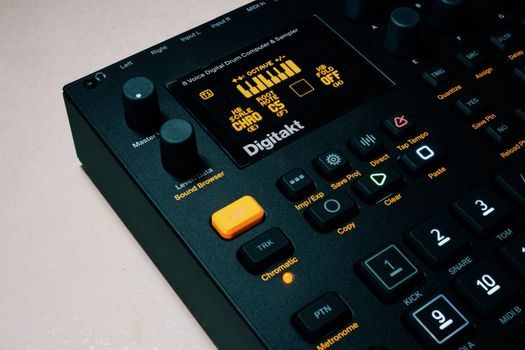
Compare on four decision criteria — max useful sine frequency, minimum arbitrary sample rate, total harmonic distortion (THD) at 1 kHz, and approximate 2026 street price: [S1]
Band A — Teaching (FG 100 and equivalents): ≤100 kHz sine, no arbitrary, no THD spec published, ~USD 250–450, intended for student labs and basic AC experiments [S5].
Band B — Mainstream analog/DDS bench (Rigol DG800/DG900, Siglent SDG1000/2000, Keysight 33510B/33500B): 25–100 MHz sine, 125–500 MSa/s arbitrary, ≤0.05 % THD at 1 kHz, ~USD 400–2,200.
Band C — High-bandwidth arbitrary (Keysight 33600A, Siglent SDG7000A, Rigol DG5000): 100–350 MHz sine, 1–5 GSa/s arbitrary, ≤0.04 % THD, ~USD 3,000–9,000.
Band D — RF/microwave signal generator (Keysight EXG/ESG, Rohde & Schwarz SMBV100A, Siglent SSG3000X): 3–44 GHz, dedicated low-phase-noise architecture, modulation bandwidth 60–160 MHz, ~USD 6,000–40,000+.
A buyer who only needs audio-band amplifier characterization should stop at Band A and not pay for Band B's modulation and sweep; a buyer doing switch-mode power supply loop measurement should skip Band B and go directly to Band C, where isolated channel-to-channel triggering and a real impedance-analysis option become available [S1].
Who Should — and Should Not — Buy Each Band
Band A (FG 100) is correct for secondary-school physics, undergraduate EE teaching, and hobbyists running ≤100 kHz experiments; it is wrong for any R&D bench, any service work, and any digital timing test [S5].
Band B is the default R&D and QC choice; it is wrong for serial-data compliance work above 10 MHz, for radar/EW stimulus, and for any test where <100 ps edge placement is required.
Band C is correct for high-speed digital hardware, switch-mode power supply control-loop characterization, and compliance pre-test for buses up to ~1 GHz; it is wrong for buyers who will not use the second channel or the memory depth, because the 3–5× price jump over Band B has to be amortized against real projects [S1].
Band D is correct for RF/wireless product development, antenna range work, and radar IF testing; it is wrong for baseband digital designers who simply need a "faster" box — they are paying for phase noise and modulation they will never use.
Software, Remote Control, and Arbitrary Waveform Loading
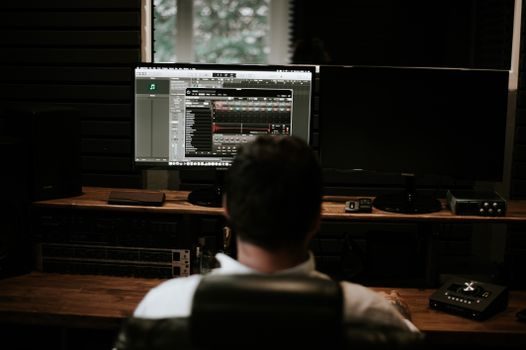
Most 2026 bench function generators expose SCPI over USB and LAN; the open-source Arduino-Due-based function generator on GitHub shows the lower bound — arbitrary waveform definition in C++ headers, sample-by-sample DAC update, no analog front-end conditioning — useful for embedding into a fixture, not for replacing a bench unit [S2].
For MATLAB-driven arbitrary waveform generation, the File Exchange reference "Function generator with CRO & Spectrum analyzer using GUI" (Suman Saha, 2026 release, 417 downloads) demonstrates a typical five-waveform GUI front-end with amplitude and frequency control and simultaneous time-/frequency-domain visualization — a useful template if you are building a custom stimulus-and-capture rig [S3].
For a quick characterisation of a small embedded design, an integrated USB scope+generator such as the Velleman PCSGU250 (with its MATLAB support package, ~2,200 downloads) is a common low-cost alternative, but its 2-channel analog front end is bandwidth-limited and should not be confused with a stand-alone ≥25 MHz function generator [S6].
Sourcing and Pricing Reality in 2026
Made-in-China wholesale listings for OEM/ODM function-generator platforms show 1 Set MOQ pricing on related power-electronics test instruments in the USD 1,490–1,580 band for a 30 kW/37.5 kVA diesel genset; function-generator-specific OEM channels from the same suppliers sit in the USD 80–600 range for rebranded 5–60 MHz DDS units, with ISO/CE markings commonly available [S7].
For brand-name bench units, the realistic 2026 street price is 15–30 % below the manufacturer's list price once discount distributors are checked, but warranty terms — and calibration certificate availability — should be confirmed before the discount is taken. Authorized calibration with traceable standards is a hard requirement if the generator will be used for ISO 17025, IATF 16949, or any medical/aerospace QC loop; not all OEM channels can issue signed certs.
Failure Modes and Common Sourcing Traps
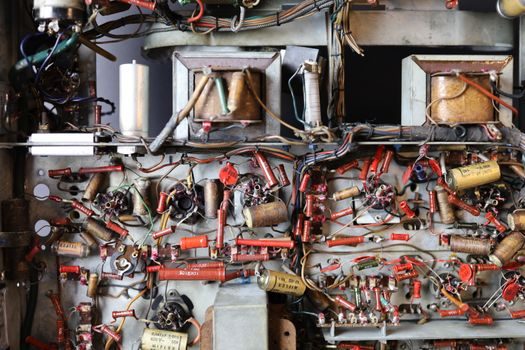
The three most common buyer errors in 2026 are: (1) buying by waveform count instead of by sample rate and analog bandwidth, (2) ignoring the 50 Ω / high-Z amplitude derating and over-driving a load, and (3) purchasing a low-end "arbitrary" unit whose arbitrary memory is 8–16 kpts and unusable for any real modulated waveform.
A second trap is firmware lock-out: some OEM rebadged units ship with modulation and sweep options enabled by software key only, and the unlock fee can equal 30–50 % of the unit price. Confirm option enablement at PO time, not at acceptance.
A third trap is ground-loop and earth-bonding: switch-mode power supply tests, in particular, require the function generator's output to be floated or driven through a wideband isolation transformer; bench units with grounded BNC shells will inject ground loops that mask the real loop response. A basic function generator overview at the encyclopedia level covers output stage architecture, but a buyer still has to verify earth-bonding against the specific test fixture before committing.
Standards, Calibration, and What's Worth a 2026 Buy
There is no IEC standard that pins a specific sample rate or THD number on bench function generators; instead, what matters is the calibration chain — measurement traceability to national standards (NIST, NPL, PTB, NIM) through an ISO/IEC 17025-accredited cal lab, and a published THD + amplitude accuracy figure measured at 1 kHz and at the unit's bandwidth limit. [S5]
Look for units that publish: amplitude accuracy ≤(0.2 % of setting + 1 mVpp), frequency accuracy ≤1 ppm with the optional OCXO, and a documented phase-noise plot at 10 kHz offset — those three numbers together define whether the unit is fit for the four jobs above, and whether it will survive a customer audit [S1].
For buyers who need stimulus outside pure sine/triangle/square — a defined pulse train for a stepper driver, a recorded ignition waveform, a chirp for an audio-DAC test — the move to a static var generator is irrelevant, but the move to a vacuum generator or pressure transmitter reference is also a different product class entirely; the right tool is a DDS/arbitrary unit with ≥1 GSa/s and ≥1 Mpt memory, not a cheaper analog box.
Shortlist logic for 2026: if the highest needed sine frequency is ≤100 kHz and modulation is not required, buy the FG 100 or a Band A equivalent and stop; if it is ≤60 MHz and arbitrary/USB/LAN control are needed, buy a Band B unit from Keysight, Rigol, or Siglent; if it is 100–350 MHz with arbitrary, buy Band C; if the requirement is RF modulation above 1 GHz, you are shopping for a signal generator, not a function generator, and the comparison set changes. The single number that most often kills a deal is forgetting the sample rate — get that one right and the rest of the spec sheet is negotiation.
For related coverage, see TOPCon Cell Supply Tightens as Patent Rail and Degradation Gap Squeeze 2026 Sourcing.